
Quick answer
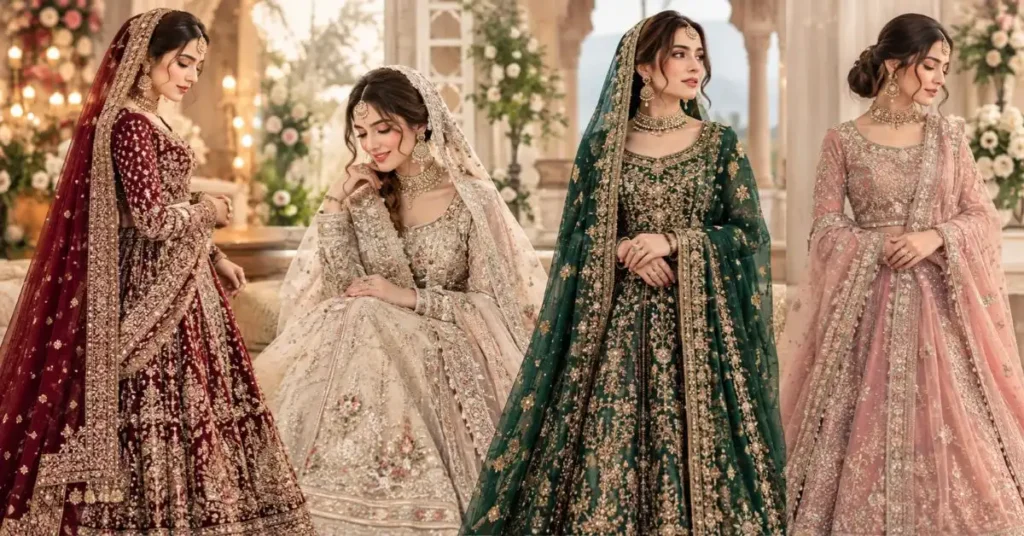
Pakistani bridal dresses include lehenga choli, sharara, gharara, pishwas, Anarkali, and formal maxi styles. The best outfit depends on the wedding event, personal taste, season, fabric, budget, and comfort. Choose a suitable silhouette, coordinate embroidery and jewelry, and check the fit before the wedding day.
Author: Zahida Amir
Founder & Fashion Content Creator
Experience: Fashion styling, dress trends, outfit inspiration, seasonal fashion, fabrics, clothing care, and everyday wardrobe ideas.
Content approach: Practical styling guidance and fashion research to help readers make confident clothing choices.
Introduction
Choosing Pakistani bridal dresses is about more than selecting a beautiful outfit. Your bridal look should reflect your personality, suit the wedding ceremony, and feel comfortable throughout a long and memorable day.
From traditional red lehengas to elegant pishwas, embroidered ghararas, and modern bridal maxis, Pakistani wedding fashion offers many options. The challenge is finding the right combination of silhouette, fabric, color, embroidery, jewelry, and fit without making the outfit difficult to wear.
This guide from Style Aura Dresses explains the main bridal styles, how to choose outfits for Mehndi, Nikah, Baraat, and Walima, and what to consider before ordering a custom design. You will also learn how to coordinate accessories, plan your budget, care for delicate fabrics, and avoid common bridal shopping mistakes.
What Makes Pakistani Bridal Fashion Special?
Pakistani bridal fashion brings together traditional craftsmanship, cultural influences, detailed embroidery, and changing design preferences. A single outfit may combine a classic silhouette with modern tailoring, giving the bride a look that feels both personal and connected to tradition.
Embroidery often plays a central role. Zardozi uses decorative metallic threadwork, dabka adds raised coiled-wire details, and resham refers to silk-thread embroidery. Gota work uses decorative ribbon or trim to create borders and patterns. Each technique creates a different texture, so the amount and placement of embellishment can change the overall appearance.
Color also shapes the character of a bridal outfit. Red, maroon, and gold create a traditional, rich look, while blush, ivory, champagne, sage, and powder blue offer softer alternatives. Jewel tones such as emerald and plum provide another option for brides who want depth without choosing classic red.
The silhouette matters just as much. A flared lehenga creates volume, a gharara gives a distinctive traditional shape, and a pishwas produces a flowing, frock-like appearance. No single style suits every preference or ceremony.
The best bridal outfit balances appearance with movement, comfort, and practical needs. Before choosing a heavily embroidered design, consider how long you will wear it, how much you need to walk, and whether you can sit comfortably in it.
For more inspiration, explore our guide to bridal lehenga styles.
Popular Pakistani Bridal Dress Styles
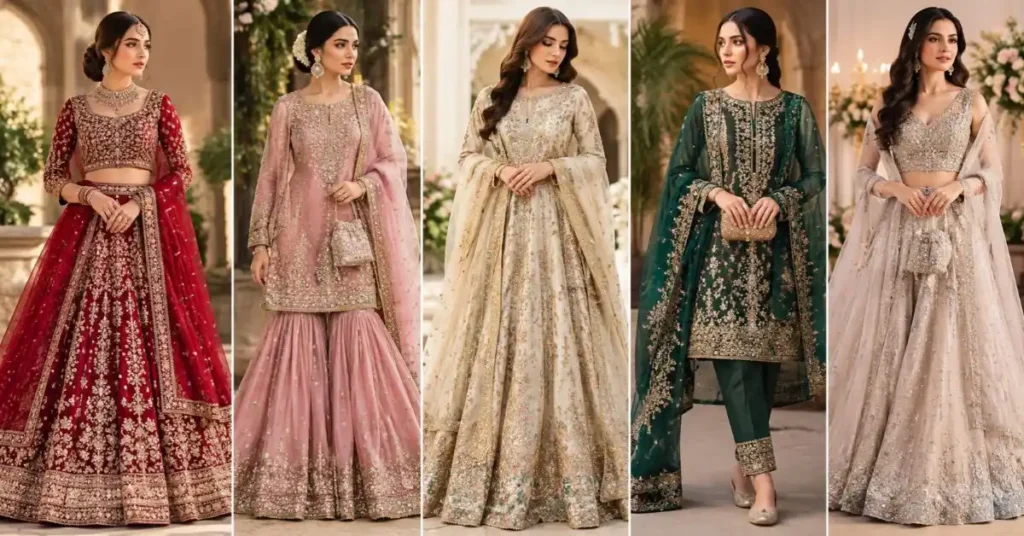
Pakistani bridal wear includes several recognizable silhouettes. Understanding their construction helps you compare designs more confidently instead of choosing an outfit based only on photographs.
| Bridal style | Best suited for | Main feature | Styling idea |
|---|---|---|---|
| Lehenga choli | Baraat, formal receptions | Flared skirt and fitted blouse | Traditional jewelry and a statement dupatta |
| Sharara | Mehndi, Nikah, festive events | Wide-legged, flowing trousers | Embroidered shirt and comfortable heels |
| Gharara | Nikah, Mehndi, traditional celebrations | Defined flare around the knee | Short or mid-length shirt and a detailed dupatta |
| Pishwas | Nikah, engagement, Walima | Long, flowing frock silhouette | Delicate jewelry and a coordinated dupatta |
| Anarkali | Engagements and formal gatherings | Fitted upper section with a flared skirt | Earrings and understated footwear |
| Bridal maxi | Nikah, Walima, contemporary weddings | Long, gown-like silhouette | Minimal jewelry or refined statement pieces |
| Formal shalwar kameez | Intimate weddings and traditional ceremonies | Tailored shirt and coordinated trousers | Embroidered neckline and elegant khussas |
Lehenga Choli
A lehenga choli combines a blouse, a flared skirt, and a dupatta. Brides often choose this silhouette for Baraat because the wide skirt provides space for detailed embroidery, decorative borders, and layered fabrics.
The design can range from a structured, voluminous skirt to a softer A-line shape. A heavily embellished lehenga creates a grand appearance, but its weight can make walking and sitting more challenging. Try the complete outfit with the intended footwear before approving the final length.
Sharara and Gharara
A sharara features wide-legged trousers that flare along the legs. A gharara traditionally has a fitted upper leg and a more defined flare around the knee. The distinction can vary in modern designs, so inspect the actual construction rather than relying only on the garment’s name.
Both styles offer a traditional alternative to the lehenga. They can work particularly well for Mehndi or Nikah when the bride wants a graceful outfit with a different kind of movement.
Pishwas, Anarkali, and Bridal Maxi
A pishwas has a fitted or shaped bodice and a long, flared lower section. Anarkali outfits also use a fitted upper section with a flowing skirt, although the exact construction and length vary. A bridal maxi takes inspiration from formal gowns and can have a straight, A-line, or more dramatic silhouette.
These styles work well for brides who prefer a flowing look over a very wide skirt. Check the bodice, lining, sleeve fit, and hem length before ordering, because these details determine how comfortably the outfit sits.
Pakistani Bridal Outfits for Different Wedding Events
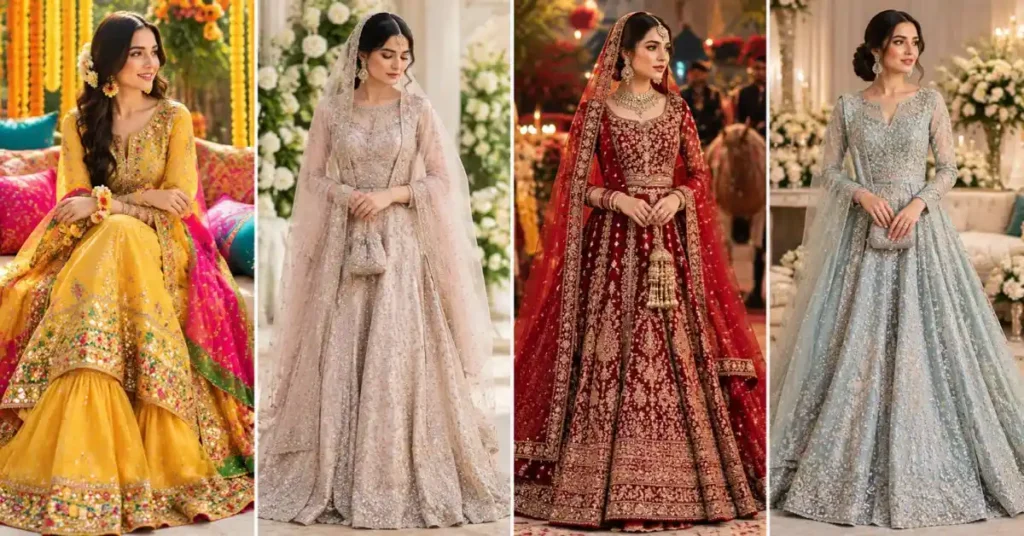
Each wedding function has its own atmosphere, dress code, and practical requirements. Planning outfits around the event helps you avoid choosing a beautiful design that feels too heavy or formal for the occasion.
Mehndi
Mehndi celebrations often feature lively colors, festive details, and activities that involve walking, sitting, and dancing. Yellow, green, orange, coral, pink, and multicolored combinations can create a cheerful look.
A sharara, gharara, lehenga, or embroidered pishwas can work well. If you expect to dance or spend long periods on your feet, choose manageable embroidery, secure footwear, and a dupatta that stays in place.
Explore our Mehndi dresses guide for more outfit and color inspiration.
Nikah
Nikah outfits can range from traditional shalwar kameez to ghararas, pishwas, and long maxis. Some brides prefer ivory, champagne, blush, sage, or other soft shades, while others choose rich colors that match their personal style and family traditions.
Consider the ceremony setting and any preferences you wish to follow regarding coverage. A carefully placed dupatta, comfortable sleeves, and balanced embroidery can create a graceful look without adding unnecessary weight.
Baraat
Baraat is often the most elaborate bridal occasion in many Pakistani wedding celebrations. Red, maroon, burgundy, deep pink, and jewel tones can create a dramatic appearance.
A heavily embroidered lehenga choli or traditional gharara may suit a bride who wants a grand look. However, elaborate embroidery, multiple skirt layers, and a long dupatta can increase the outfit’s weight.
Check whether you can climb steps, sit for photographs, and walk at a natural pace. A beautiful bridal outfit should not make every movement difficult.
Walima
Walima styling can be traditional, contemporary, or a combination of both. Brides may choose a pastel lehenga, formal maxi, pishwas, or an embroidered gown.
Ivory, champagne, powder blue, blush, muted pink, and emerald are possible choices, but the best shade depends on your preferences and the overall styling. Lighter colors can show stains more easily, so handle makeup, food, and drinks carefully during the event.
Popular Colors for Pakistani Bridal Dresses
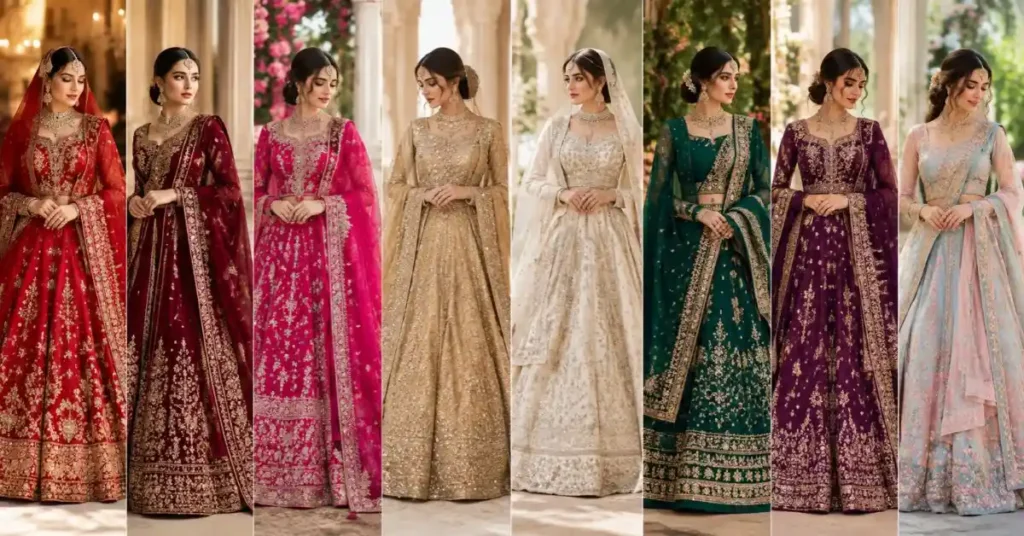
Color affects the mood of the outfit and the way its embroidery, fabric, and jewelry work together. Choose a shade that you enjoy wearing rather than following a trend simply because it appears in bridal collections.
- Red: A familiar choice for traditional bridal styling. Gold, antique metallic work, and deep-toned jewelry can complement it.
- Maroon and burgundy: These shades create a rich, deep appearance and work well with gold or antique embroidery.
- Pink and blush: Soft pink feels romantic, while deeper pink adds more visual impact. Rose-gold or gold accessories can complement either shade.
- Gold and champagne: These colors create a warm, luminous look. Balance the shine with carefully selected jewelry to avoid competing details.
- Ivory and cream: These shades suit brides who prefer understated elegance. Check the contrast between the fabric and embroidery so the details remain visible.
- Emerald and deep green: Jewel-toned green can create a striking look with gold, bronze, or antique embellishment.
- Plum and purple: These shades offer a distinctive alternative to red and maroon.
- Pastels: Powder blue, sage, lavender, and soft peach can create a gentle appearance, particularly for daytime ceremonies or reception outfits.
Consider the venue lighting before finalizing the color. A fabric that looks soft and muted in a showroom may appear brighter under strong stage lights or flash photography. If possible, view the fabric in daylight and under lighting similar to your wedding venue.
Fabrics Used in Pakistani Bridal Wear
Fabric affects the outfit’s weight, drape, structure, comfort, and maintenance needs. A design may look beautiful in a photograph but feel unsuitable for the weather or ceremony if the fabric does not match the occasion.
Silk and raw silk can provide structure and a substantial base for embroidery. Velvet has a dense surface that works well for many winter and evening looks, although it can feel warm in a crowded venue. Organza creates a crisp, structured effect, while chiffon offers a softer, flowing drape. Net is often used for overlays and dupattas, especially when designers want a light, layered appearance.
| Fabric | Best use | Main benefit | Styling and care tip |
|---|---|---|---|
| Raw silk | Structured lehengas and formal outfits | Holds shape and embroidery well | Follow the care label; embellished pieces often need professional cleaning |
| Velvet | Winter weddings and evening ceremonies | Rich texture and depth | Avoid crushing the pile during storage |
| Organza | Dupattas, overlays, layered skirts | Adds structure without a dense appearance | Handle gently to avoid snags and sharp creases |
| Chiffon | Flowing dupattas and softer outfits | Light, fluid drape | Avoid pulling or twisting delicate fabric |
| Net | Embellished overlays and dupattas | Creates layered detail | Keep away from jewelry hooks and rough surfaces |
| Tissue | Shimmering formal ensembles | Reflects light | Check comfort, lining, and crease behavior before purchase |
How to choose fabric for the season
For a warm-weather wedding, consider the venue, lining, number of layers, and how much time you will spend outdoors. A lighter outer fabric does not automatically make an outfit cool if it contains a heavy lining or dense embroidery.
For winter weddings, velvet and heavier fabrics may feel suitable, particularly for evening ceremonies. Still, consider indoor heating and the time you will spend traveling between locations.
Always ask the seller or tailor how to clean the specific garment. Do not assume that silk, organza, velvet, or heavily embroidered fabric can go into a washing machine. The Textile Care Guide offers further general advice on caring for delicate and embellished clothing.
How to Choose the Right Pakistani Bridal Outfit
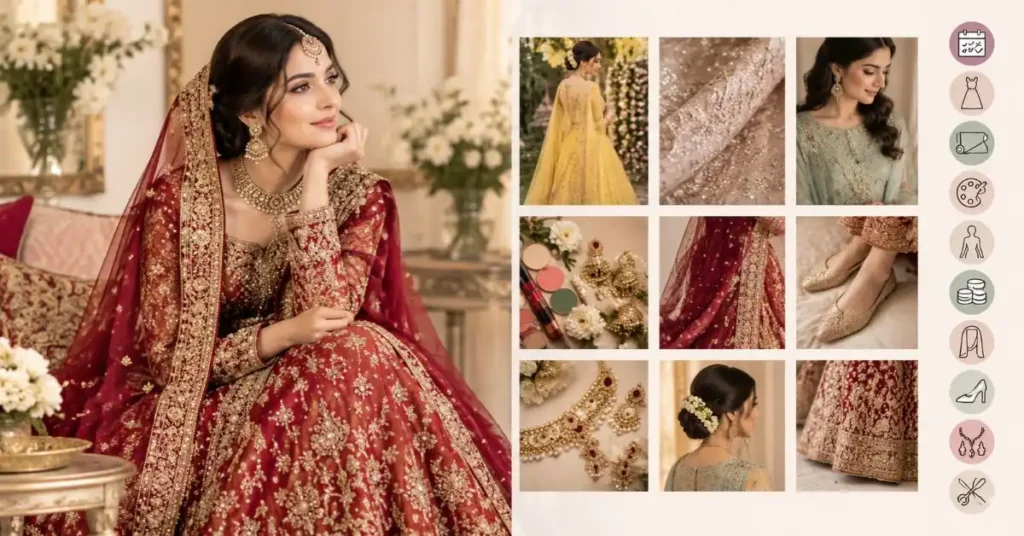
Choosing a bridal outfit becomes easier when you work through a clear process. Start with the ceremony and budget, then evaluate the silhouette, fabric, fit, color, and finishing details.
Step 1: Set your budget. Decide how much you can spend on the outfit before visiting boutiques or contacting designers. Include alterations, shoes, jewelry, dupatta finishing, and any delivery fees. This gives you a more realistic view of the total cost.
Step 2: Choose the silhouette. Decide whether you prefer a lehenga, gharara, sharara, pishwas, or maxi. Consider how much volume you want and whether you need to move comfortably throughout the event.
Step 3: Select the fabric. Match the fabric to the season, venue, and amount of embroidery. Ask whether the garment includes lining, a stiff underskirt, or additional layers that could increase its weight.
Step 4: Finalize the color. Consider your personal taste, jewelry, venue, and the overall wedding palette. Request fabric samples when ordering remotely, if available.
Step 5: Review the fit. Check the shoulders, bodice, waist, sleeves, and hem. A garment should allow you to sit, walk, raise your arms, and breathe comfortably.
Step 6: Plan the accessories. Decide how you will wear the dupatta and which jewelry pieces will complement the embroidery. Avoid purchasing accessories before you know the outfit’s final design.
Step 7: Confirm the timeline. Agree on measurements, fitting dates, delivery arrangements, and alteration deadlines with the seller or tailor. Leave enough time to resolve fit issues before the wedding.
Bridal Dress Selection Checklist
Use this checklist before paying for a ready-made or custom outfit.
- Does the design suit the wedding function?
- Is the total cost within my budget?
- Does the fabric suit the season and venue?
- Can I sit, walk, and move comfortably?
- Is the skirt or trouser length practical?
- Does the lining provide suitable coverage?
- Is the embroidery secure and neatly finished?
- Does the dupatta stay in place?
- Do the shoes work with the final hem length?
- Have I confirmed alterations and delivery dates?
- Do I understand the garment’s cleaning requirements?
- Do I feel comfortable and confident in the complete outfit?
How to Style Pakistani Bridal Wear
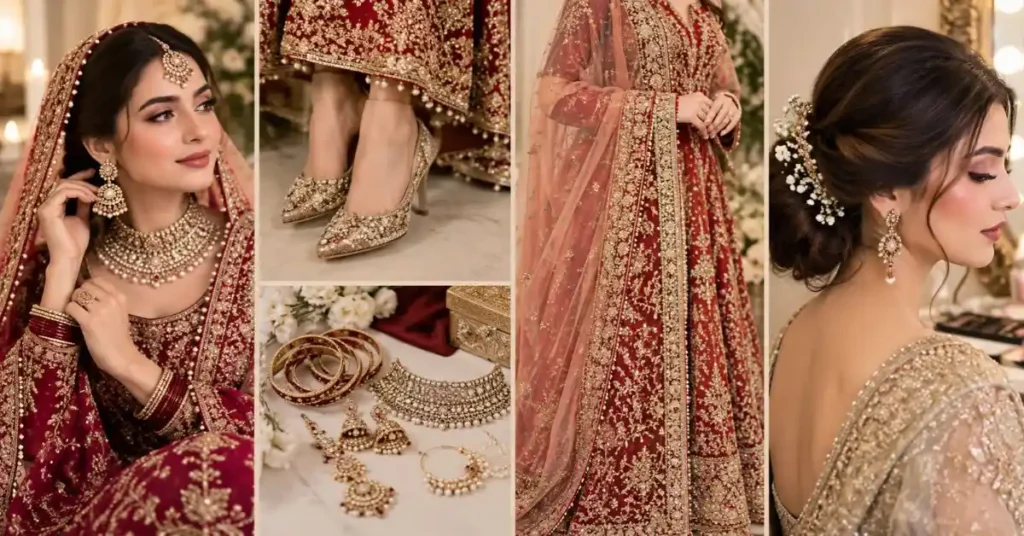
Discover Pakistani bridal dresses, from lehengas to ghararas. Explore elegant colors, fabrics, wedding styles, and practical tips for your perfect bridal look.
Accessories complete a bridal look, but they work best when they support the outfit rather than compete with it. Consider the embroidery, neckline, sleeves, and dupatta before choosing jewelry.
Jewelry: Heavy embroidery can already create a strong focal point. In that case, choose jewelry that complements the neckline and decorative work. A simpler outfit may allow more prominent earrings, a necklace, or a traditional headpiece.
Footwear: Match shoes to the outfit’s length and your comfort. Heels can change posture and the way a skirt falls, so wear the actual wedding shoes during your final fitting. If you expect a long event, consider a comfortable backup pair.
Dupatta: Decide whether you want a head drape, a shoulder drape, or a two-dupatta arrangement. Secure the fabric with suitable pins and test the style while walking and sitting. A very heavy dupatta may need additional support.
Hair and makeup: Coordinate the overall look with the outfit’s color and level of detail. A heavily decorated ensemble may look balanced with a simpler hairstyle, while a minimalist outfit can support a more noticeable accessory or makeup choice.
Handbag: A small clutch can hold essentials without distracting from the outfit. Check that its color and embellishment complement the dress.
A simple bridal styling framework
Use this sequence to keep your look coordinated:
- Choose the bridal outfit and finalize its color.
- Identify the strongest design feature, such as the neckline, embroidery, or skirt.
- Select jewelry that complements that feature.
- Finalize the dupatta drape and secure it comfortably.
- Match footwear to the outfit’s length and event duration.
- Coordinate hair and makeup with the full look.
- Try everything together before the wedding day.
Bridal Shopping, Customization, and Common Mistakes
Bridal shopping often involves several decisions at once. A little planning can help you avoid rushed purchases, unexpected costs, and last-minute alterations.
Start by comparing the actual construction of the outfits you like. Ask about the fabric composition, lining, embroidery method, closure, and alteration options. If you order online, request clear photographs of the front, back, neckline, sleeves, borders, and embroidery. Check the size chart and return or alteration policy before paying.
Custom outfits need a realistic timeline. Ask the designer or tailor when measurements, first fitting, final fitting, and delivery will take place. Keep written confirmation of the agreed design, color, embellishment, and price. Avoid leaving major alterations until the final few days.
Watch for these common mistakes:
- Choosing appearance over comfort: An extremely heavy outfit may look impressive but become tiring during a long event.
- Ignoring the complete cost: Alterations, accessories, and footwear can add to the original price.
- Copying a photograph without checking construction: Fabric, lighting, body measurements, and tailoring affect the final result.
- Overloading the look: Too many statement accessories can compete with detailed embroidery.
- Skipping the final fitting: Even a small change in hem length or bodice fit can affect movement and photographs.
- Ignoring garment care: Incorrect washing, ironing, or storage can damage delicate fabrics and embellishments.
- Ordering too late: Delays in stitching, shipping, or alterations can create unnecessary stress.
A bridal outfit does not need the most expensive fabric or the heaviest embroidery to look elegant. Good tailoring, thoughtful color coordination, suitable proportions, and comfortable construction can make a meaningful difference.
Caring for Your Bridal Outfit After the Wedding
A bridal outfit may hold sentimental as well as financial value. Proper care helps preserve its fabric, color, embroidery, and shape for future use or storage.
After the event, allow the outfit to air in a clean, dry space before storing it. Remove any detachable accessories and keep them separately. If you notice food, makeup, or other stains, avoid rubbing the area or applying household cleaners without checking the fabric’s care requirements.
Read the care label and consult a professional cleaner who has experience with bridal garments. Tell the cleaner about delicate fabric, metallic thread, beads, sequins, and other embellishments. Different materials need different treatment, so one cleaning method does not suit every outfit.
For storage, use a clean, dry space away from direct sunlight. Protect delicate embroidery from snagging, and avoid placing heavy items on top of the garment. A very heavy bridal outfit may stretch if you leave it hanging for a long time, so ask a specialist about the best storage method for its construction.
Check the garment occasionally for loose threads, damaged fastenings, or signs of moisture. Addressing small issues early can make future repairs easier.
Frequently Asked Questions About Pakistani Bridal Dresses
1. What are the most popular Pakistani bridal dress styles?
Lehenga choli, sharara, gharara, pishwas, Anarkali, formal shalwar kameez, and bridal maxi styles are popular options. The best choice depends on the ceremony, personal preference, fabric, and desired level of embellishment.
2. Which color is best for a Pakistani bridal outfit?
Red remains a familiar traditional choice, but maroon, burgundy, gold, pink, emerald, ivory, champagne, and pastel shades can also work beautifully. Choose a color that complements your personal style and wedding plans.
3. What should a bride wear for Mehndi?
A lehenga, sharara, gharara, or flowing traditional outfit can suit Mehndi. Bright colors and festive details work well, but prioritize comfortable footwear and freedom of movement if the celebration includes dancing.
4. Which outfit is suitable for Nikah?
A bride may choose a pishwas, gharara, formal shalwar kameez, Anarkali, or maxi. The final choice can reflect personal taste, family preferences, and the ceremony’s dress code.
5. Which fabric is best for bridal wear?
Raw silk, velvet, organza, chiffon, net, and tissue each offer different qualities. Consider the season, garment weight, embroidery, lining, and cleaning requirements before choosing.
6. What is the difference between a sharara and a gharara?
A sharara usually has wide-legged trousers that flare along the legs. A traditional gharara has a more defined flare around the knee. Modern designs vary, so check the garment’s actual construction.
7. How can I make my bridal outfit more comfortable?
Choose the right size, test the outfit with your wedding shoes, secure the dupatta, and practice sitting and walking in the complete ensemble. Ask your tailor to correct any pulling, tightness, or excessive hem length before the event.
8. When should I order a custom bridal dress?
Start early enough to allow for design approval, fabric sourcing, stitching, fittings, and alterations. The required lead time varies by designer and garment complexity, so confirm a realistic schedule directly with the seller.
9. How should I care for a heavily embroidered bridal dress?
Follow the care label and consult a specialist cleaner experienced with embellished garments. Avoid machine washing or ironing directly over embroidery unless the garment’s care instructions specifically permit it.
Final Thoughts on Pakistani Bridal Dresses
The best Pakistani bridal dresses combine cultural expression, personal style, thoughtful craftsmanship, and practical comfort. A lehenga can create a grand traditional look, a gharara or sharara can offer a distinctive flowing silhouette, and a pishwas or maxi can provide a graceful alternative.
Start with the wedding event and your budget. Then choose the silhouette, fabric, color, embroidery, and accessories that work together. Check the complete outfit before the wedding so you can move comfortably and enjoy the occasion.
Most importantly, choose a bridal look that feels right for you. Trends can offer inspiration, but careful fitting, coordinated details, and confidence will make your outfit more meaningful.
Zahida Amir is the creative force behind Style Aura Dresses, a multicultural fashion blog. With a passion for timeless elegance, she curates easy-to-follow style guides that help readers find the perfect look for every occasion.
Pingback: How to Style a Red Dress: 11 Stunning Outfit Ideas