
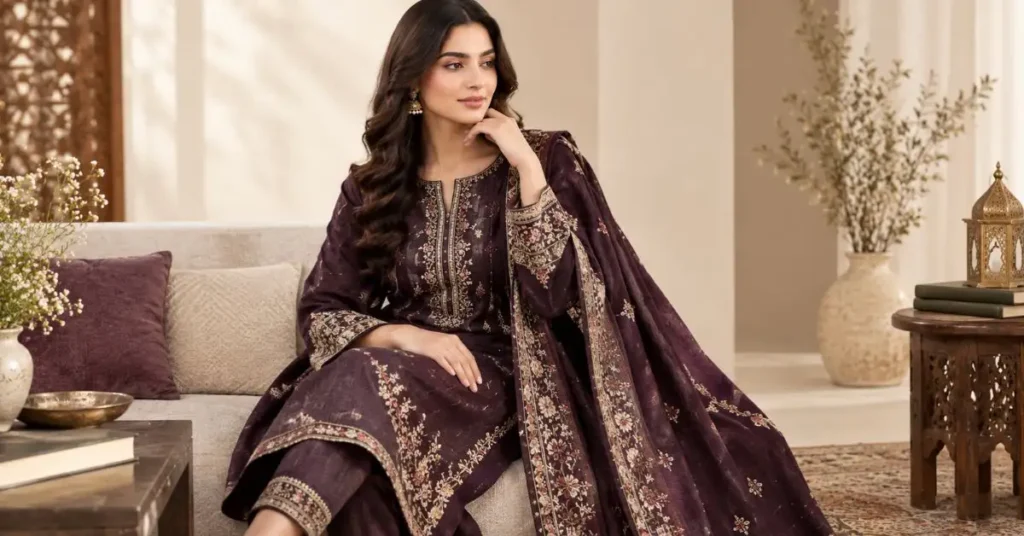
Quick Answer
An embroidered khaddar suit combines textured winter fabric with decorative threadwork, making it a popular choice for everyday wear, office outfits, family gatherings, and seasonal celebrations. Choose a comfortable fabric weight, suitable embroidery, flattering colors, and a well-fitted silhouette to create a stylish winter outfit.
Author Box
Author: Zahida Amir
Role: Founder & Fashion Content Creator
Experience: Fashion styling, dress trends, outfit inspiration, seasonal fashion, fabrics, clothing care, and everyday wardrobe ideas.
Content Approach: Original fashion research, practical styling guidance, and trusted fashion resources designed to help readers make confident clothing and styling choices.
Introduction
An embroidered khaddar suit offers a beautiful way to combine traditional Pakistani fashion with practical winter dressing. Its textured fabric and decorative embroidery can create an elegant outfit for everyday activities, office wear, family gatherings, and festive occasions. However, choosing the right design involves more than selecting an attractive color or embroidery pattern.
The fabric weight, stitching quality, shirt length, trouser style, and overall fit can all affect how a suit looks and feels. A heavily embroidered design may suit a formal gathering, while a simpler pattern can work better for daily wear. Similarly, a rich winter color can create a sophisticated appearance, but the right choice also depends on your personal style and the occasion.
Khaddar suits come in different fabric compositions, textures, colors, and embroidery styles. Some designs feature delicate floral threadwork, while others use geometric patterns, decorative necklines, embroidered borders, or contrasting sleeves.
In this guide, Style Aura Dresses explores how to choose and style an embroidered khaddar suit without sacrificing comfort. You will discover popular designs, winter color combinations, fabric-selection tips, outfit ideas, and practical clothing-care advice. You will also learn how to evaluate a suit before buying it so that your winter wardrobe reflects your preferences, budget, and everyday needs.
What Makes an Embroidered Khaddar Suit a Good Winter Choice?
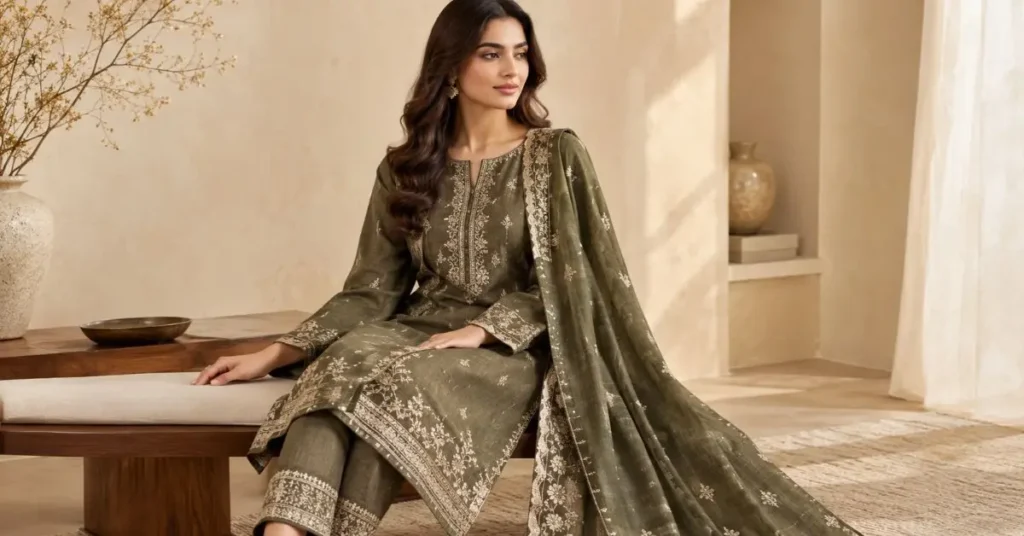
An embroidered khaddar suit combines khaddar fabric with decorative stitching or threadwork. Khaddar commonly refers to textured woven fabric used in South Asian clothing, particularly winter collections. Its exact composition varies by garment, so always check whether a particular suit contains cotton, wool, synthetic fibers, or a blend.
The appeal of this outfit comes from the balance between texture and decoration. Khaddar provides a distinctive surface, while embroidery adds detail to the shirt, sleeves, neckline, trousers, or dupatta.
Popular Embroidery Styles
Different embroidery patterns create different visual effects.
- Floral embroidery: Flowers and leaves give the outfit a soft, traditional appearance.
- Geometric embroidery: Lines, diamonds, and repeated shapes create a neat, structured look.
- Neckline embroidery: Decorative stitching around the neckline adds detail without covering the entire shirt.
- Sleeve embroidery: Embroidered cuffs and sleeve borders make a simple shirt look more refined.
- Border embroidery: Decorative hems can create a coordinated appearance across the shirt and trousers.
- Contrasting threadwork: Embroidery in a different color creates visible contrast against the fabric.
A simple design with carefully placed embroidery can work well for everyday wear. More elaborate threadwork may suit dinner gatherings, winter celebrations, and formal family events.
Why Fabric Quality Matters
The word khaddar alone does not guarantee a particular level of warmth or softness. Fabric construction, fiber content, thickness, and finishing all influence comfort.
A thicker fabric may provide more coverage in cool weather, but it can feel uncomfortable indoors or in warmer conditions. A lighter version may offer easier movement and more flexibility for daily activities.
Before buying, touch the material if possible. Check its surface, thickness, stitching, and ability to move comfortably with your body.
You can also explore the traditional outfit inspiration in our Pakistani Dresses collection for ideas on coordinating ethnic clothing with your personal style.
Beautiful Embroidered Khaddar Suit Designs for Women
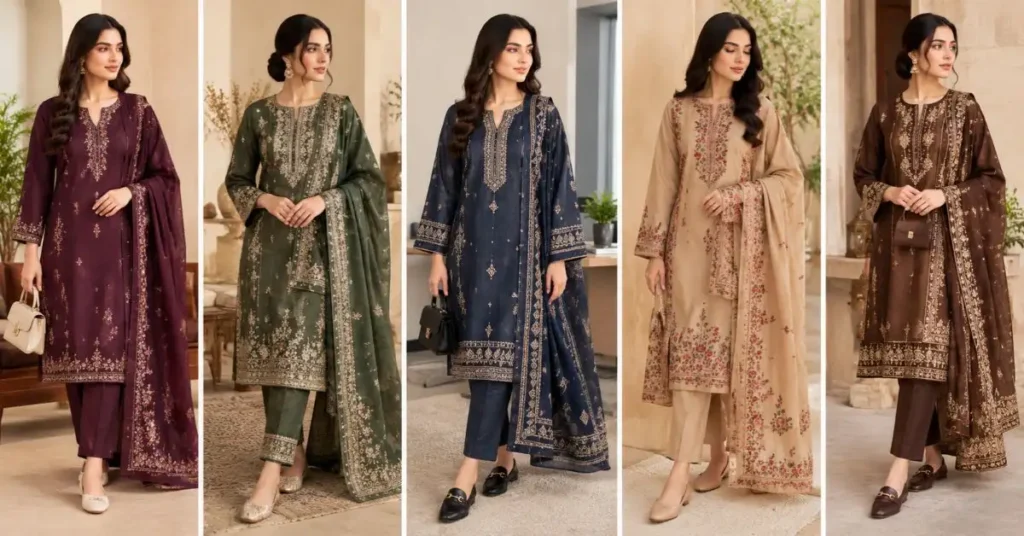
The best embroidered khaddar suit design depends on your lifestyle, preferred colors, and the occasions you attend. You do not need the most heavily decorated outfit to create an elegant appearance. Often, balanced embroidery and good tailoring make a stronger impression.
Here are several designs worth considering.
Minimal floral khaddar suits
Small floral motifs create a graceful appearance without making the fabric look overcrowded. Choose a suit with embroidery around the neckline, cuffs, or shirt hem.
This design works well for everyday errands, casual lunches, and family visits. Pair it with plain trousers and comfortable flats to keep the outfit practical.
Traditional embroidered three-piece suits
A three-piece suit generally includes a shirt, trousers, and dupatta. Coordinated embroidery across these pieces can create a complete traditional outfit.
For a balanced result, choose a shirt with moderate embroidery and a dupatta that complements rather than competes with the main design. If the shirt already contains detailed threadwork, a simpler dupatta can make the outfit easier to style.
Geometric khaddar designs
Geometric embroidery suits women who prefer clean lines and a more structured appearance. Repeated shapes along the neckline, sleeves, or front panel can make the outfit look coordinated.
Pair geometric designs with straight trousers and understated accessories. This approach works particularly well for office wear and daytime gatherings.
Embroidered shirts with plain trousers
A shirt with detailed embroidery and plain trousers creates an easy balance. The embroidered shirt becomes the main feature, while the trousers provide a calmer finish.
This combination is especially useful when you want a polished outfit without purchasing matching embroidered pieces.
Contrasting embroidery designs
Contrasting threadwork adds definition to the garment. For example, cream embroidery on navy fabric or muted gold thread on deep brown fabric can create an elegant appearance.
When selecting contrasting colors, consider the overall balance. Too many bright thread colors may compete for attention, particularly when the suit also includes printed fabric or a decorative dupatta.
Suit Design Comparison
| Suit Design | Best For | Suitable Season | Styling Idea |
|---|---|---|---|
| Minimal floral embroidery | Daily wear and casual visits | Cool autumn and winter days | Add plain trousers and comfortable flats |
| Three-piece embroidered suit | Family gatherings and festive occasions | Winter | Coordinate the dupatta with the embroidery |
| Geometric embroidery | Office wear and daytime events | Cool weather | Choose straight trousers and simple accessories |
| Embroidered shirt with plain trousers | Everyday styling | Autumn and winter | Let the shirt remain the focal point |
| Contrasting threadwork | Dinners and celebrations | Winter | Match accessories to one embroidery color |
Remember that the best design is one you can wear comfortably and style for more than one occasion. Before buying, consider whether the garment will work with your existing shoes, bags, and winter layers.
Best Colors for an Embroidered Khaddar Suit
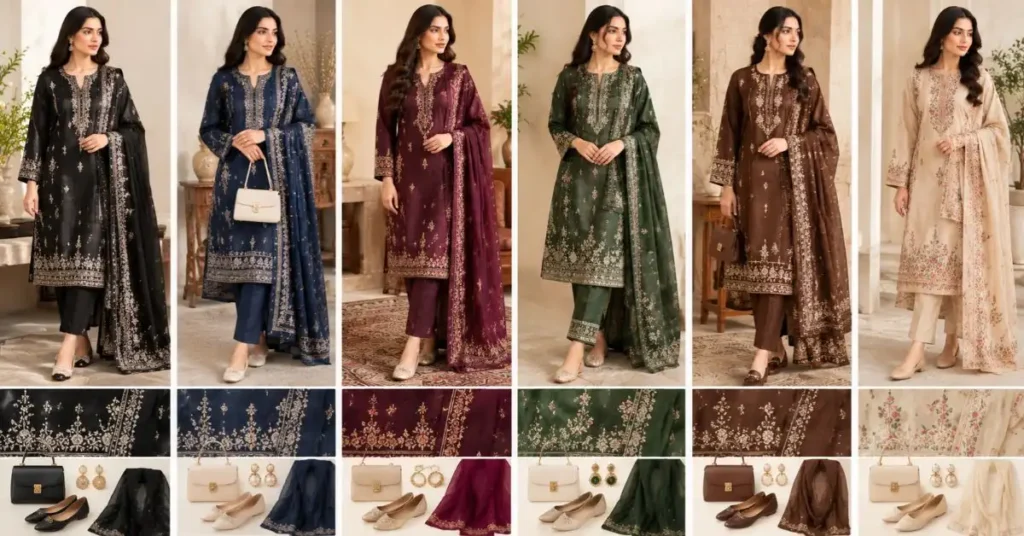
Color can change the overall mood of a winter outfit. Deep shades often create a rich appearance, while lighter neutrals offer a softer and more understated look.
However, no single color suits every person or occasion. Consider your preferences, the type of embroidery, and how easily you can coordinate the suit with other wardrobe pieces.
Black: Black provides a versatile background for silver, gold, cream, and contrasting threadwork. A black embroidered khaddar suit can work for office wear, dinners, and evening gatherings. Pair it with neutral footwear or accessories that repeat a color from the embroidery.
Navy blue: Navy creates a polished appearance without relying on a very bright color. Cream, silver, muted gold, and light blue embroidery can all complement it. A navy suit with straight trousers is a practical option for regular winter wear.
Maroon and burgundy: These deep red shades create a rich color combination for winter outfits. Gold, beige, and antique-gold threadwork can complement them. Keep the remaining accessories relatively simple if the shirt already has detailed embroidery.
Bottle green: Deep green offers an alternative to traditional black and navy. Gold, cream, and muted pink embroidery can provide attractive contrast. Choose neutral shoes and a coordinating dupatta to keep the outfit balanced.
Brown and camel: Earthy shades work well with cream, beige, ivory, and antique-gold embroidery. These colors are especially useful when you prefer a warm, understated wardrobe.
Cream and beige: Lighter shades can create a refined daytime appearance. However, consider the fabric’s opacity, lining, and care requirements before choosing a light-colored suit.
How to Coordinate Colors
Start with the main fabric color. Then identify the dominant embroidery shade and select accessories that repeat or complement it.
For example, a navy suit with cream embroidery can work with beige footwear and a cream dupatta. A maroon suit with gold detailing may look balanced with neutral shoes and understated gold jewelry.
You can also use a simple three-color approach:
- Choose the main suit color.
- Select one complementary color from the embroidery or dupatta.
- Introduce a neutral shade through footwear, a handbag, or an outer layer.
This approach makes coordination easier without requiring every item to match exactly.
For additional color-coordination inspiration, explore our guide to the blue and black dress, which explains how contrasting shades can work together in an outfit.
How to Choose the Right Khaddar Fabric and Fit
A beautiful design will not feel successful if the suit restricts movement, feels too heavy, or requires more care than you can manage.
Start by considering the weather and the amount of time you expect to spend wearing the outfit. A suit for commuting and office work may need a different fabric weight from one intended for a short evening gathering.
Check the Fabric Composition
Khaddar garments may contain different fibers or fiber blends. These differences affect softness, warmth, drape, shrinkage, and washing requirements.
Read the product description or garment label before buying. If you are purchasing fabric for stitching, ask the seller about its composition, expected shrinkage, and recommended care.
A heavier fabric may feel suitable for colder days, while a lighter version can be easier to wear indoors. Neither option is automatically better; the right choice depends on your climate and intended use.
Choose a Comfortable Fit
A well-fitted shirt should allow you to sit, walk, reach, and move your arms without pulling across the shoulders or chest.
Check the following areas:
- Shoulders: Seams should sit comfortably without digging into the skin.
- Chest: The fabric should not pull or form unwanted tension lines.
- Sleeves: You should be able to bend your elbows easily.
- Waist and hips: The shirt should provide enough room for comfortable movement.
- Length: The hem should suit your preferred silhouette and trouser style.
- Trousers: The waistband should feel secure without being restrictive.
If you plan to wear a thermal layer underneath, allow enough room for it during fitting.
Select a Suitable Silhouette
Straight shirts offer a clean, versatile appearance. A-line shirts gradually widen toward the hem and can provide extra room around the hips. Longer shirts create a traditional look, while shorter styles may suit particular trouser cuts and personal preferences.
The right silhouette is the one that feels comfortable and creates the appearance you want.
Consider Stitching and Embroidery Quality
Examine the embroidery closely. Look for secure threads, neat finishing, and consistent stitching. Check the inside of the garment for loose threads or rough areas that might irritate your skin.
Pay special attention to cuffs, necklines, and heavily embroidered panels because these areas receive regular movement and handling.
If you are buying online, review the size chart, fabric details, product photographs, and return policy before placing an order.
Styling an Embroidered Khaddar Suit for Different Occasions
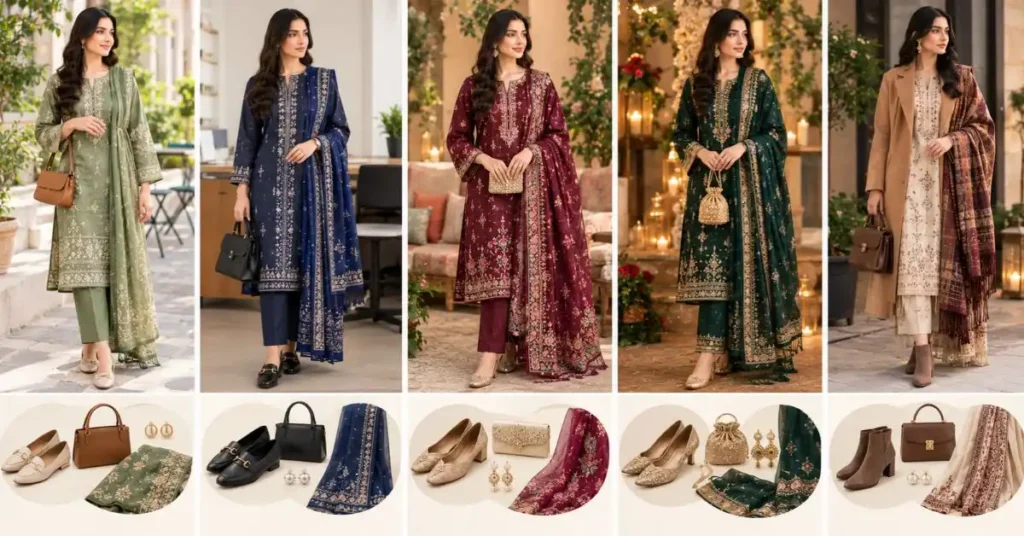
An embroidered khaddar suit can work for several settings when you adjust its accessories, footwear, and layering.
The key is to match the overall appearance to the occasion rather than wearing the same styling combination everywhere.
For everyday wear
Choose a lightweight or moderately weighted suit with simple embroidery. Plain trousers reduce visual clutter and make the outfit easier to coordinate.
Flat shoes, a practical handbag, and minimal jewelry are useful for errands, shopping, and casual family visits.
Avoid choosing a heavily embellished suit for tasks that involve frequent movement or physical activity. Decorative threads can catch on rough surfaces, while a bulky outfit may feel inconvenient during a long day.
For office wear
A straight embroidered shirt with matching trousers creates a polished traditional outfit. Choose subtle embroidery around the neckline, cuffs, or front panel.
Closed-toe flats, loafers, or low heels can complement the outfit. A neutral handbag and simple earrings help maintain a professional appearance.
Consider your workplace dress code and indoor temperature. A heavy suit may feel uncomfortable in a heated office, even when outdoor weather is cold.
For family gatherings
Family lunches, dinners, and visits provide room for more decorative designs. Floral embroidery, contrasting threadwork, and coordinated dupattas can make the outfit feel special.
Choose comfortable footwear if you expect to stand or walk for extended periods. If the gathering involves sitting on the floor, check that the shirt and trousers allow you to move comfortably.
For festive occasions
A richer color, detailed neckline, embroidered sleeves, or decorative borders can create a more formal appearance.
You can introduce gold or silver jewelry, a small handbag, and dressier footwear. However, avoid adding too many competing details when the suit already features heavy embroidery.
For evening events
Deep colors and carefully coordinated accessories can create a refined winter look. A maroon suit with gold threadwork or a navy design with silver details can work well for dinners and celebrations.
Consider the event’s formality before choosing footwear and jewelry. A family dinner may require a simpler outfit than a formal celebration.
Occasion-Based Styling Guide
| Option | Best Occasion | Key Benefit | Styling Tip |
|---|---|---|---|
| Minimal embroidered suit | Daily errands | Easy to wear and coordinate | Use flat shoes and a practical bag |
| Straight embroidered suit | Office and meetings | Neat, structured appearance | Choose understated jewelry |
| Floral three-piece suit | Family gatherings | Coordinated traditional look | Keep the dupatta complementary |
| Deep-colored formal suit | Evening celebrations | Rich, polished appearance | Add restrained metallic accessories |
| Light-colored embroidered suit | Daytime events | Soft, elegant appearance | Check opacity and select neutral footwear |
Shoes, Jewelry, Dupattas, and Winter Layers
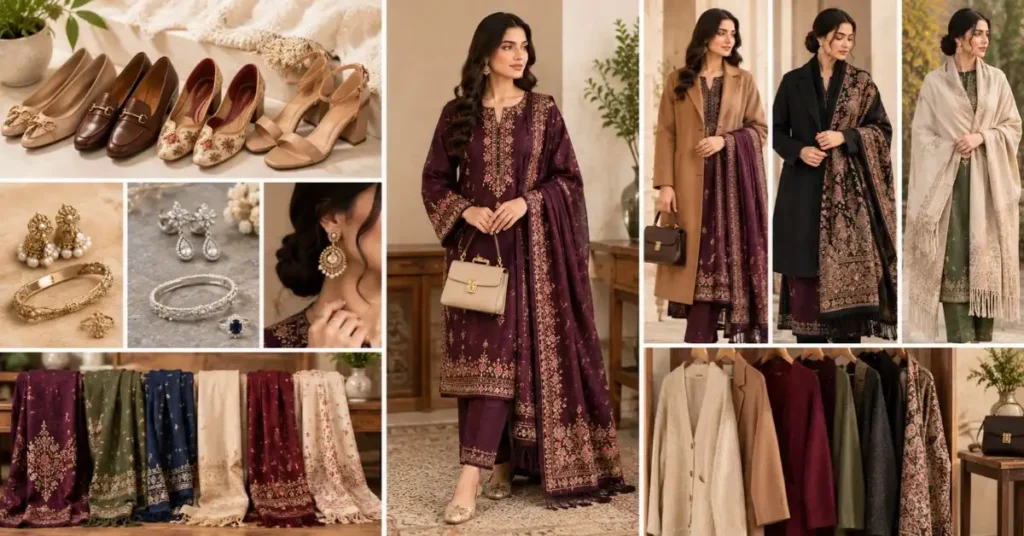
Accessories can improve an outfit, but they should support the embroidered khaddar suit rather than compete with it.
Begin by identifying the strongest feature of your suit. If the neckline has heavy threadwork, you may not need a large necklace. If the shirt is relatively simple, you have more freedom to introduce statement earrings or a decorative dupatta.
Choose the Right Footwear
For daily wear, comfortable flats, loafers, and low heels offer practical choices. Select shoes that support your feet and suit the amount of walking you expect to do.
For a formal gathering, dressier flats, block heels, or traditional footwear may complement the suit. Consider the trouser length before choosing shoes so that the hem does not drag on the ground.
Neutral footwear is particularly useful when you own suits in several colors. Beige, tan, black, and brown can coordinate with many winter outfits.
Match Jewelry to the Embroidery
Gold jewelry can complement warm shades such as maroon, brown, and bottle green. Silver jewelry can create a cooler contrast with navy, black, and some pastel colors.
These are styling suggestions rather than strict rules. Choose jewelry based on your preferences and the actual shades in your outfit.
For heavily embroidered suits, try small earrings, a bracelet, or a simple ring. With minimal embroidery, statement earrings or a necklace may add interest.
Style the Dupatta Carefully
A dupatta can introduce another color or reinforce the suit’s existing palette.
A plain dupatta often works well with a heavily embroidered shirt. Conversely, a decorative dupatta can add interest to a simpler suit.
Check the fabric weight and drape. A bulky dupatta combined with thick khaddar can make the overall outfit feel heavy, particularly indoors.
Add Practical Winter Layers
A cardigan, shawl, or coat can provide extra warmth when temperatures drop.
Choose an outer layer that allows your arms to move comfortably and does not pull against the embroidered sleeves. If the shirt already has a decorative neckline, consider an open-front layer that leaves the detail visible.
For a coordinated appearance, select a neutral layer or repeat one of the suit’s embroidery colors.
Remember that your comfort matters more than following a strict color rule. The best accessories are those that suit the occasion, fit your budget, and allow you to enjoy wearing your outfit.
Common Mistakes to Avoid When Buying an Embroidered Khaddar Suit
Small purchasing mistakes can affect how often you wear a suit and how long it remains in good condition.
Choosing a design without checking the fabric
An attractive photograph cannot tell you everything about a fabric’s thickness, softness, or composition. Read the product details and ask questions when important information is missing.
Assuming every khaddar suit offers the same warmth
Fabric weight and composition vary. A thin khaddar garment may not provide enough warmth for particularly cold weather, while a heavy version may feel uncomfortable in a heated room.
Choose according to your local conditions and intended use.
Ignoring the size chart
Sizes can vary between brands and sellers. Do not rely on a label such as small, medium, or large alone.
Compare the garment measurements with a suit you already own and find comfortable. Check shoulder width, chest, shirt length, sleeve length, and trouser measurements.
Selecting embroidery that is difficult to maintain
Heavy threadwork, beads, and decorative embellishments may require special care. If you prefer low-maintenance clothing, choose simpler embroidery and check the cleaning instructions before buying.
Overloading the outfit with accessories
A suit with detailed embroidery already has visual interest. Large jewelry, a heavily decorated dupatta, bright footwear, and a statement handbag can compete with one another.
Choose one or two accessories that complement the main design.
Buying a color without considering your wardrobe
Before purchasing a new suit, consider which shoes, dupattas, shawls, and bags you can wear with it.
A versatile color may provide more outfit combinations than a highly specific shade you can wear only once.
Ignoring tailoring costs
If you purchase unstitched fabric, include stitching and finishing costs in your budget. Ask your tailor about lining, sleeve construction, trouser style, and embroidery placement before work begins.
A good design still needs comfortable tailoring to work well.
How to Care for an Embroidered Khaddar Suit
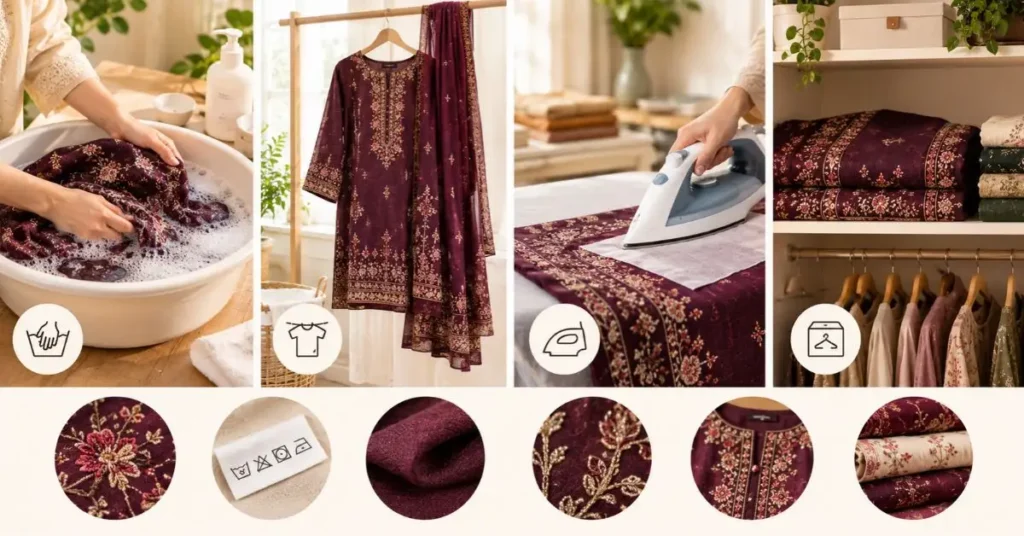
Proper clothing care helps protect the fabric, preserve embroidery, and reduce avoidable damage.
The correct method depends on the garment’s fiber composition, dyes, construction, and decorative details. Always follow the care label rather than assuming every khaddar suit can be washed in the same way.
Washing
Before washing, inspect the garment for loose threads, delicate embellishments, and stains.
If the label permits hand washing, use an appropriate detergent and handle the embroidered areas gently. Avoid aggressive rubbing, twisting, or scrubbing because these actions may damage the threadwork or distort the fabric.
For garments with dense embroidery, metallic thread, beads, or delicate finishing, professional cleaning may be the safer option.
Do not automatically place an embroidered suit in a washing machine simply because the base fabric appears sturdy.
Drying
Follow the care instructions for the specific garment.
When the label permits air drying, avoid rough handling and direct heat. Support the garment properly so that wet fabric does not stretch under its own weight.
Avoid wringing embroidered areas. Excessive twisting can place unnecessary stress on both the fabric and decorative stitching.
Ironing
Check the recommended iron temperature before pressing the suit.
Turn the garment inside out when appropriate, and avoid pressing directly over raised embroidery. A pressing cloth can help protect the surface, but delicate or embellished garments may require professional care.
Test an inconspicuous area first if the fabric instructions allow home ironing.
Storage
Make sure the suit is clean and completely dry before storing it.
Fold the garment carefully or hang it according to its construction and weight. Avoid placing heavy objects on embroidered areas because pressure can flatten decorative details or create creases.
Store matching pieces together when practical, and keep the garment in a clean, dry place.
A Practical Checklist for Choosing the Best Embroidered Khaddar Suit
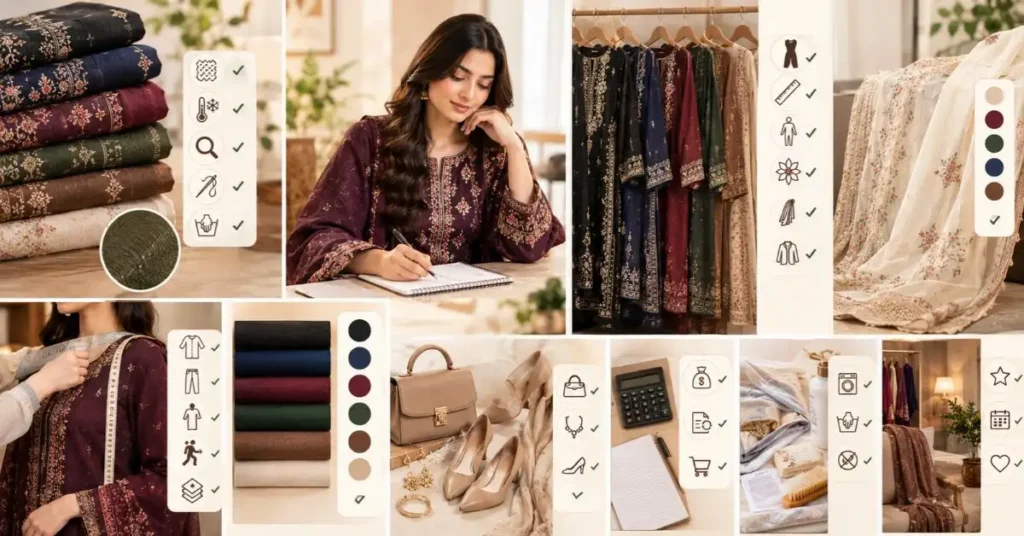
Before purchasing a suit, use this checklist to compare its appearance, quality, comfort, and overall value.
Fabric and Quality
- Check the fabric composition and thickness.
- Consider whether the material suits your local winter weather.
- Inspect the surface for uneven weaving or visible defects.
- Check the embroidery for loose threads and uneven stitching.
- Review the care instructions before purchasing.
Fit and Design
- Choose a shirt length that works with your preferred trouser style.
- Check shoulder, chest, sleeve, and trouser measurements.
- Make sure the suit allows comfortable movement.
- Decide whether floral, geometric, or minimal embroidery suits your style.
- Check whether the dupatta complements the shirt.
- Consider whether you need additional room for winter layers.
Color and Styling
- Select a color you enjoy wearing.
- Check that the embroidery contrasts or coordinates attractively with the fabric.
- Consider which shoes and handbags you already own.
- Choose jewelry that complements the level of embroidery.
- Make sure the outfit suits the occasion.
Budget and Practicality
- Compare the complete outfit price, including stitching if needed.
- Review the seller’s size information and return policy.
- Consider how frequently you expect to wear the suit.
- Check whether the fabric and embroidery require special cleaning.
- Avoid purchasing solely because a design appears fashionable.
This checklist helps you compare different options without focusing only on photographs or price. A suit that fits well, meets your comfort needs, and coordinates with your existing wardrobe may offer better practical value than one you rarely wear.
Frequently Asked Questions
What is an embroidered khaddar suit?
An embroidered khaddar suit is a traditional South Asian outfit made from khaddar fabric and decorated with threadwork. Depending on its design, the embroidery may appear on the neckline, sleeves, shirt front, trousers, or dupatta.
Is an embroidered khaddar suit suitable for winter?
Many khaddar suits suit cool-weather dressing, but their warmth depends on fabric thickness, composition, and construction. Check the material details before buying, especially if you need an outfit for very cold weather.
Which colors look elegant in embroidered khaddar suits?
Black, navy, maroon, bottle green, brown, cream, and beige are versatile options. The best choice depends on your personal preferences, embroidery colors, and intended occasion.
Which embroidery is best for everyday wear?
Small floral motifs, simple neckline embroidery, and understated sleeve details work well for everyday outfits. These designs provide visual interest without making the suit look overly formal.
Can I wear an embroidered khaddar suit to the office?
Yes. Choose a comfortable suit with moderate embroidery, a practical silhouette, and coordinated trousers. Simple jewelry, comfortable footwear, and a structured handbag can complete the outfit.
How do I choose the right size?
Compare the garment measurements with a suit you already own and find comfortable. Check shoulder width, chest, sleeves, shirt length, and trousers. If you plan to wear thermal clothing underneath, allow enough room for layering.
How should I wash an embroidered khaddar suit?
Follow the garment’s care label. Use gentle handling when hand washing is permitted, and avoid rubbing or twisting embroidered areas. Delicate embellishments or complex threadwork may require professional cleaning.
Are embroidered khaddar suits suitable for formal occasions?
Yes. Deep colors, carefully placed embroidery, coordinated dupattas, and refined accessories can create an elegant outfit for dinners, family celebrations, and selected festive events.
How can I style a simple embroidered khaddar suit?
Pair the suit with plain trousers, comfortable shoes, and a complementary dupatta. Add simple jewelry and a coordinated handbag. Keeping the remaining pieces understated allows the embroidery to remain the main feature.
What should I check before buying an unstitched khaddar suit?
Check the fabric composition, available fabric length, embroidery placement, color accuracy, stitching requirements, and care instructions. Include tailoring costs in your budget and confirm whether the fabric provides enough material for your preferred design.
Final Thoughts
An embroidered khaddar suit can be a practical and elegant addition to a winter wardrobe when you choose the right fabric, fit, color, and embroidery. Simple floral designs work well for everyday wear, while richer threadwork and coordinated accessories can create a more formal appearance.
Focus on comfort, fabric quality, and versatility rather than following every fashion trend. Check the measurements, understand the care requirements, and choose a design that suits the occasions you attend most often.
At Style Aura Dresses, our goal is to make fashion choices easier through useful styling ideas and practical clothing guidance. With thoughtful selection and proper care, you can enjoy your embroidered khaddar suit throughout the season.
Zahida Amir is the creative force behind Style Aura Dresses, a multicultural fashion blog. With a passion for timeless elegance, she curates easy-to-follow style guides that help readers find the perfect look for every occasion.