
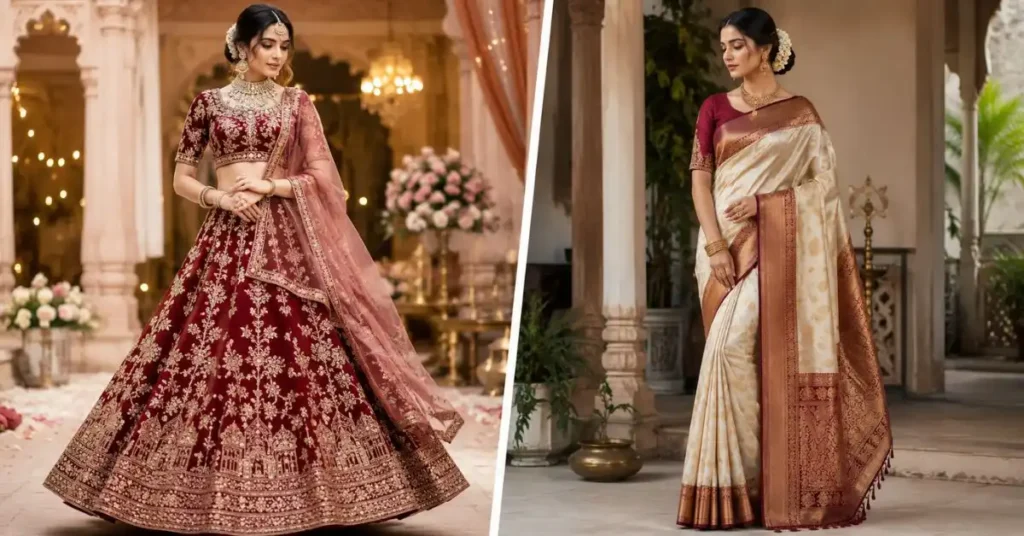
Indian ethnic fashion is celebrated around the world for its elegance, craftsmanship, and cultural significance. Among the most iconic garments are the lehenga and the saree, both of which have been cherished for generations. While they often appear at weddings, festivals, and formal celebrations, many people still wonder about the difference between lehenga and saree and which option best suits their style and occasion.
Although both ensembles represent India’s rich textile heritage, they differ in construction, styling, comfort, and overall appearance. A lehenga offers a structured silhouette with coordinated pieces, while a saree showcases timeless grace through the art of draping. Choosing between the two depends on factors such as the event, personal comfort, fashion preferences, and cultural traditions.
What is a Lehenga?
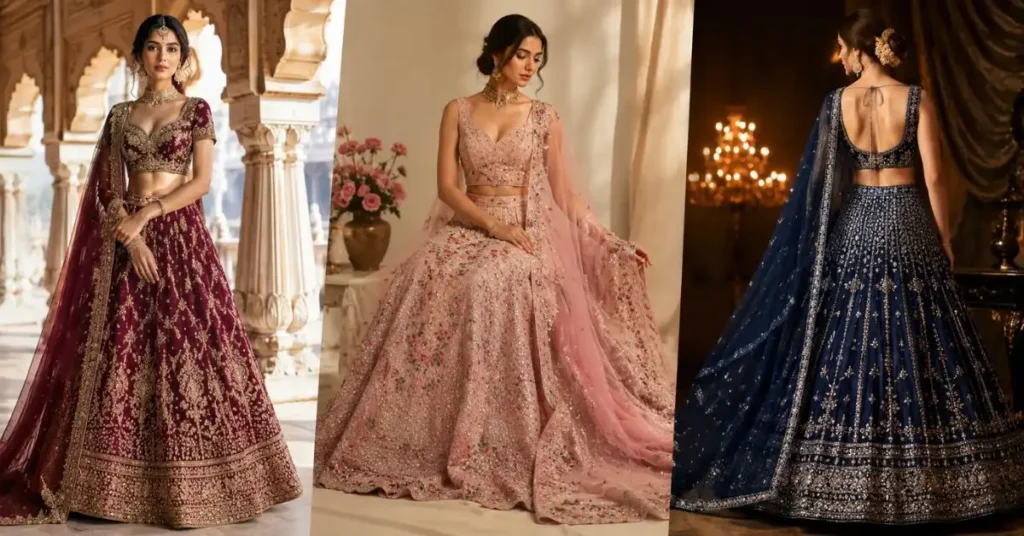
A lehenga is a traditional three-piece ensemble consisting of a long flared skirt, a fitted blouse known as a choli, and a dupatta. Originating from the royal courts of India, the lehenga has evolved into one of the most sought-after choices for weddings, festive celebrations, and grand occasions.
Modern lehengas are available in countless silhouettes, including A-line, circular, mermaid, panelled, and fishtail designs. Fashion designers continually reinvent this classic attire by experimenting with luxurious fabrics, intricate embroidery, contemporary cuts, and modern color palettes while preserving its traditional charm.
One of the biggest advantages of a lehenga is its versatility. The skirt and blouse can often be styled separately with other wardrobe pieces, allowing wearers to create multiple looks from a single ensemble. Whether paired with statement jewelry or kept minimal, a lehenga effortlessly blends elegance with modern fashion.
What Is a Saree?
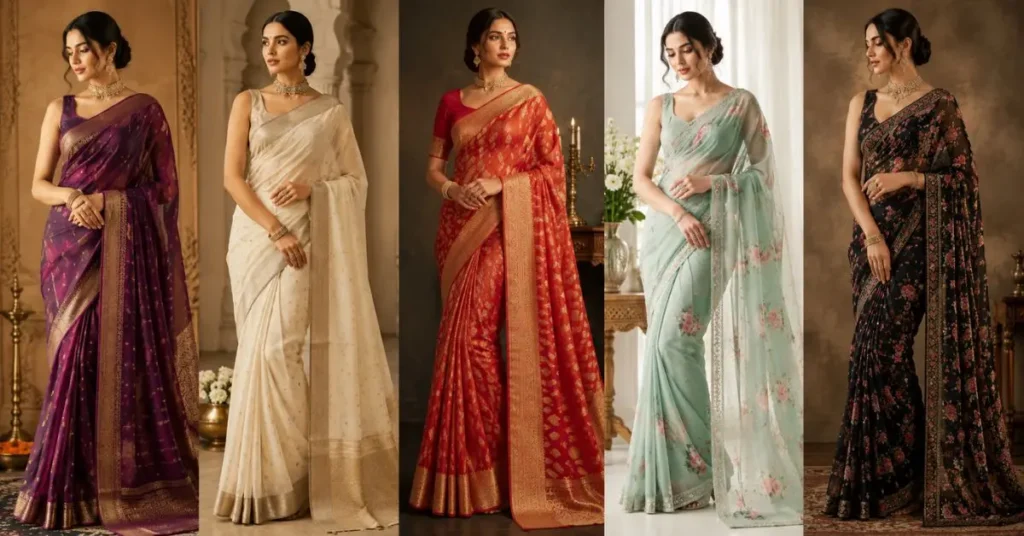
A saree is one of the oldest and most graceful forms of traditional Indian clothing. Unlike stitched garments, a saree is an unstitched length of fabric, usually measuring between five and nine yards, that is artfully draped around the body and paired with a fitted blouse and a petticoat.
The beauty of a saree lies in its versatility. A single piece of fabric can be draped in numerous regional styles, each reflecting centuries of cultural heritage and local traditions. From classic pleated drapes to contemporary pre-stitched versions, the saree continues to evolve while maintaining its timeless appeal.
Sarees are crafted using a wide variety of fabrics, including silk, cotton, chiffon, georgette, organza, crepe, linen, and satin. Decorative techniques such as hand embroidery, zari weaving, block printing, sequins, beadwork, and digital prints contribute to their unique character.
Difference Between Lehenga and Saree
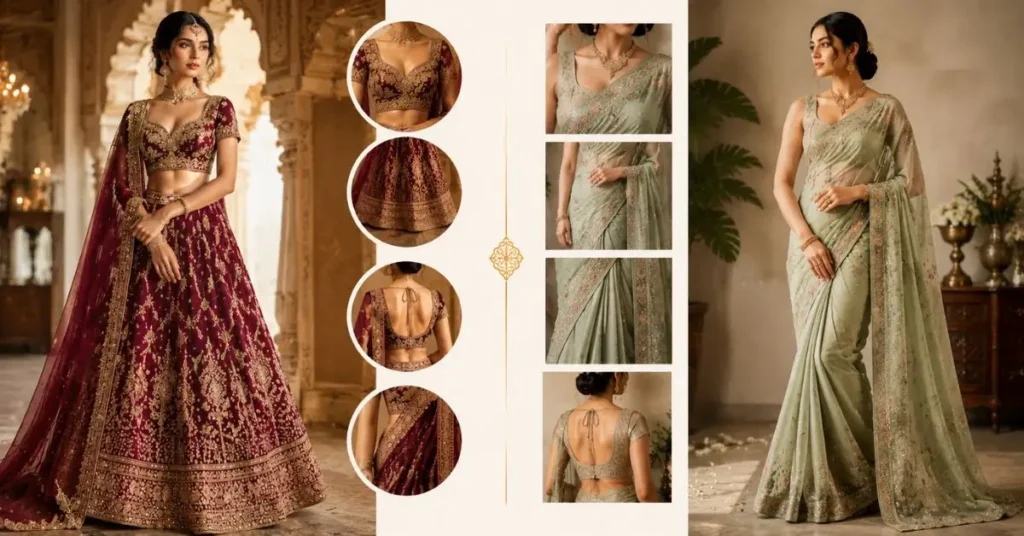
Understanding the difference between lehenga and saree goes beyond appearance. While both are treasured forms of Indian ethnic wear, they differ in their construction, styling, comfort, maintenance, and suitability for various occasions. Knowing these distinctions can help you choose the right ensemble with confidence.
Construction and Design
The most noticeable difference between Lehenga and Saree is how each garment is made. A lehenga is a stitched three-piece outfit that includes a skirt, blouse, and dupatta. Since the pieces are tailored, they provide a structured and ready-to-wear look.
A saree, by contrast, is an unstitched length of fabric that requires draping around the body. Its graceful appearance depends on the wearer’s draping technique, making each look unique.
Styling Flexibility
Another important difference between Lehenga and saree is styling versatility. Lehengas allow you to mix and match blouses, skirts, and dupattas with other wardrobe pieces, creating fresh looks without purchasing an entirely new outfit.
Sarees also offer styling flexibility through different blouse designs, belts, jackets, capes, and draping techniques. However, mastering various drapes often requires practice and experience.
Comfort and Ease of Wear
Comfort is often a deciding factor when comparing these two iconic garments. Many women find lehengas easier to wear because they are pre-stitched and require minimal preparation. Once dressed, the outfit remains secure throughout the event, making it an excellent choice for dancing and long celebrations.
A saree, while exceptionally elegant, usually takes more time to drape correctly. Maintaining neatly arranged pleats and a well-positioned pallu may require occasional adjustments, especially during active events.
Suitable Occasions
The Difference Between Lehenga and saree also becomes clear when considering different occasions. Lehengas are especially popular for bridal ceremonies, engagement parties, sangeet functions, receptions, and festive celebrations where a glamorous appearance is desired.
Sarees, on the other hand, are incredibly versatile. They transition beautifully from weddings and religious ceremonies to office functions, cultural events, formal dinners, and family gatherings, making them one of the most adaptable pieces in traditional fashion.
Lehenga vs Saree: Comparison Table
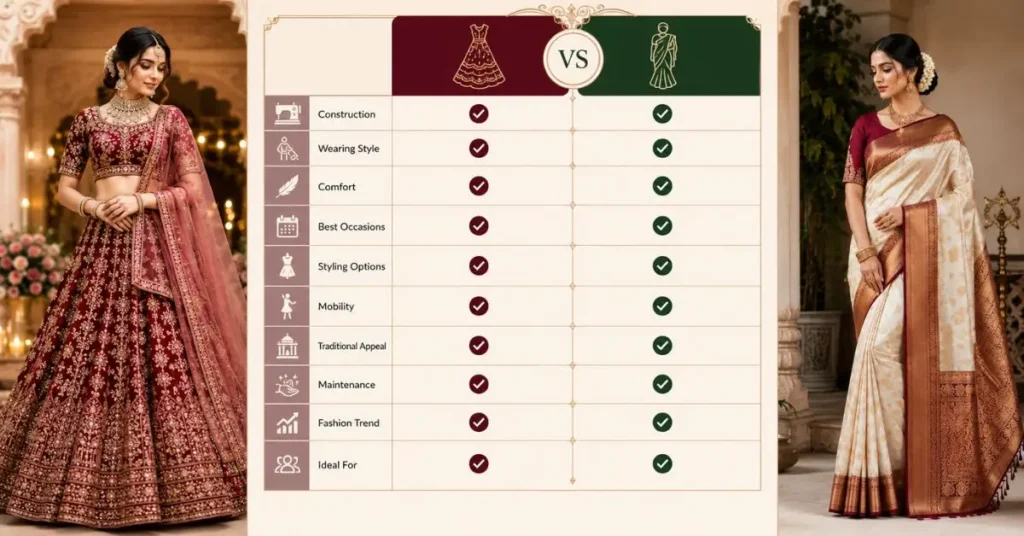
Choosing between these two iconic ensembles becomes easier when you compare their features side by side. The table below highlights the difference between lehenga and saree across several important factors.
| Feature | Lehenga | Saree |
| Construction | Three-piece stitched ensemble with skirt, blouse, and dupatta | Unstitched fabric paired with a blouse and petticoat |
| Wearing Style | Easy to wear and requires minimal adjustment | Needs careful draping and pleating |
| Comfort | Comfortable for long events and dancing | Comfortable once draped correctly, but may require occasional adjustments |
| Best Occasions | Weddings, receptions, sangeet, engagement, festive celebrations | Weddings, religious ceremonies, office events, family gatherings, formal occasions |
| Styling Options | Mix and match skirts, blouses, and dupattas | Multiple draping styles, designer blouses, belts, jackets, and accessories |
| Mobility | Greater freedom of movement | Depends on the fabric and draping style |
| Traditional Appeal | Richly associated with bridal celebrations | Represents timeless Indian heritage across regions |
| Maintenance | Embroidered pieces often require dry cleaning and careful storage | Maintenance varies depending on fabric and embellishments |
| Fashion Trend | Popular for contemporary bridal and festive fashion | A timeless classic that never goes out of style |
| Ideal For | Brides, bridesmaids, and festive occasions | Women of all ages seeking elegance and versatility |
Both garments are beautiful in their own way. The right choice depends on your personal style, comfort level, and the occasion you are dressing for.
When Should You Choose a Lehenga?
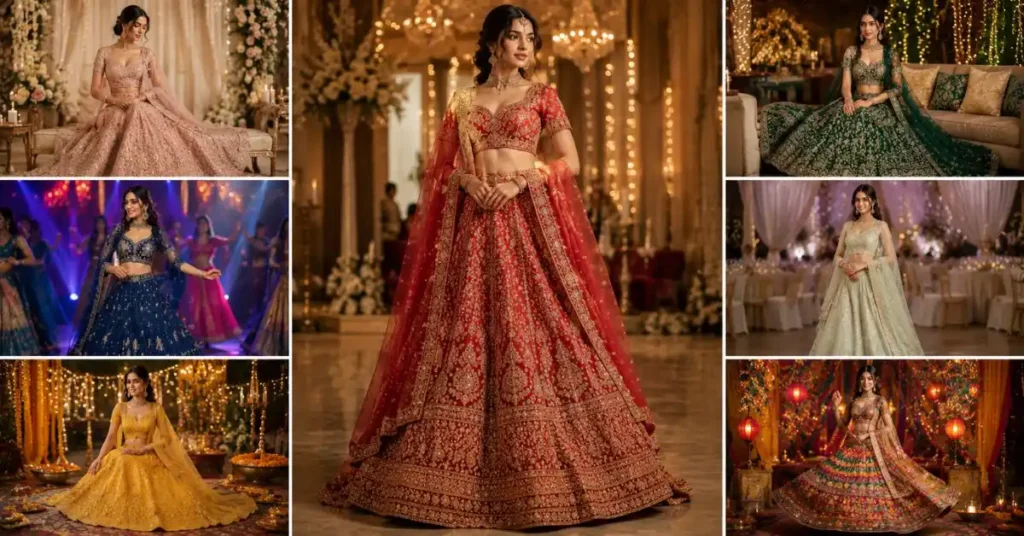
A lehenga is an excellent choice when you want to make a bold fashion statement while enjoying comfort throughout the event. Its structured silhouette creates a regal appearance that works especially well for celebrations filled with photography, dancing, and social gatherings.
Brides often choose heavily embroidered lehengas because they offer grandeur without limiting movement during long wedding ceremonies. Bridesmaids and wedding guests also appreciate lighter versions that combine elegance with practicality.
A lehenga is ideal for occasions such as:
- Weddings
- Engagement ceremonies
- Sangeet nights
- Mehndi celebrations
- Reception parties
- Diwali gatherings
- Navratri festivities
- Family celebrations
Another reason many women prefer a lehenga is its versatility. A beautifully embroidered blouse can later be paired with a saree or skirt, while the lehenga skirt can be styled with a crop top, jacket, or contemporary blouse for a fresh look.
Fashion experts recommend choosing lightweight fabrics such as georgette, chiffon, or organza for daytime events, while silk, velvet, or richly embellished fabrics create a luxurious appearance for evening celebrations.
If comfort, movement, and a glamorous silhouette are your priorities, a lehenga is often the perfect option.
When Should You Choose a Saree?
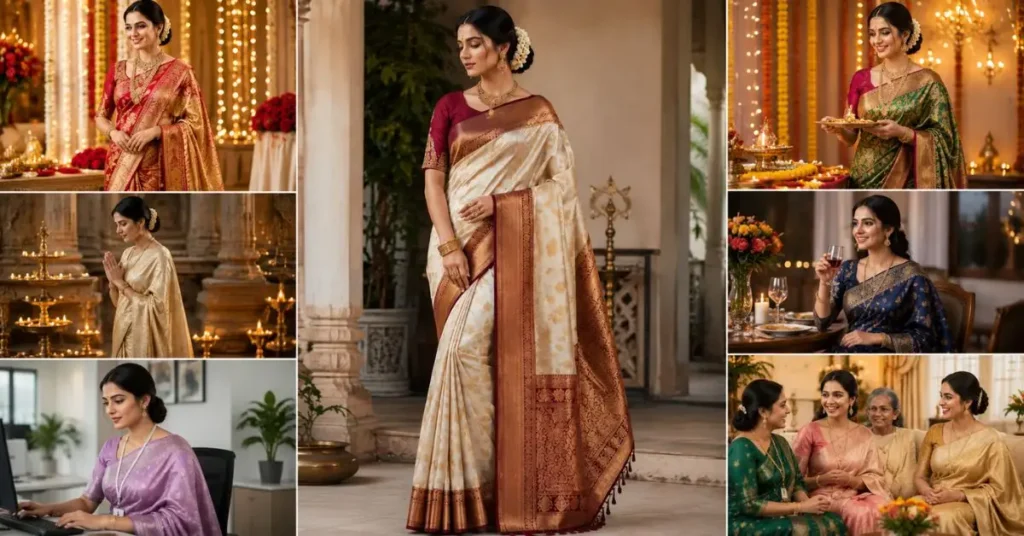
A saree remains one of the most graceful and versatile pieces in Indian fashion. Its flowing silhouette exudes elegance and sophistication, making it suitable for women of every age and body type.
Unlike many occasion-specific garments, a saree adapts effortlessly to both formal and festive settings. By simply changing the blouse, accessories, and draping style, the same saree can create completely different looks.
A saree is an excellent choice for:
- Traditional weddings
- Religious ceremonies
- Temple visits
- Office celebrations
- Cultural festivals
- Anniversary parties
- Formal dinners
- Family functions
Women who appreciate timeless fashion often invest in high-quality silk or handwoven sarees because they remain stylish for decades and are frequently passed down through generations.
Contemporary styling has also made sarees more accessible. Ready-to-wear and pre-stitched options allow beginners to enjoy the elegance of a saree without mastering complex draping techniques.
If you value classic beauty, cultural heritage, and endless styling possibilities, a saree is an exceptional wardrobe investment.
Lehenga vs Saree for Weddings
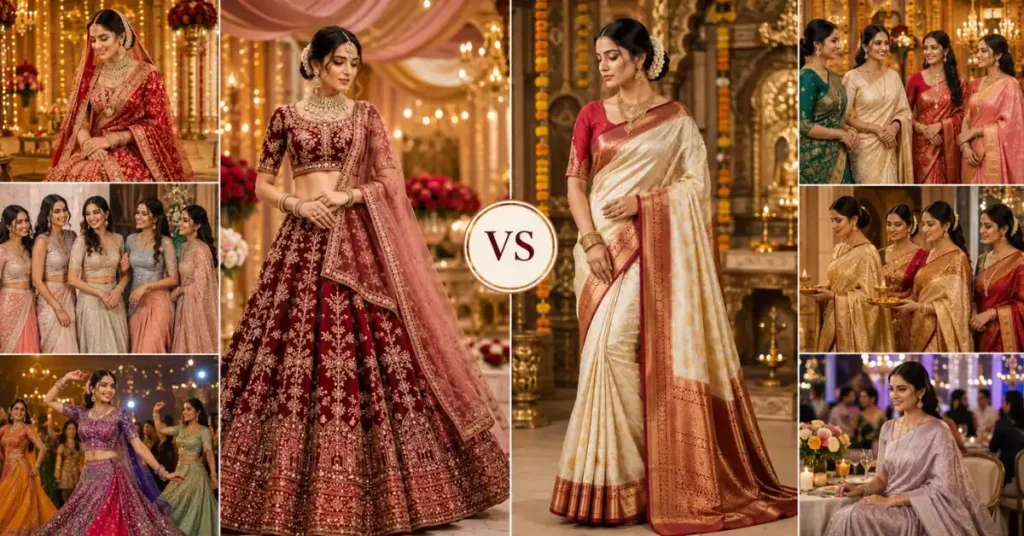
One of the most common questions when discussing the difference between lehenga and saree is which option works best for weddings. The answer largely depends on your role in the celebration and the overall dress code.
For Brides
Bridal lehengas continue to dominate modern Indian weddings because they provide a luxurious appearance while allowing brides to move comfortably throughout multiple ceremonies.
However, bridal sarees remain deeply rooted in many regional traditions. In several parts of India, brides proudly wear intricately woven silk sarees that symbolize heritage, prosperity, and family customs.
For Bridesmaids
Bridesmaids often prefer lehengas because they are easier to manage during long celebrations, dance performances, and photo sessions. Coordinated lehenga ensembles also create a cohesive bridal party look.
For Wedding Guests
Guests have the flexibility to wear either ensemble depending on the formality of the event.
A lehenga creates a glamorous, festive appearance for receptions and evening celebrations, while a saree offers timeless elegance for wedding ceremonies and religious rituals.
For Reception Parties
Reception events often feature contemporary fashion. Embellished lehengas with modern silhouettes have become increasingly popular, although designer sarees paired with stylish blouses remain equally fashionable.
For Mehndi and Sangeet
Since these celebrations involve music, dancing, and movement, lightweight lehengas are often the preferred option. Their comfortable construction allows guests to participate freely while maintaining a festive appearance.
For Traditional Ceremonies
Religious rituals and family customs frequently favor sarees because of their cultural significance and graceful presentation.
Ultimately, both ensembles are appropriate for weddings. Your decision should reflect the ceremony, your personal comfort, and the style you wish to express.
Lehenga vs Saree for Festivals
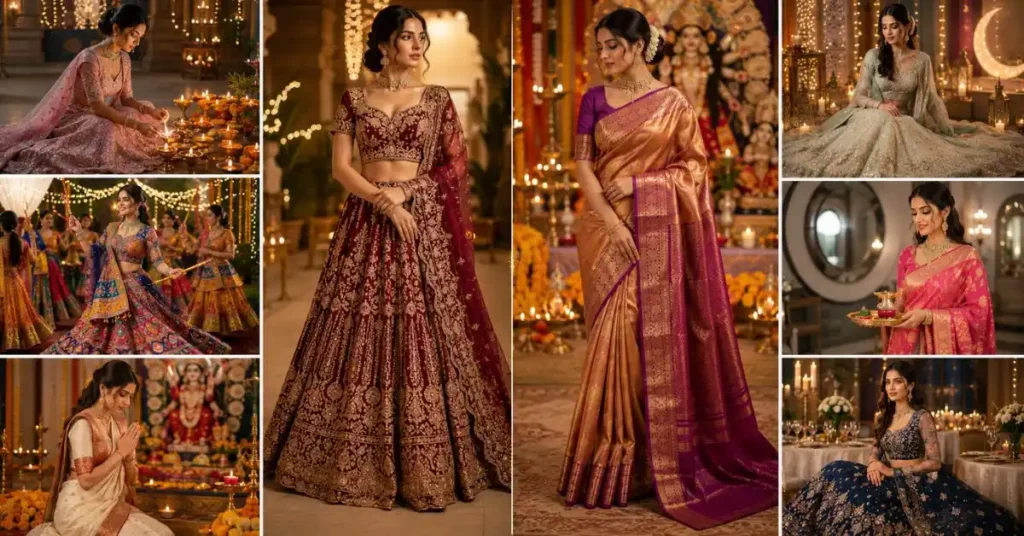
Festivals are the perfect opportunity to celebrate traditional fashion while showcasing your personal style. Understanding the difference between lehenga and saree can help you select an ensemble that suits the occasion beautifully.
Diwali
For Diwali celebrations, many women choose embellished lehengas for evening parties because they create a festive and glamorous appearance. Elegant silk or organza sarees are equally popular for family gatherings and religious ceremonies.
Navratri
Navratri is widely associated with colorful lehengas due to Garba and Dandiya celebrations. Their flared silhouettes enhance movement and create beautiful visual effects while dancing.
Durga Puja
During Durga Puja, traditional sarees remain a timeless favorite. Rich handwoven fabrics and classic draping styles perfectly complement the cultural significance of the festival.
Eid
Both ensembles are popular choices for Eid celebrations. Many women prefer lightweight lehengas for festive gatherings, while others select elegant sarees for family visits and special dinners.
Karva Chauth
This occasion often calls for luxurious attire. Rich silk sarees and embroidered lehengas are equally admired, allowing women to celebrate tradition while embracing personal style.
Family Gatherings
For birthdays, anniversaries, and festive dinners, the choice depends on the event’s formality. Lightweight lehengas provide comfort for lively celebrations, while sarees create a refined and sophisticated impression.
Regardless of the festival, selecting breathable fabrics, comfortable footwear, and coordinated accessories will ensure you enjoy the celebration while looking effortlessly elegant.
Pros and Cons of a Lehenga
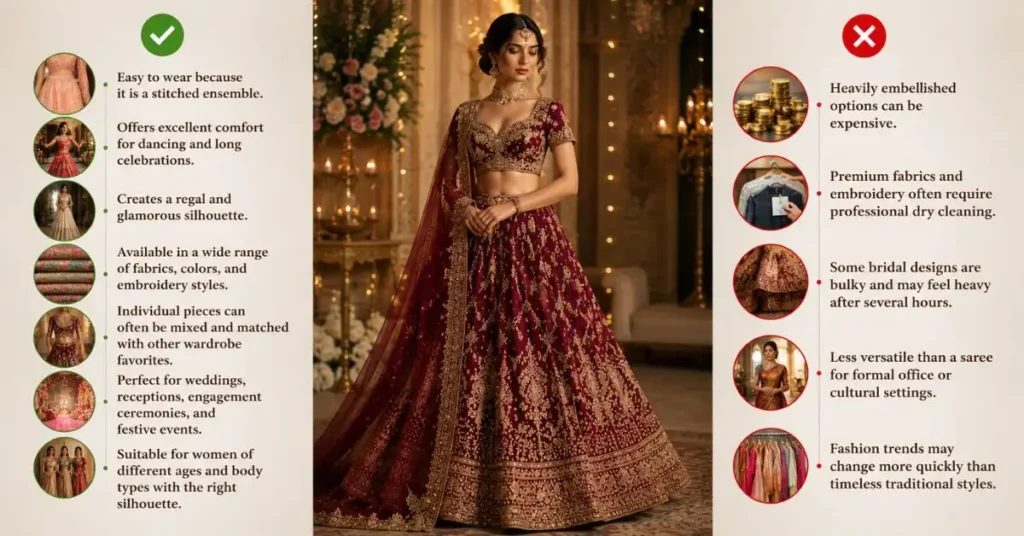
Like any traditional ensemble, a lehenga has its strengths and limitations. Understanding these can help you decide whether it is the right choice for your next special occasion.
Pros
- Easy to wear because it is a stitched ensemble.
- Offers excellent comfort for dancing and long celebrations.
- Creates a regal and glamorous silhouette.
- Available in a wide range of fabrics, colors, and embroidery styles.
- Individual pieces can often be mixed and matched with other wardrobe favorites.
- Perfect for weddings, receptions, engagement ceremonies, and festive events.
- Suitable for women of different ages and body types with the right silhouette.
Cons
- Heavily embellished options can be expensive.
- Premium fabrics and embroidery often require professional dry cleaning.
- Some bridal designs are bulky and may feel heavy after several hours.
- Less versatile than a saree for formal office or cultural settings.
- Fashion trends may change more quickly than timeless traditional styles.
Pros and Cons of a Saree
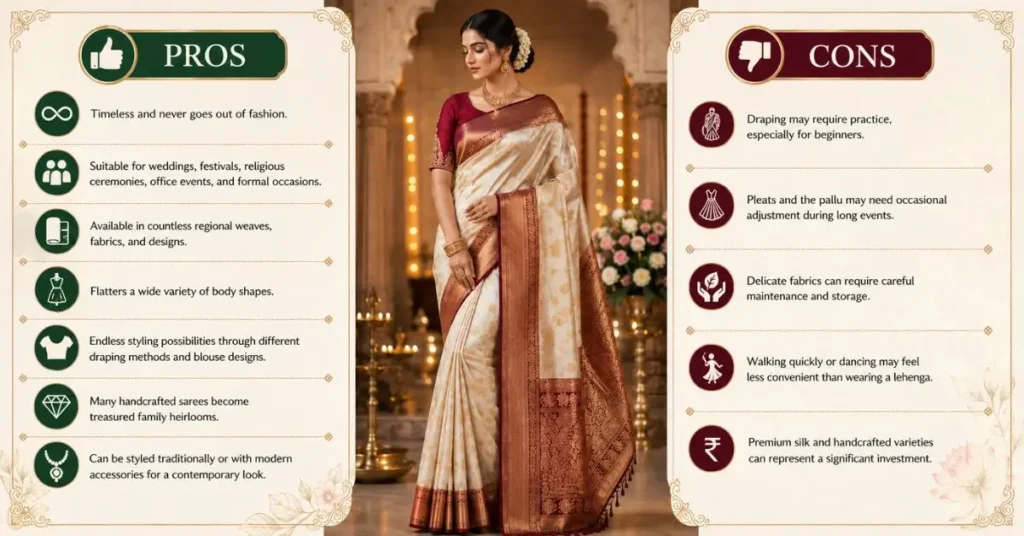
The saree has remained an enduring symbol of elegance for centuries, but it also comes with its own advantages and challenges.
Pros
- Timeless and never goes out of fashion.
- Suitable for weddings, festivals, religious ceremonies, office events, and formal occasions.
- Available in countless regional weaves, fabrics, and designs.
- Flatters a wide variety of body shapes.
- Endless styling possibilities through different draping methods and blouse designs.
- Many handcrafted sarees become treasured family heirlooms.
- Can be styled traditionally or with modern accessories for a contemporary look.
Cons
- Draping may require practice, especially for beginners.
- Pleats and the pallu may need occasional adjustment during long events.
- Delicate fabrics can require careful maintenance and storage.
- Walking quickly or dancing may feel less convenient than wearing a lehenga.
- Premium silk and handcrafted varieties can represent a significant investment.
Which One Is Better?
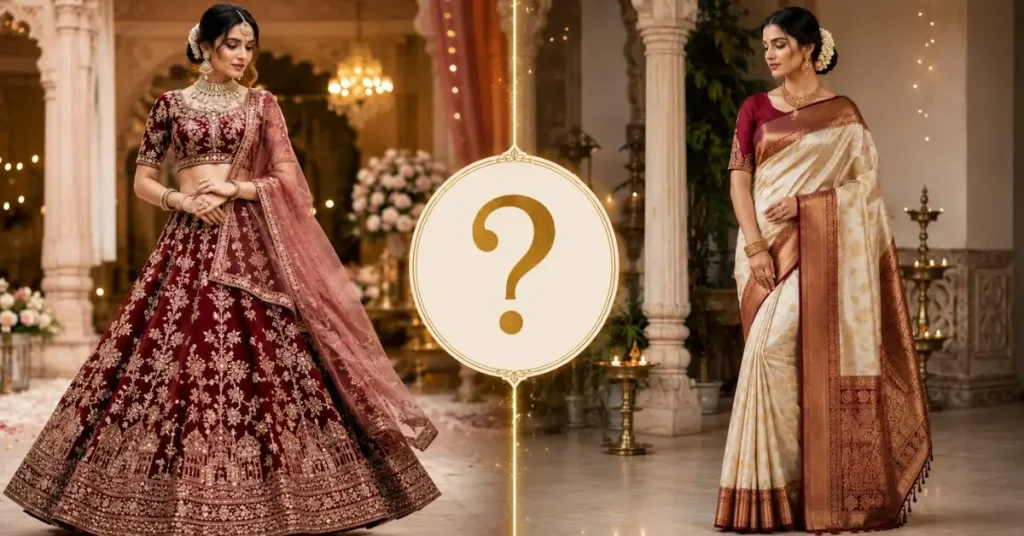
After understanding the difference between lehenga and saree, it becomes clear that there is no universal winner. Both ensembles celebrate India’s rich fashion heritage while offering unique advantages.
A lehenga is an excellent option if you value convenience, comfort, and a statement-making silhouette. It is especially well suited to weddings, receptions, sangeet functions, and festive celebrations where movement and glamour are equally important.
A saree, on the other hand, is the ideal choice if you appreciate timeless elegance, cultural tradition, and unmatched versatility. From religious ceremonies and office events to grand weddings and family gatherings, a well-styled saree remains effortlessly sophisticated.
Rather than asking which ensemble is better, consider the occasion, your comfort level, the desired level of formality, and your personal style. Many fashion enthusiasts include both in their wardrobe because each serves a different purpose and offers its own distinct charm.
Ultimately, the difference between lehenga and saree lies not only in their construction but also in the unique experience each one provides. Whether you choose the structured elegance of a lehenga or the graceful drape of a saree, both continue to define the beauty of Indian ethnic fashion.
Conclusion
The Difference Between Lehenga and saree extends beyond appearance. While a lehenga offers convenience, comfort, and a modern yet regal silhouette, a saree embodies timeless grace, cultural heritage, and unmatched versatility. Each ensemble reflects exceptional craftsmanship and remains an essential part of Indian ethnic fashion.
Your decision should be guided by the occasion, your personal style, and the level of comfort you prefer. Whether you’re attending a wedding, celebrating a festival, or building a versatile ethnic wardrobe, both options deserve a place in your collection. By understanding the difference between lehenga and saree, you can confidently select the ensemble that best complements your personality and the event.
FAQs
1. What is the difference between lehenga and saree?
A lehenga is a stitched outfit with a skirt, blouse, and dupatta, while a saree is an unstitched fabric draped around the body with a blouse and petticoat.
2. Which is more comfortable, a lehenga or a saree?
A lehenga is generally easier to wear and move in, while a saree offers comfort once draped properly.
3. Which is better for weddings?
Both are excellent choices. Lehengas are popular for modern bridal looks, while sarees remain a timeless option for traditional ceremonies.
4. Is a lehenga easier to wear than a saree?
Yes. A lehenga is pre-stitched and quick to wear, whereas a saree requires draping and pleating.
5. Can I wear a lehenga instead of a saree?
Yes. A lehenga is a stylish alternative for weddings, festivals, and special occasions, depending on the event and dress code.

Zahida Amir is the founder and creative force behind Style Aura Dresses, a multicultural fashion blog celebrating South Asian, Western, and bridal dress styles. With a deep passion for fashion trends and timeless elegance, Zahida Amir curates content that helps readers discover the perfect look for every occasion.
Through Style Aura Dresses, Zahida Amir shares style guides, dress inspiration, and expert fashion tips, blending traditional and contemporary influences to inspire women worldwide.