
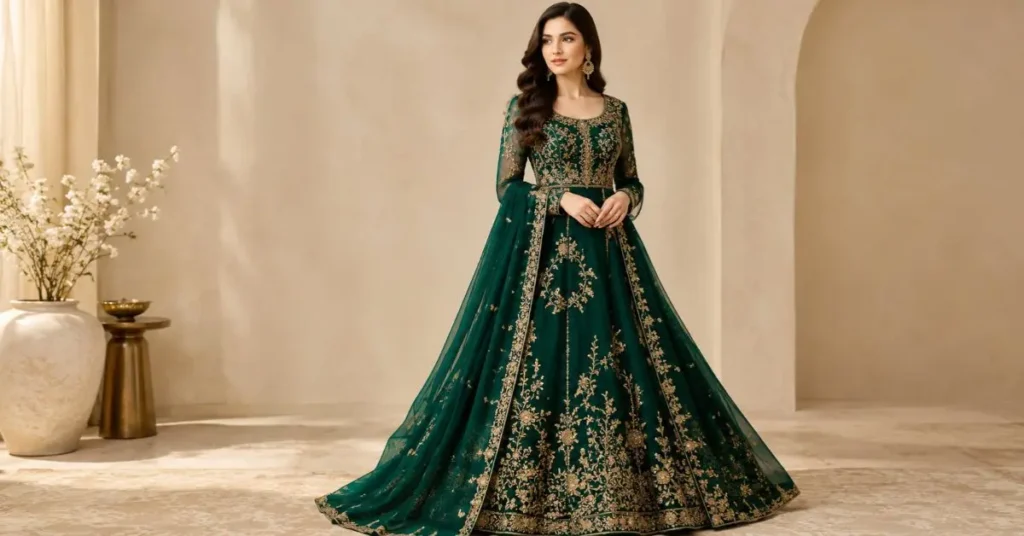
Quick Answer
An elegant emerald green embroidered gown pairs a rich jewel tone with decorative threadwork, beadwork, sequins, or metallic embroidery. It can suit weddings, receptions, engagement celebrations, and formal parties. Choose a fabric that matches the season, a comfortable silhouette, and gold, silver, nude, or champagne accessories to create a balanced outfit.
Author Box
Author: Zahida Amir
Role: Founder & Fashion Content Creator, Style Aura Dresses
Experience: Fashion styling, dress trends, outfit inspiration, seasonal fashion, fabrics, clothing care, and everyday wardrobe ideas.
Content Approach: Original fashion research, practical styling guidance, and trusted fashion resources designed to help readers make confident clothing and styling choices.
Introduction
An elegant emerald green embroidered gown can bring color, detail, and sophistication to a special occasion outfit. Its deep green shade creates a rich visual effect, while embroidery adds texture and decorative interest. Together, these details can create a memorable look without requiring an excessive number of accessories.
However, finding the right gown involves more than choosing a beautiful color. You need to consider the event, fabric, embroidery placement, dress length, and overall fit. A heavily embellished gown may suit an evening reception, while a lighter embroidered design can work better for a daytime celebration.
Comfort also matters. A gown that feels too tight, weighs heavily on the shoulders, or drags along the floor can make a long event difficult. Choosing a suitable lining, sleeve design, and heel height helps you enjoy the occasion without constantly adjusting your outfit.
This guide explores emerald green gown designs, suitable fabrics, embroidery styles, color combinations, and practical accessorizing tips. You will also learn how to choose a flattering silhouette, care for delicate embellishments, and avoid common styling mistakes.
At Style Aura Dresses, our aim is to make fashion decisions easier through practical outfit inspiration and helpful clothing guidance. Whether you are preparing for a wedding, engagement, formal dinner, or festive gathering, this guide will help you plan an emerald green look that suits your style, budget, and comfort.
Why Choose an Elegant Emerald Green Embroidered Gown?
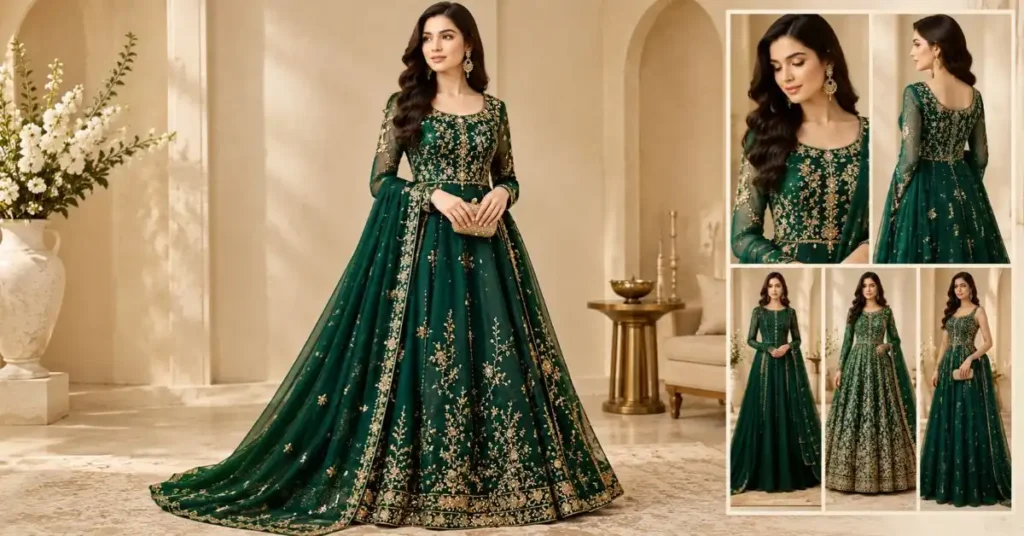
Emerald green is a deep, saturated shade of green that resembles the color of the gemstone. In formal clothing, it offers a rich alternative to black, navy, burgundy, and other traditional evening colors.
An embroidered gown adds another layer of visual interest. Decorative stitching, metallic thread, beads, sequins, or floral motifs can highlight the neckline, sleeves, waist, or hemline. The final appearance depends on the fabric, embroidery density, and overall design.
A rich color for special occasions
Emerald green can work beautifully for evening weddings, receptions, engagement parties, formal dinners, and festive celebrations. Under warm indoor lighting, gold embroidery may create a glowing effect. Silver or crystal embellishments offer a cooler, more delicate finish.
The color also works across different design styles. A fitted gown with subtle embroidery creates a modern formal appearance, while a flowing Anarkali or maxi silhouette offers a more traditional look.
A versatile choice for different personal styles
You do not need to choose heavy embellishment to make an impact. Consider these options:
- Minimalist: A plain emerald gown with embroidery around the neckline or cuffs.
- Classic: A floor-length gown with gold threadwork and a defined waist.
- Romantic: A flowing chiffon design with floral embroidery.
- Traditional: An embroidered Anarkali gown paired with a coordinated dupatta.
- Glamorous: A structured gown with beadwork or carefully placed sequins.
Each design creates a different effect. Select the one that suits the event and reflects your personal taste.
Consider the limitations
Dark green fabric can look different under daylight, warm lighting, and camera flash. Ask for photographs in different lighting conditions when shopping online. Also inspect the embroidery carefully because dense embellishments can increase the garment’s weight and make delicate fabric harder to maintain.
If you want a gown that you can wear more than once, select a design with versatile embroidery and accessories you already own. A balanced design often offers more styling options than a gown covered in heavy decoration from neckline to hem.
Best Emerald Green Embroidered Gown Designs
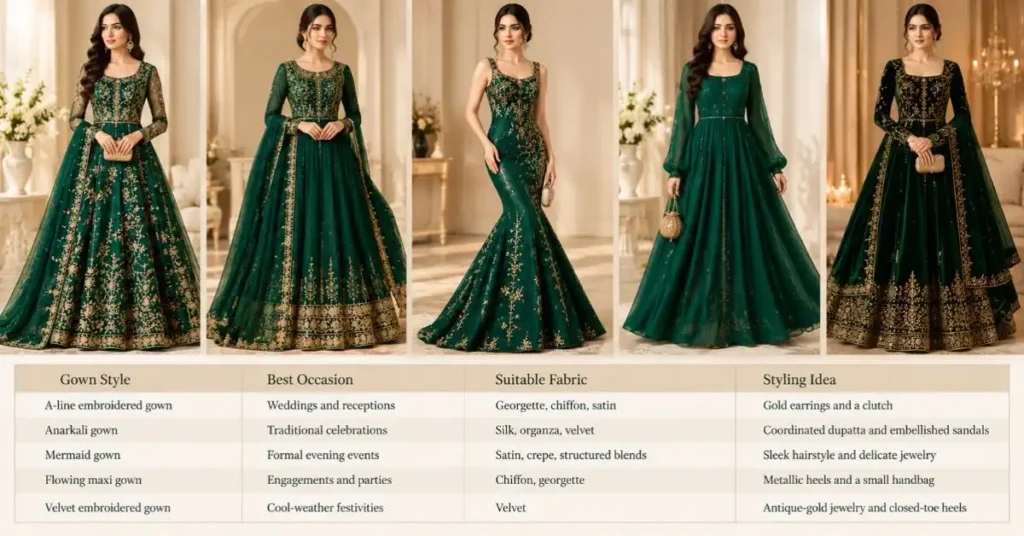
The silhouette determines how a gown falls around the body and how easily you can move in it. The best option depends on your preferences, the event, and the structure of the fabric.
A-line embroidered gown
An A-line gown follows the upper body and gradually widens toward the hem. This shape creates a balanced, flowing outline without requiring a very full skirt.
Choose an A-line gown for receptions, formal dinners, and family celebrations. Embroidery around the bodice or waist can provide detail without making the entire skirt look busy.
Anarkali gown
An Anarkali-style gown features a fitted upper section and a flared lower portion. It often suits traditional South Asian celebrations, including weddings, engagement events, and festive gatherings.
Gold threadwork, embroidered borders, and a coordinated dupatta can strengthen its traditional appeal. For easier movement, check the skirt’s weight and make sure the flare does not restrict walking.
Mermaid or fitted gown
A mermaid gown follows the body closely and flares around the knees or lower legs. It creates a defined silhouette and works well for formal evening events when the wearer prefers a structured appearance.
Check the fit around the hips and knees before purchasing. A gown that looks attractive while standing may feel restrictive when sitting, climbing stairs, or dancing.
Flowing maxi gown
A maxi gown reaches the ankles or floor and may feature a straight, A-line, or softly flared silhouette. Chiffon and georgette can create movement, while satin and silk-like fabrics offer a smoother appearance.
Choose a hemline that works with your intended footwear. Too much fabric around the feet can cause tripping, particularly on crowded dance floors.
Gown design comparison
| Gown Style | Best Occasion | Suitable Fabric | Styling Idea |
| A-line embroidered gown | Weddings and receptions | Georgette, chiffon, satin | Gold earrings and a clutch |
| Anarkali gown | Traditional celebrations | Silk, organza, velvet | Coordinated dupatta and embellished sandals |
| Mermaid gown | Formal evening events | Satin, crepe, structured blends | Sleek hairstyle and delicate jewelry |
| Flowing maxi gown | Engagements and parties | Chiffon, georgette | Metallic heels and a small handbag |
| Velvet embroidered gown | Cool-weather festivities | Velvet | Antique-gold jewelry and closed-toe heels |
These are styling suggestions rather than strict rules. Always consider the actual fabric construction, garment weight, and event dress code before making your final choice.
Best Fabrics for an Emerald Green Embroidered Gown
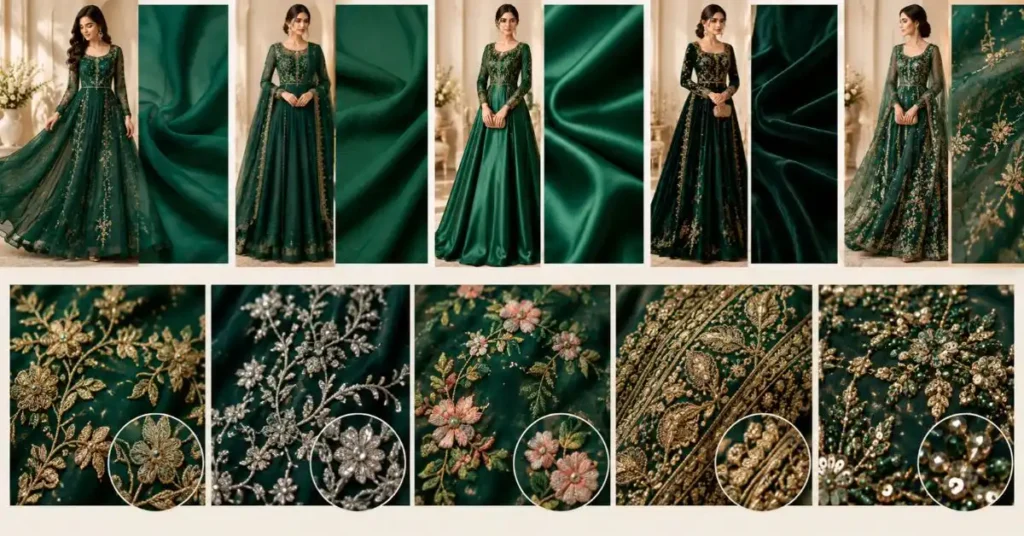
Fabric affects the gown’s appearance, comfort, movement, and care requirements. Two gowns in the same color can look completely different because one uses a soft, flowing material while the other has a structured finish.
Chiffon creates a light, airy appearance and works well for layered skirts and soft draping. It is a useful option for warm-weather events, especially when the gown includes a breathable lining. However, chiffon can snag, and heavily embellished areas may require careful handling.
Georgette has a flowing drape with more texture than many smooth fabrics. It can work well for A-line gowns, flared maxi dresses, and designs with embroidered panels. Check the lining because some georgette garments can feel rough or transparent without an appropriate inner layer.
Silk and silk-blend fabrics often offer a smooth finish and elegant drape. They can support formal embroidery and structured designs. Natural silk may need specialist cleaning, so check the care label before buying.
Satin has a smooth surface that reflects light. It can make emerald green look especially rich, but the fabric may highlight wrinkles, pulling, or uneven seams. Examine the fit carefully, particularly around the waist and hips.
Velvet adds a soft texture and suits many cool-weather celebrations. Its thicker surface can support elaborate embroidery, although the garment may feel warm or heavy in crowded indoor venues.
Organza and net can add volume, sheer sleeves, overlays, or decorative layers. They work particularly well in formal South Asian designs, but they may need lining and careful storage to prevent snags.
How to select the right fabric
Start by considering the weather and event location. For a warm outdoor wedding, a lightweight gown with a suitable lining may feel more comfortable than a heavy velvet design. For a cool evening reception, velvet or a structured silk-blend gown may be a practical choice.
Next, examine the embroidery. Heavy beads and metallic thread can pull on delicate material, so check the stitching around the shoulders, waist, and sleeves. If you plan to dance or walk frequently, test how easily the skirt moves.
Finally, review the care instructions. A beautiful gown becomes less practical if it needs specialist cleaning that does not fit your budget or schedule.
Embroidery Styles That Complement Emerald Green
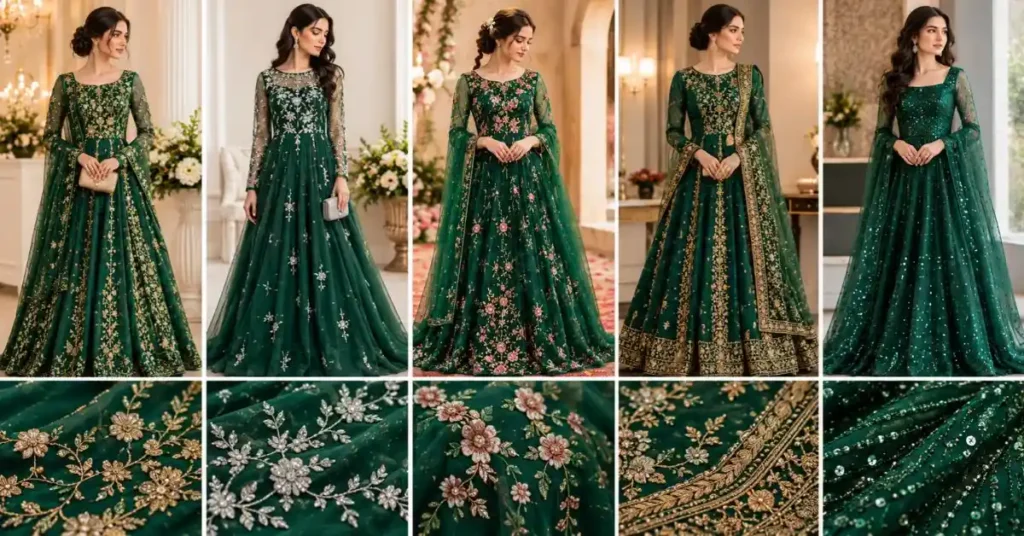
Embroidery gives a gown texture, pattern, and personality. The best design depends on whether you want subtle decoration, traditional richness, or a glamorous evening look.
Gold thread embroidery creates a warm contrast against deep green. It suits traditional gowns, wedding guest outfits, and formal celebrations. Pair it with understated gold jewelry to keep the outfit coordinated.
Silver embroidery creates a cooler finish. It can work well with crystal earrings, silver-toned accessories, and evening footwear. This combination suits people who prefer a crisp, modern appearance.
Floral embroidery adds a softer, romantic effect. Small flowers placed across the bodice or sleeves can look delicate, while larger floral patterns create a stronger visual statement. Keep other patterns simple so the gown remains the main feature.
Zari work uses metallic threads to create decorative motifs and borders. It often appears in traditional South Asian formal wear. Depending on the design, zari can range from subtle accents to elaborate all-over decoration.
Beadwork and sequins add dimension and shine. Concentrated embellishment around the neckline or waist can draw attention to those areas, while scattered details can create a more delicate effect. Inspect the finishing carefully because loose beads and rough edges may catch on other clothing.
Choosing the right amount of embroidery
Consider the event before deciding how much decoration you want. A formal evening reception may suit a richly embellished gown, while a daytime celebration may call for smaller motifs and lighter materials.
Also think about comfort. Dense beadwork can make sleeves feel stiff, and bodices feel heavy. If you plan to wear the gown for several hours, look for smooth inner seams and secure embroidery.
When shopping online, zoom in on close-up photographs. Check whether the embroidery covers the whole garment or only selected sections, and confirm whether the dupatta, belt, or other accessories come with the gown.
The goal is to choose embroidery that complements the emerald color without making the outfit difficult to wear or maintain.
How to Style an Emerald Green Gown with Accessories
Accessories should complement the gown’s color, embroidery, and overall shape. You do not need a matching set of jewelry, shoes, and handbag to create a polished appearance. A few well-chosen pieces usually work better than many competing details.
Jewelry choices
Gold jewelry pairs naturally with warm gold embroidery. Try drop earrings, a slim bracelet, or a delicate necklace, depending on the neckline.
Silver jewelry can complement silver threadwork, crystal embellishments, or cooler-toned embroidery. A pair of earrings and one simple bracelet may be enough for a gown with substantial decoration.
If the gown has a high neckline, heavily embroidered collar, or detailed bodice, skip a large necklace and focus on earrings instead. This keeps the upper part of the outfit from looking crowded.
Shoes and handbags
Nude, champagne, gold, and silver footwear can all work with emerald green. Choose a shade that complements the gown’s embellishments and feels appropriate for the venue.
For long events, block heels or elegant flats may offer more comfort than narrow high heels. Check the gown’s length while wearing the shoes you intend to use, and make sure the hem does not drag.
A small clutch or structured evening bag completes the outfit without adding too much bulk. If the gown already features heavy gold or silver embroidery, a plain metallic or neutral bag can provide balance.
Makeup and hairstyles
A soft, defined eye with neutral lipstick can create a classic evening look. For a more dramatic appearance, deeper lip color can work well with a relatively simple eye makeup style.
Choose your hairstyle according to the neckline. An updo can highlight detailed shoulders and earrings, while soft waves can complement a romantic, flowing gown.
Avoid treating these suggestions as fixed rules. Your skin preferences, comfort, cultural style, and event setting matter more than following a single makeup trend.
Accessory coordination guide
| Accessory | Best Pairing | Key Benefit | Practical Tip |
| Gold earrings | Gold thread embroidery | Creates a warm, coordinated finish | Choose one statement piece |
| Silver jewelry | Silver or crystal details | Adds a cooler, refined touch | Avoid excessive competing sparkle |
| Champagne clutch | Heavy embroidery | Balances decorative details | Choose a compact, secure bag |
| Nude heels | Most emerald gown styles | Keeps attention on the dress | Check heel height and hem length |
| Gold sandals | Traditional or festive gowns | Reinforces a celebratory look | Choose secure straps for dancing |
| Simple bracelet | Minimal or medium embroidery | Adds detail without crowding the outfit | Check that it does not snag the fabric |
How to Choose the Right Fit and Gown Length
A well-fitting gown should allow you to stand, sit, walk, and move your arms without discomfort. The right fit does not depend on a particular body shape. It depends on your measurements, preferred silhouette, and how you want the garment to feel.
Begin by measuring your bust, waist, hips, shoulder width, and desired length. Compare these measurements with the seller’s size chart rather than relying only on labels such as small, medium, or large. Sizing can vary between brands and designers.
Check the bodice carefully. It should not pull across the chest or create uncomfortable pressure around the waist. Sleeves should allow movement, and the armholes should not rub against your skin.
Next, consider the skirt. A fitted gown should allow you to sit and walk comfortably. A flared gown should have enough room for natural movement without dragging excessively on the floor.
A practical fitting checklist
- Confirm the bust, waist, and hip measurements.
- Check shoulder width and sleeve comfort.
- Sit down and walk several steps while wearing the gown.
- Confirm that the neckline stays in place.
- Check the lining for transparency and rough seams.
- Test the zipper, hooks, and other fastenings.
- Wear your intended shoes when checking the hem.
- Make sure embroidery does not scratch your skin.
- Ask about alterations, delivery time, and return terms.
Selecting the right length
A floor-length gown creates a formal appearance, but it should not cover your shoes so completely that you trip. An ankle-length design can offer easier movement while maintaining an elegant look.
If you order a custom gown, provide accurate measurements and ask the tailor how much ease the design needs. Do not request an extremely tight fit simply to create a defined silhouette. Proper ease allows the fabric to fall more smoothly and makes the gown more comfortable.
Before a major event, try on the complete outfit at home. Include your shoes, undergarments, jewelry, and any dupatta or shawl. This final check helps identify problems before the occasion.
Styling an Emerald Green Gown for Different Occasions
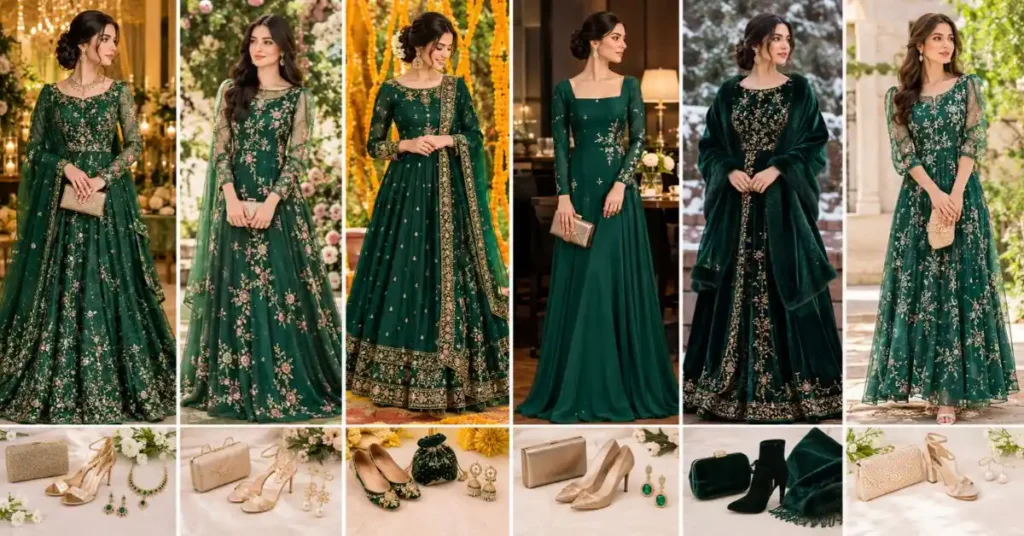
The same gown can create different looks depending on its fabric, embroidery, and accessories. Adjust the level of decoration to the occasion rather than buying a new outfit for every event.
Wedding receptions: A full-length gown with gold or silver embroidery can suit a formal reception. Choose polished footwear, a small clutch, and jewelry that complements the neckline. Check the invitation for the dress code, and avoid a design that could be mistaken for the event’s reserved bridal outfit.
Engagement parties: A softly flared gown with floral embroidery can feel celebratory without looking excessively heavy. Champagne accessories and delicate earrings can keep the outfit balanced.
Mehndi and festive events: An Anarkali-style gown with a coordinated dupatta offers a traditional option. If you expect to dance or move through a crowded venue, prioritize a manageable skirt weight and secure footwear.
Formal dinners: A simple emerald gown with selective embroidery can look refined. A structured clutch, understated earrings, and a sleek hairstyle help create a clean appearance.
Winter celebrations: Velvet or a heavier fabric can provide a seasonally suitable look. Choose a warm wrap or shawl if needed, but check that its texture does not catch on the gown’s embroidery.
Daytime celebrations: Lighter fabrics, smaller motifs, and less reflective embellishment may feel more appropriate in bright daylight. Comfortable footwear can also make outdoor events easier.
For more inspiration, explore our guide to party dresses for special occasions and discover how different silhouettes and decorative details can suit different celebrations.
Common Styling Mistakes and How to Avoid Them
Even a beautiful gown can lose its impact when the fit, accessories, or fabric do not work together. A few simple checks can help you avoid common problems.
Using too many statement accessories: Large earrings, a heavy necklace, an embellished clutch, and decorative shoes can compete with each other. Choose one main accessory and keep the remaining pieces simple.
Ignoring fabric weight: A gown may look graceful in a photograph but feel uncomfortable after several hours. Check the weight of the embroidery and the number of fabric layers before buying.
Choosing the wrong hem length: A hem that drags can collect dirt and create a tripping risk. Test the length with your intended footwear and ask about alterations when necessary.
Overlooking the lining: Sheer material may look different in daylight or under flash photography. Check the lining, seams, and opacity before wearing the gown to an event.
Matching every item exactly: Shoes, bags, and jewelry do not need to be identical shades of green. Gold, silver, champagne, nude, and other complementary tones can create a more balanced outfit.
Ignoring the dress code: A heavily embellished gown may feel excessive for a small daytime gathering. Match the garment’s formality to the event, venue, and cultural expectations.
Buying without checking measurements: Standard sizes vary, and online photographs do not show how a gown will fit every wearer. Review measurements, alteration policies, delivery dates, and return conditions.
Neglecting garment care: Embroidery can loosen, snag, or lose its finish when handled incorrectly. Read the care label and avoid using a washing method simply because it works for ordinary clothing.
For additional color inspiration, our teal dress style guide explores ways to coordinate jewel-toned dresses with footwear, accessories, and different occasions.
How to Care for and Store an Embroidered Gown
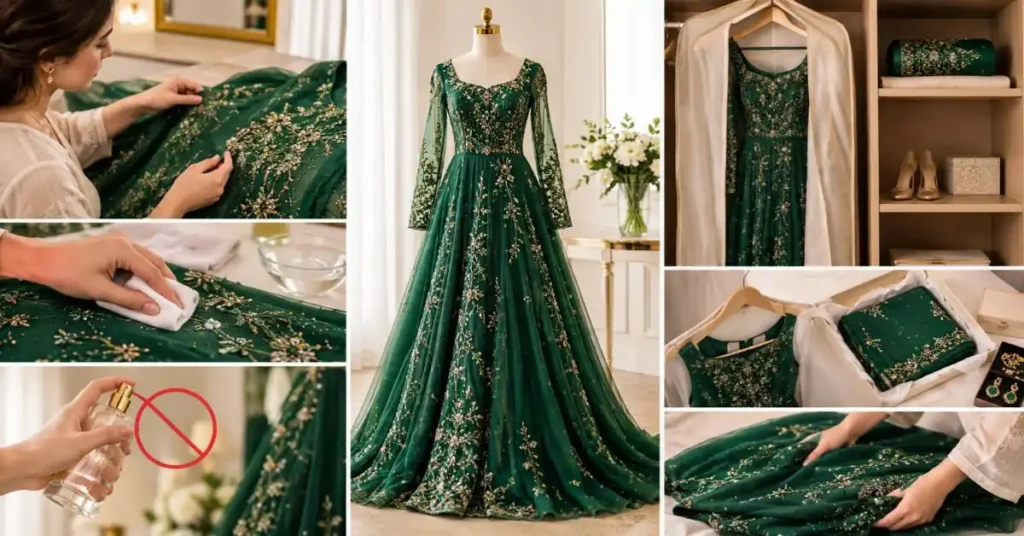
Good clothing care helps preserve the fabric, embroidery, shape, and finish of a formal gown. The correct method depends on the material and embellishments, so always follow the garment’s care label first.
After wearing the gown
Inspect the gown for loose threads, missing beads, makeup marks, or small stains. Handle decorated areas gently and avoid pulling at the embroidery.
Let the garment air out in a clean, dry place before storing it. Keep it away from direct sunlight, damp areas, and strong odors. Do not spray perfume directly onto the fabric because fragrance and alcohol may affect delicate materials or embellishments.
Cleaning and stain care
Do not assume that every gown can go into a washing machine. Silk, velvet, structured satin, heavily beaded net, and delicate embroidery may need professional cleaning.
For a stain, avoid rubbing the area aggressively or applying bleach. Check the care label and consult a specialist cleaner if the fabric or embroidery is delicate. Tell the cleaner about beads, sequins, metallic thread, and any special finishes.
Storage tips
Use a clean, breathable garment bag and a suitable hanger when the garment’s weight allows hanging. A very heavy gown may need padded support or careful flat storage to prevent the shoulders from stretching.
Keep the gown separate from rough fabrics, jewelry, and accessories that might catch on its embroidery. Store matching pieces, such as a dupatta or belt, in a way that prevents creasing and snagging.
Before the next occasion, inspect the garment and allow enough time for professional cleaning or repairs. These simple steps can help you enjoy the gown again without unnecessary last-minute stress.
Conclusion
An elegant emerald green embroidered gown can create a memorable outfit for weddings, receptions, engagements, and other formal occasions. The key is to balance the rich color with suitable fabric, carefully chosen embroidery, a comfortable silhouette, and accessories that complement rather than compete with the dress.
Start with the event and season, then compare gown styles and fabrics. Check measurements, movement, lining, and garment care requirements before making your final choice. Gold embroidery can create a warm traditional finish, while silver details offer a cooler alternative. Simple accessories can keep a heavily decorated gown looking balanced.
Most importantly, choose a gown that reflects your personal style and allows you to enjoy the occasion comfortably. Thoughtful selection and proper care will help you make the most of this elegant wardrobe choice.
Frequently Asked Questions
1. What accessories go best with an emerald green embroidered gown?
Gold, silver, champagne, and nude accessories often complement emerald green. Match the metal tone to the embroidery, and choose a clutch and footwear that suit the event and your comfort needs.
2. Is an emerald green gown suitable for a wedding?
Yes. An emerald green gown can work for wedding receptions, engagement celebrations, and many formal wedding events. Check the dress code and avoid designs that are inappropriate for the occasion.
3. Which fabric is best for an embroidered emerald green gown?
Chiffon and georgette create flowing silhouettes, satin offers a smooth finish, silk can provide an elegant drape, and velvet suits many cool-weather events. The best option depends on the season, garment design, and care requirements.
4. Does gold or silver embroidery look better on emerald green?
Both can work well. Gold creates a warm contrast and often suits traditional designs, while silver creates a cooler, more contemporary appearance. Choose the option that complements your preferred jewelry and accessories.
5. Can I wear an emerald green embroidered gown to a daytime event?
Yes. Choose a lighter fabric, restrained embroidery, and comfortable footwear. A less heavily embellished design can feel more appropriate for an outdoor or daytime celebration.
6. How should I choose the correct gown size?
Measure your bust, waist, hips, shoulders, and desired length. Compare your measurements with the seller’s size chart, and check whether the gown allows comfortable sitting, walking, and arm movement.
7. How do I care for a heavily embroidered gown?
Follow the care label and use professional cleaning when the fabric or embellishments require it. Avoid harsh rubbing, direct perfume application, and careless storage that could damage the embroidery.
8. What shoes should I wear with an emerald green gown?
Gold, silver, champagne, nude, and other complementary neutrals work well. Choose a heel height and shoe design that suit the hemline, venue, and how much walking you expect.
9. How can I make my emerald green gown look elegant without spending too much?
Choose a well-fitting gown with embroidery in one or two key areas. Reuse jewelry and shoes you already own, and add a simple clutch or hairstyle that complements the outfit. Good fit and careful styling often matter more than extra decoration.
10. Can an emerald green embroidered gown be worn more than once?
Yes. Select a versatile design and change the accessories, hairstyle, or dupatta to create a different look. Follow the care instructions and store the gown properly between occasions.
Zahida Amir is the creative force behind Style Aura Dresses, a multicultural fashion blog. With a passion for timeless elegance, she curates easy-to-follow style guides that help readers find the perfect look for every occasion.