
Quick Answer
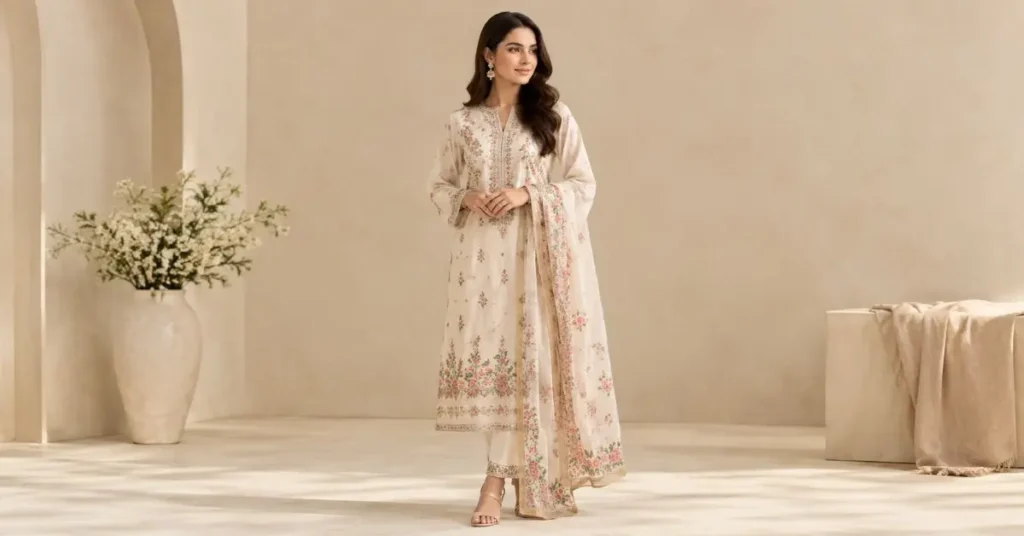
Embroidered dresses feature decorative patterns created with thread, beads, sequins, or other embellishments on fabric. They suit casual outings, festive gatherings, weddings, and formal events. Choose a design based on the occasion, fabric, season, fit, and personal style.
Author Box
Author: Zahida Amir
Role: Founder & Fashion Content Creator
Experience: Fashion styling, dress trends, outfit inspiration, seasonal fashion, fabrics, clothing care, and everyday wardrobe ideas.
Content Approach: Original fashion research, practical styling guidance, and trusted fashion resources designed to help readers make confident clothing and styling choices.
Introduction
Embroidered dresses bring beauty, texture, and personality to women’s fashion. From delicate floral stitching on a summer outfit to detailed gold embroidery on a formal wedding dress, these designs offer many ways to express your personal style.
However, choosing the right dress takes more than finding an attractive pattern. You also need to consider the fabric, embroidery placement, color, fit, weather, and occasion. A heavily decorated dress may look beautiful but feel uncomfortable in hot weather. Similarly, an outfit with delicate threadwork may need extra care to maintain its appearance.
This guide explores embroidered dresses for women, including casual styles, Pakistani designs, formal outfits, wedding wear, and modern Western looks. You will learn how to choose suitable fabrics, coordinate colors, select accessories, and care for embroidered clothing.
Whether you prefer a simple cotton outfit, a graceful chiffon dress, or a richly decorated formal ensemble, you can find a style that matches your needs. Style Aura Dresses shares practical fashion inspiration to help you make thoughtful clothing choices and create outfits that feel comfortable, elegant, and personal.
What Are Embroidered Dresses?
As an Amazon Associate, I earn from qualifying purchases
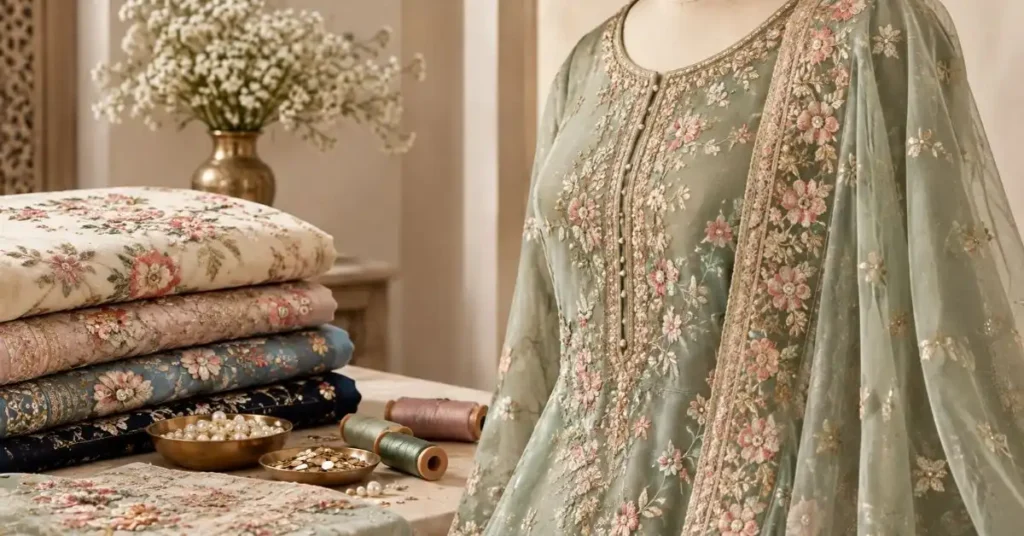
Embroidered dresses feature decorative stitching that creates patterns, pictures, borders, or textured designs on fabric. Designers and artisans may use colorful threads, metallic threads, beads, sequins, pearls, or other decorative materials to create different effects.
Traditional embroidery often reflects regional craftsmanship and cultural influences. Modern designs combine these techniques with contemporary silhouettes, minimal patterns, and unusual color combinations.
The amount and placement of embroidery determine much of a dress’s appearance. A simple neckline with delicate stitching can create a refined everyday look, while a fully embellished gown can suit a formal celebration.
Popular Types of Embroidery
- Floral embroidery: Flowers, leaves, vines, and botanical motifs create a soft, romantic appearance.
- Thread embroidery: Colored threads form decorative patterns without necessarily adding shine.
- Zari embroidery: Metallic threads create gold or silver accents often associated with traditional formalwear.
- Mirror work: Small reflective pieces add sparkle and visual interest to festive clothing.
- Beaded embroidery: Beads create texture and shine, making the design suitable for special occasions.
- Sequin embroidery: Small decorative discs reflect light and add a party-ready finish.
- Geometric embroidery: Lines, shapes, and repeating patterns create a modern, structured appearance.
The techniques can overlap. For example, one dress may combine floral threadwork with metallic borders and small beads.
The best choice depends on your personal taste and the event. Lightweight threadwork often suits daytime wear, while detailed metallic embroidery may work better for evening celebrations.
Embroidery also changes the way fabric looks and feels. Heavy decorative work can add weight and stiffness, while small stitched motifs usually preserve more of the fabric’s natural movement.
Best Embroidered Dress Styles for Women
Embroidered dresses come in many silhouettes, from relaxed everyday outfits to dramatic formal gowns. Rather than following every trend, choose a shape that fits your lifestyle and the occasions you attend.
| Dress Style | Best For | Suitable Season | Styling Idea |
|---|---|---|---|
| Embroidered cotton dress | Daily wear and casual outings | Spring and summer | Flat sandals and a simple handbag |
| Floral embroidered midi | Brunch and daytime events | Spring and summer | Ballet flats and delicate earrings |
| Embroidered maxi dress | Family gatherings and dinners | All seasons, depending on fabric | Minimal jewelry and comfortable heels |
| Pakistani embroidered suit | Festive occasions and family events | All seasons, depending on fabric | Khussa shoes and a coordinated dupatta |
| Embroidered formal gown | Weddings and evening celebrations | Cooler weather or indoor events | A small clutch and understated jewelry |
| Embroidered shirt dress | Work or smart-casual outings | Spring, autumn, and mild weather | Loafers and a structured bag |
Casual Embroidered Dresses
Casual embroidered dresses work well when you want a little detail without wearing formal clothing. Cotton, lawn, and lightweight linen blends can feel comfortable in warm weather, depending on their construction.
Choose small floral motifs, subtle neckline embroidery, or stitched borders for an easy everyday look. These details add interest without making the dress feel too elaborate.
For shopping trips, university days, or relaxed lunches, pair an embroidered cotton dress with flat sandals, comfortable shoes, and a practical handbag. Keep jewelry simple so the embroidery remains the main feature.
A casual dress with dense embellishment may feel too warm or heavy for everyday use. Look for breathable fabric, secure stitching, and enough room to move comfortably.
Formal and Party Dresses
Formal embroidered dresses often feature richer fabrics, larger motifs, detailed borders, or decorative sleeves. Velvet, silk, organza, chiffon, and structured blends can all support different types of embellishment.
For a wedding reception or evening dinner, consider a dress with embroidery concentrated around the neckline, bodice, or hem. This creates a focal point without requiring every part of the outfit to compete for attention.
If you prefer a glamorous look, metallic threadwork and carefully placed sequins can add shine. Balance these details with understated shoes, a neat hairstyle, and jewelry that complements the neckline.
For additional wedding inspiration, explore Pakistani bridal dresses, which include traditional silhouettes, rich fabrics, and decorative techniques.
How to Choose the Right Fabric for Embroidered Dresses
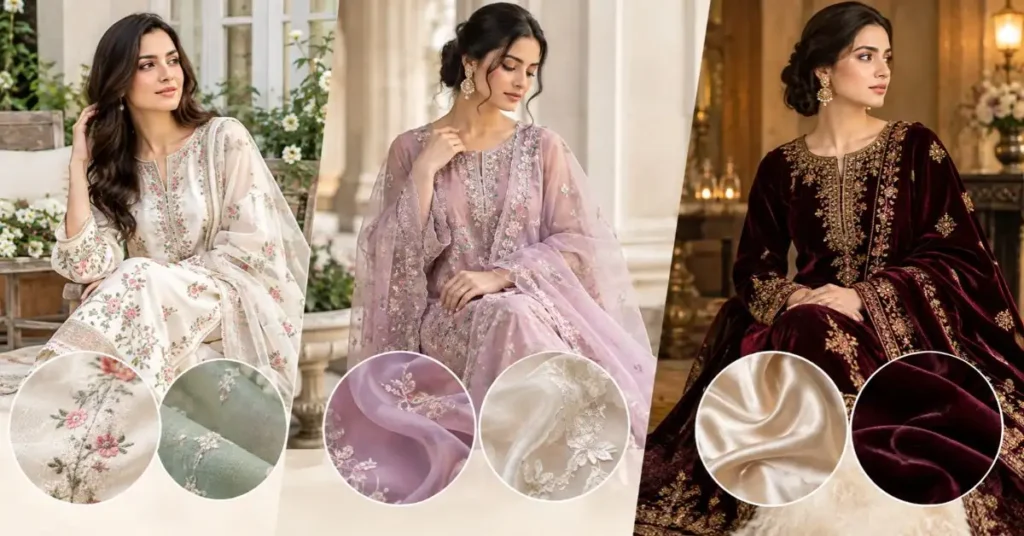
Fabric affects comfort, movement, appearance, and the way embroidery sits on a garment. Two dresses with similar patterns can look and feel very different because their materials differ.
Before purchasing an embroidered dress, consider the climate, length of wear, weight of the decoration, and care instructions.
Cotton and Lawn
Cotton and lawn often work well for everyday embroidered clothing. These materials can feel comfortable in warm weather and suit casual shirts, tunics, and traditional outfits.
Small thread motifs and lightly embroidered necklines can add detail while keeping the outfit practical. However, dense embroidery, synthetic lining, and tight construction may reduce breathability.
Check whether the dress includes a lining and whether the fabric feels comfortable against your skin.
Chiffon and Organza
Chiffon offers a soft, flowing appearance. Designers often use it for dupattas, sleeves, layered dresses, and formal outfits.
Organza has a more structured, slightly crisp feel. It can support defined shapes, decorative overlays, and embroidered panels.
Both fabrics can look delicate, but they may require careful handling. Loose threads, sharp jewelry, and rough surfaces can catch on lightweight materials.
Silk and Velvet
Silk can create a smooth, refined appearance and support detailed decorative work. Velvet offers a richer surface that often suits winter celebrations and evening occasions.
These fabrics can work beautifully for formal embroidered outfits, but their suitability depends on the specific garment and climate. Heavy velvet with dense embellishment may feel uncomfortable at an outdoor summer event.
Always check the garment’s care label before washing or ironing it. Some fabrics and decorative finishes need professional cleaning.
| Fabric | Best Occasion | Key Benefit | Styling Tip |
|---|---|---|---|
| Cotton or lawn | Everyday wear and daytime gatherings | Often comfortable in warm weather | Pair with flat sandals |
| Chiffon | Parties and formal dinners | Soft movement and fluid drape | Add delicate earrings |
| Organza | Festive events and layered outfits | Holds a defined shape | Keep accessories balanced |
| Silk | Formal dinners and celebrations | Smooth, refined appearance | Choose simple metallic jewelry |
| Velvet | Winter weddings and evening events | Rich texture and visual depth | Wear with elegant closed-toe shoes |
The table provides general guidance, not a guarantee that every fabric will feel the same. Blends, linings, thread density, and garment construction all affect comfort.
How to Style Embroidered Dresses for Different Occasions
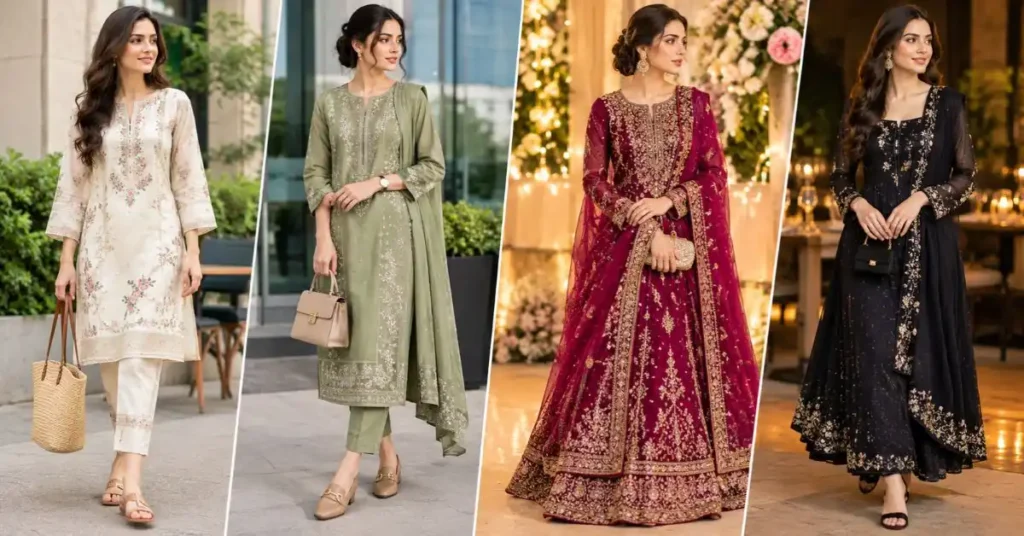
The easiest way to style an embroidered dress is to let the occasion guide your choices. Consider the level of decoration, the formality of the setting, and how long you will wear the outfit.
Everyday Outfits
For daily wear, choose an embroidered dress with a comfortable cut and modest decorative details. Small motifs around the neckline, cuffs, or hem can make a simple outfit look thoughtfully styled.
Pair a cotton dress with flat sandals, a tote bag, and small earrings. If the weather changes, add a lightweight cardigan or a simple jacket that does not hide the main design.
Avoid wearing uncomfortable shoes just to make a casual outfit look more formal. A polished outfit should also allow you to walk, sit, and complete daily tasks easily.
Office and Smart-Casual Looks
For a workplace or professional gathering, look for clean lines, restrained embroidery, and colors that suit your environment.
A solid-colored embroidered shirt dress or a traditional suit with subtle threadwork can create a neat appearance. Coordinate it with loafers, flats, or low heels and a structured handbag.
If the dress already features decorative sleeves or a detailed neckline, keep your jewelry minimal. This helps the overall outfit look balanced rather than busy.
Always consider your workplace dress code and the practical demands of your day.
Weddings and Festive Celebrations
Wedding events provide more room for elaborate designs, metallic details, rich colors, and statement accessories.
For a traditional celebration, an embroidered suit, lehenga, maxi, or formal gown can work depending on the event and your personal preferences. Choose the weight of the garment according to the venue and season.
If you select a heavily embroidered dress, avoid adding too many competing details. One statement accessory, such as earrings or a clutch, may be enough.
For a vibrant pre-wedding celebration, you can explore ideas in this guide to Mehndi dresses.
Before finalizing your outfit, test whether you can sit comfortably, walk without tripping, and move your arms without pulling the fabric.
Dinner Dates and Evening Events
An embroidered midi dress, elegant maxi, or refined Western-style outfit can suit a dinner date or evening event.
Choose a silhouette that makes you feel comfortable and confident. Dark shades, jewel tones, neutrals, and subtle metallic details can all work, depending on the setting.
Pair the dress with a small handbag, comfortable heels or dressy flats, and jewelry that complements its embroidery.
The goal is to create a coordinated outfit, not to make every accessory equally noticeable.
How to Match Colors, Shoes, and Accessories
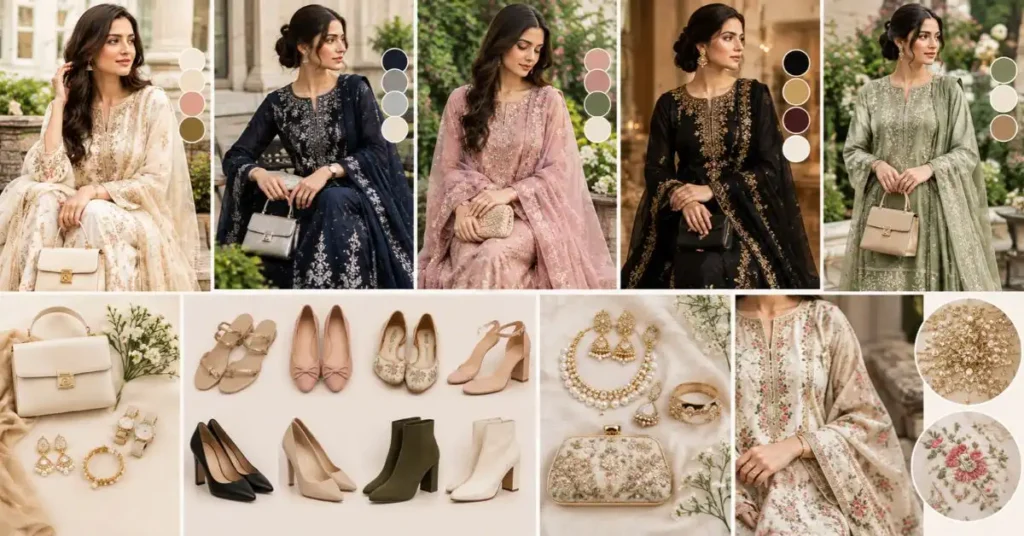
Color coordination helps embroidered clothing look intentional. Because embroidery already adds visual detail, start with the dress itself before selecting shoes, bags, and jewelry.
Choose Colors That Work Together
Neutral dresses provide a versatile background for colorful embroidery. Ivory, beige, black, navy, and soft grey can work with many accent colors, although the exact combination depends on the design.
For example, a cream dress with gold threadwork can pair well with warm metallic accessories. A navy dress with silver embroidery may work with silver earrings and a matching clutch.
Bright floral embroidery can contain several colors. Instead of trying to match every shade, select one color from the pattern and repeat it in a small accessory.
If the dress already contains strong contrasts, simple shoes and a neutral bag can help maintain balance.
Select Shoes for Comfort and Style
Footwear should match the occasion and the dress length.
- Flat sandals: Useful for casual outings and warm weather.
- Ballet flats: A comfortable option for daytime events and smart-casual outfits.
- Khussa shoes: Can complement traditional South Asian embroidered clothing.
- Block heels: Offer an option for formal events when you want added height.
- Classic pumps: Often suit office outfits and structured formal dresses.
- Elegant boots: Can work with certain embroidered midi dresses in cooler weather.
Try your shoes with the dress before an important event. Check the hem length and make sure you can walk comfortably.
Balance Jewelry and Handbags
The embroidery should guide your accessory choices.
A dress with a highly decorated neckline may need only earrings and a bracelet. If the dress has minimal stitching, a statement necklace or decorative earrings can add interest.
Choose a handbag that suits the event. A small clutch can work for a formal celebration, while a medium shoulder bag or tote may be more useful for everyday wear.
Avoid accessories with sharp edges that could catch delicate embroidery. Also check that heavy jewelry does not pull at the neckline or damage lightweight fabric.
Seasonal Styling Tips for Embroidered Dresses
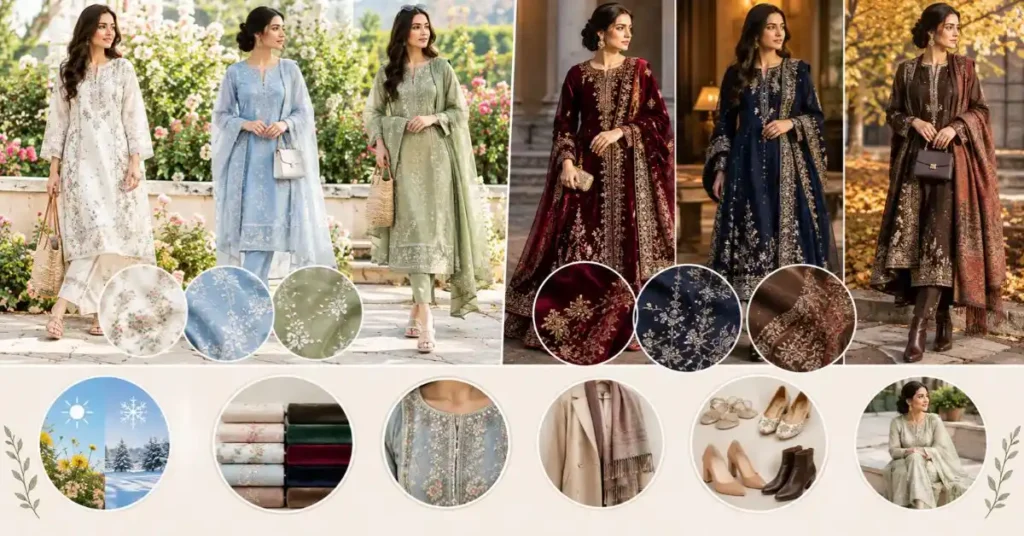
Seasonal styling is about more than choosing a fashionable color. Fabric weight, lining, sleeve length, and the event’s location all affect comfort.
Spring and Summer
Warm weather often calls for lighter materials, relaxed silhouettes, and breathable construction.
Cotton, lawn, and some lightweight blends can work well for daytime outfits. Choose delicate floral embroidery, small motifs, or light threadwork if you want a comfortable look.
Soft pink, cream, sky blue, sage green, and other light shades can create a fresh seasonal appearance. However, darker colors can also work if the fabric and fit suit the weather.
For outdoor events, consider sun exposure, humidity, and the amount of time you will spend walking or standing.
Autumn and Winter
Cooler weather allows more options for layering and heavier fabrics.
Velvet, thicker blends, and lined formal dresses can work for evening celebrations. Deep green, burgundy, navy, plum, and rich brown can complement metallic embroidery.
You can add a tailored coat, shawl, or suitable outer layer without covering every decorative detail. Choose layers that allow you to move freely and remain comfortable indoors.
Heavy embellishment can add weight, so consider the total weight of the outfit before buying it.
A Simple Seasonal Styling Framework
Use these steps to prepare an embroidered outfit:
- Check the weather: Consider heat, humidity, rain, and temperature.
- Choose the fabric: Select a material that suits the conditions.
- Assess the embroidery: Decide whether the decorative work feels suitable for the occasion.
- Plan the layers: Add a cardigan, coat, or shawl when needed.
- Coordinate footwear: Choose shoes that suit the ground, venue, and walking distance.
- Test comfort: Sit, walk, and raise your arms before leaving home.
This process can help you avoid an outfit that looks attractive but feels impractical after a few hours.
How to Care for Embroidered Dresses
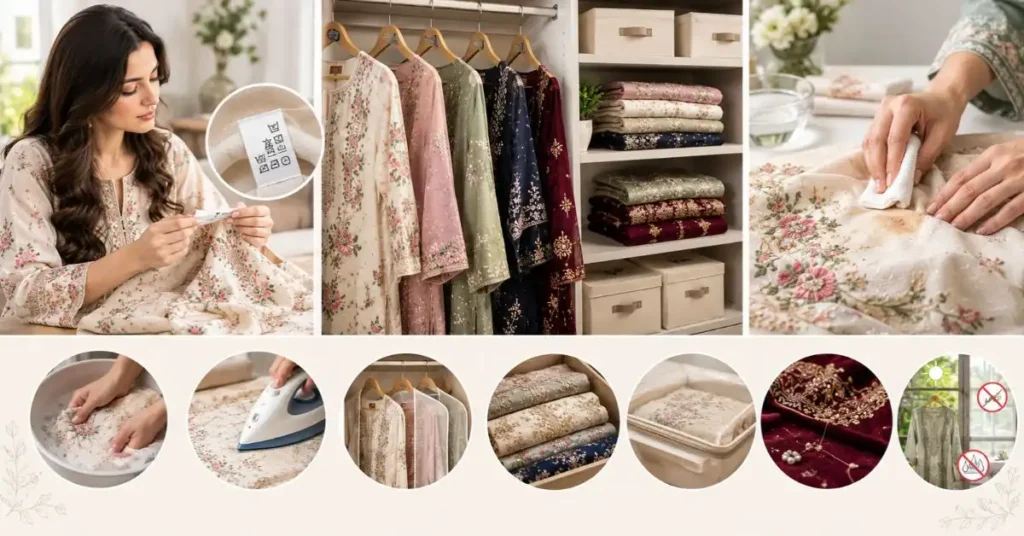
Proper care helps preserve the appearance of embroidery and the fabric beneath it. The correct method depends on the garment’s material, thread, beads, sequins, lining, and construction.
Do not assume every embroidered dress needs the same cleaning method.
Read the Care Label
Check the label before washing or ironing. Some cotton dresses with simple threadwork may tolerate gentle washing, while embellished silk, velvet, or delicate formalwear may require professional cleaning.
If the care instructions recommend dry cleaning, follow them. Avoid experimenting with water, detergent, bleach, or stain removers on delicate embroidery.
For valuable or fragile garments, seek advice from a professional cleaner who understands embellished clothing.
Protect the Embroidery During Storage
Hang sturdy dresses on suitable hangers that support their shoulders. Store heavy garments carefully because the weight of the fabric and decoration can strain seams over time.
For delicate or heavily embellished clothing, folded storage may work better when you support the garment and prevent beads or metallic details from pressing into the fabric. Use clean, breathable storage materials appropriate for the garment.
Keep embroidered clothing away from prolonged direct sunlight, damp spaces, and rough surfaces.
Handle Stains and Loose Threads Carefully
Do not rub a stain aggressively. Rubbing can distort stitches, damage fibers, or spread the mark.
Blot a fresh spill gently with a clean cloth if the garment’s care instructions allow it, then seek suitable cleaning advice. Avoid pulling loose threads or cutting them without checking how they connect to the embroidery.
For more information, consult the George Washington University Museum and The Textile Museum’s textile-care guidance. Its resources explain how handling, environmental conditions, and cleaning methods affect textiles.
Common Mistakes to Avoid When Choosing Embroidered Dresses
A beautiful design is only one part of a successful outfit. Avoiding a few common mistakes can help you choose clothing that works well beyond the fitting room.
- Choosing decoration over comfort: Heavy embroidery can add weight and stiffness. Check how the garment feels when you move.
- Ignoring the season: Thick velvet may feel uncomfortable in hot weather, while a thin unlined dress may not suit a cold outdoor event.
- Over-accessorizing: Too many statement pieces can compete with detailed stitching. Choose one or two accessories that support the look.
- Buying the wrong size: Tight seams may pull the embroidery, while excessive looseness can affect the silhouette. Check the shoulders, bust, waist, hips, and hem.
- Overlooking the lining: Rough backing or poorly finished seams may irritate your skin. Inspect the inside of the dress when possible.
- Ignoring cleaning requirements: Special-care clothing may cost more to maintain. Check the instructions before purchasing.
- Following trends without considering personal style: A design may look attractive on someone else but may not suit your preferences or routine.
- Waiting until the last minute: Formal embroidered clothing may need alterations. Leave time for fitting and adjustments before an important event.
A useful approach is to consider the full outfit rather than judging the dress by its embroidery alone. Fabric, construction, fit, shoes, and comfort all matter.
Embroidered Dress Selection Checklist
Use this checklist before purchasing or wearing an embroidered dress.
- Confirm the occasion and expected level of formality.
- Choose a fabric suitable for the weather.
- Inspect the embroidery for loose threads and uneven finishing.
- Check the neckline, sleeves, waist, and hem for a comfortable fit.
- Make sure the lining feels comfortable against your skin.
- Confirm that the dress allows you to sit, walk, and move freely.
- Select shoes that suit the dress length and venue.
- Coordinate jewelry and a handbag without overcrowding the design.
- Read the garment’s washing and care instructions.
- Consider cleaning and alteration costs when setting your budget.
- Try the complete outfit before an important event.
This checklist works for casual dresses, formal outfits, traditional suits, and wedding clothing. Adjust it according to the garment’s construction and your needs.
Frequently Asked Questions About Embroidered Dresses
1. What are embroidered dresses?
Embroidered dresses are garments decorated with stitched patterns, motifs, or borders. Designs may use thread, metallic thread, beads, sequins, or other embellishments. They range from simple everyday clothing to elaborate formalwear.
2. Which embroidered dresses are best for everyday wear?
Cotton and lawn dresses with light threadwork often work well for everyday wear, especially in warm weather. Choose a comfortable silhouette, practical shoes, and decorative details that do not make the outfit too heavy.
3. Are embroidered dresses suitable for weddings?
Yes. Embroidered dresses can suit wedding ceremonies, receptions, engagement parties, and other celebrations. Choose the fabric, color, silhouette, and level of embellishment according to the event’s formality and your personal style.
4. How do I style a heavily embroidered dress?
Keep the remaining elements simple. Choose shoes and a handbag that complement the main color, then add limited jewelry. If the neckline or sleeves feature dense embroidery, avoid accessories that compete with those areas.
5. Which fabrics are best for embroidered dresses?
Cotton, lawn, chiffon, organza, silk, and velvet can all work for embroidered clothing. The best option depends on the embroidery technique, garment construction, weather, and occasion. Always check the care instructions before buying.
6. Can I wash embroidered dresses at home?
Some lightly embroidered garments can be washed at home if their care labels allow it. Delicate fabrics, beads, metallic thread, sequins, and heavy embellishment may require professional cleaning. Never assume that every embroidered dress can tolerate machine washing.
7. How can I make embroidered dresses look modern?
Choose a clean silhouette, coordinate the outfit around one main color, and avoid excessive accessories. Pair traditional embroidery with contemporary footwear or a simple handbag to create a balanced look.
8. What shoes should I wear with embroidered dresses?
Flat sandals and ballet flats suit many casual outfits, while block heels, pumps, or elegant traditional footwear can work for formal occasions. Consider comfort, dress length, and the venue before choosing your shoes.
9. Are floral embroidered dresses suitable for summer?
Yes. Floral embroidered dresses in breathable fabrics can work well for summer. Look for lightweight construction, comfortable lining, and modest embroidery density to help reduce unnecessary heat and weight.
10. How should I store embroidered dresses?
Store clean, completely dry garments in a cool, dry place away from prolonged direct sunlight. Support heavy clothing properly, protect delicate stitching from snagging, and follow any specific storage advice provided for the fabric.
Final Thoughts
Embroidered dresses offer many ways to combine craftsmanship, personal style, and practical clothing choices. Whether you prefer delicate floral stitching, colorful threadwork, traditional Pakistani designs, or richly embellished formalwear, the right outfit should suit your occasion and feel comfortable to wear.
Start by choosing the dress’s purpose. Then consider fabric, silhouette, color, embroidery placement, and accessories. Check the fit carefully and follow the garment’s care instructions to help preserve its appearance.
You do not need the heaviest embroidery or the most expensive fabric to create an elegant outfit. Thoughtful details, suitable proportions, and comfortable styling can make a simple dress feel special.
At Style Aura Dresses, we aim to provide useful fashion inspiration to help you explore different styles and make informed clothing decisions. Choose embroidered clothing that reflects your taste, supports your lifestyle, and makes you feel confident.
Zahida Amir is the creative force behind Style Aura Dresses, a multicultural fashion blog. With a passion for timeless elegance, she curates easy-to-follow style guides that help readers find the perfect look for every occasion.