
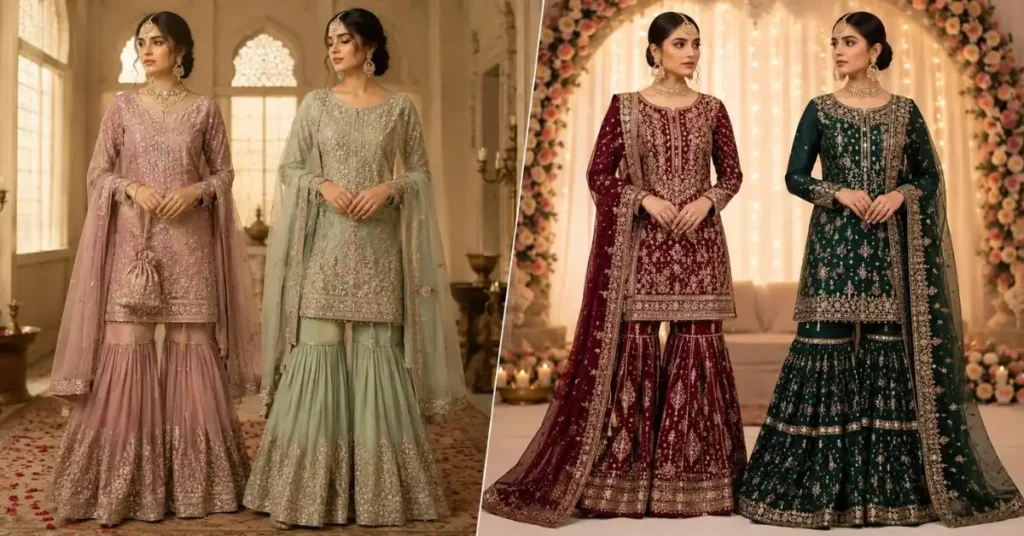
If you have ever stood in a boutique scrolling through racks of flared ethnic wear, wondering whether you are holding a sharara or a gharara, you are far from alone. The confusion around Sharara vs Gharara is one of the most common questions in South Asian fashion, and honestly, it makes sense. Both pieces look similar at first glance, both flare dramatically, and both have earned their place at weddings, mehndis, and festive gatherings across Pakistan and India. But once you understand the construction behind each one, the Sharara vs Gharara debate becomes refreshingly simple. This guide breaks down everything you need to know, from cut and fabric to occasion and styling
What Is a Sharara?
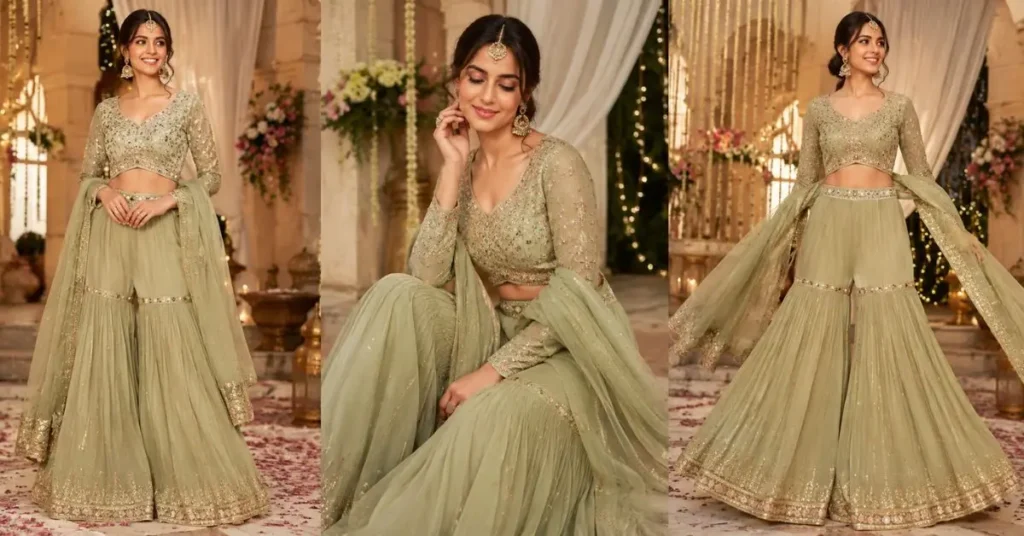
A sharara is a three-piece ensemble that typically includes wide-leg flared trousers, a kurti or fitted top, and a dupatta.They are very wide and start flaring from the waist or hips, with no stitching appearing at the knee. This continuous sweep of fabric is exactly what gives the sharara its flowy, skirt-like movement.
Shararas are mostly made from soft, light fabrics like georgette, chiffon, crepe, or light silk, which feel airy and easy to wear, allowing you to walk, sit, and dance comfortably. This is one major reason brides and bridesmaids alike gravitate toward this piece for high-energy functions like mehndi or sangeet, where movement matters as much as appearance.
The silhouette pairs beautifully with both traditional and modern tops. With crop tops, peplum kurtis, or trendy blouses, a sharara can look very young and fresh. That versatility is exactly why this outfit has stayed relevant across generations, constantly reinventing itself while keeping its signature flare intact.
What Is a Gharara?
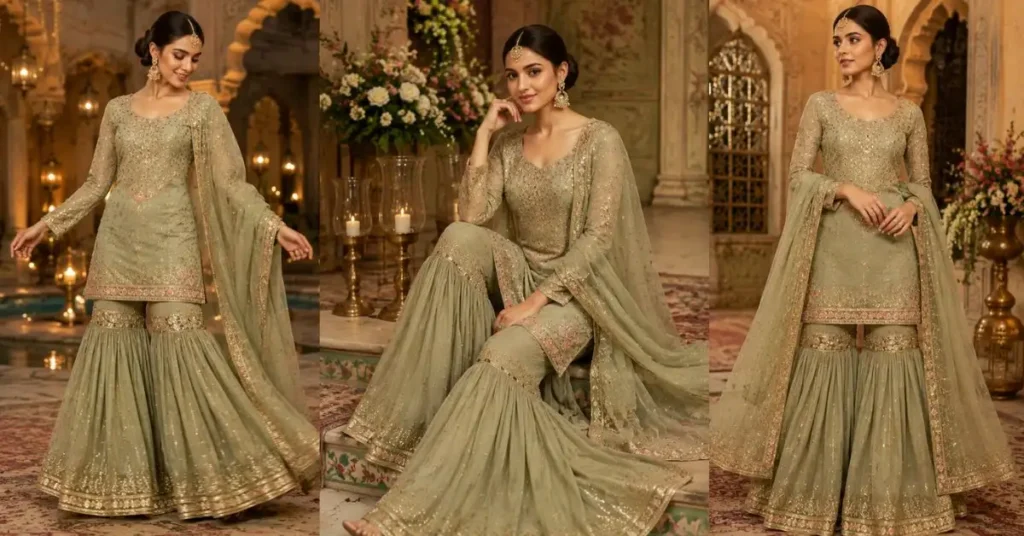
A gharara takes a more architectural approach to the same flared concept. It usually consists of pants that are fitted or straight from the waist down to the knee, with a knee band that is what makes a gharara easy to recognize. From that band, the fabric is gathered to create a big, dramatic flare, giving the gharara a strong, royal look with a touch of old-world charm.
The fabric choice tends to be richer too. Ghararas are often made from richer fabrics like brocade, jamawar, silk, or velvet, usually featuring heavy embroidery, zari, stones, or gota work. This is precisely why ghararas often feel like showstoppers rather than everyday festive pieces.
A gharara is a traditional Mughal-era outfit that originated in Lucknow, the heart of Nawabi culture in India, structured as a two-legged ensemble where the pants are divided but appear like a flowing skirt.
Sharara vs Gharara Key Differences
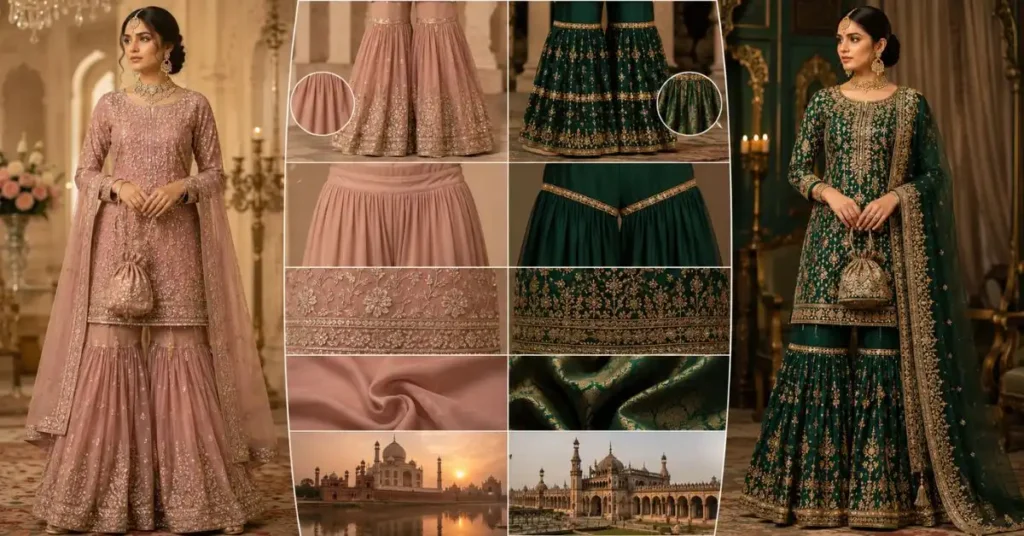
Now that you understand each piece individually, let’s break down the Sharara vs Gharara comparison in detail, because the differences go beyond just appearance.
Silhouette and Cut
This is the single most important distinction in the Sharara vs Gharara conversation.A simple trick to tell them apart at a glance: if you can see a band at the knee, it is a gharara.
Fabric and Flow
Shararas are typically made using lightweight and flowing materials such as georgette, chiffon, or crepe, while ghararas are more heavily woven and embroidered with silk, brocade, or velvet to carry their structured flair and elaborate embroidery. This fabric difference directly affects how each outfit moves on the body one floats, the other commands attention with weight and structure.
Stitching Technique
The construction technique sets these two apart at a technical level. A sharara is cut as one continuous panel from waist to ankle, requiring no internal seam. A gharara, by contrast, is stitched in two distinct sections joined precisely at the knee, which is what creates its tiered, sculptural drama. This single seam is the entire reason these two outfits look so different despite using similar amounts of fabric.
Historical Origin
The sharara style has its roots in Mughal culture and remains popular in Pakistan, India, and Bangladesh, especially for weddings, festive occasions, and formal parties. The gharara, meanwhile, carries an even more specific regional legacy. The gharara originated in the 19th century, when places like Lucknow were known as the era of the Nawabis, and it was a dress preferred by the aristocratic class as a representation of grace, class, and literary sophistication.
Which One Suits Your Body Type
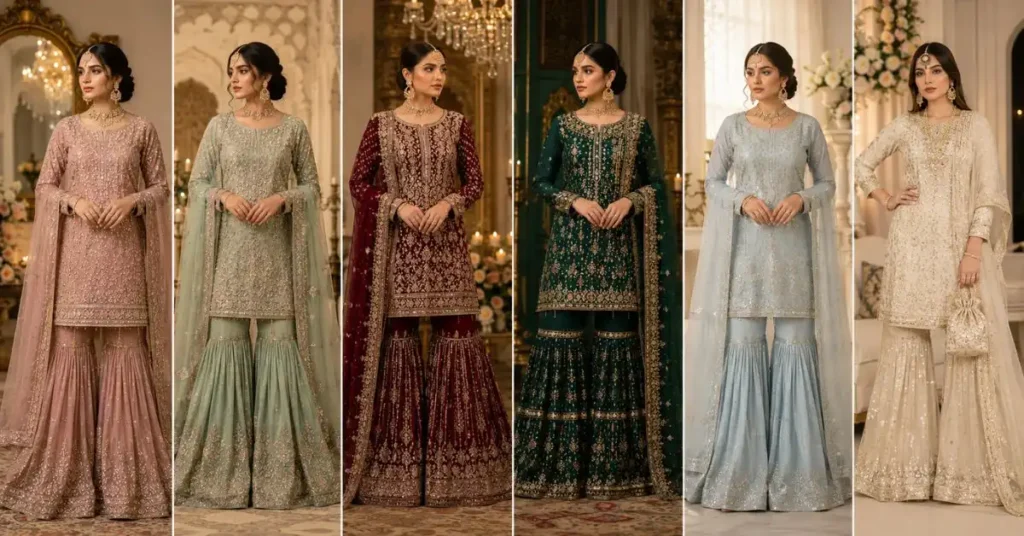
When deciding on Sharara vs Gharara, your body type and comfort preferences matter just as much as the occasion. Shararas suit most body types since their flared shape balances any proportion and is flattering, especially for a pear-shaped or curvy physique.
Ghararas, with their knee-flare structure, work beautifully on taller frames and those who want added volume through the lower body. Shararas visually elongate, while ghararas can add volume and drama to taller or medium-height frames. If you are petite, a sharara may feel more proportionate, whereas a gharara can add the height and presence many brides love for their main event.
Best Occasions for Sharara vs Gharara
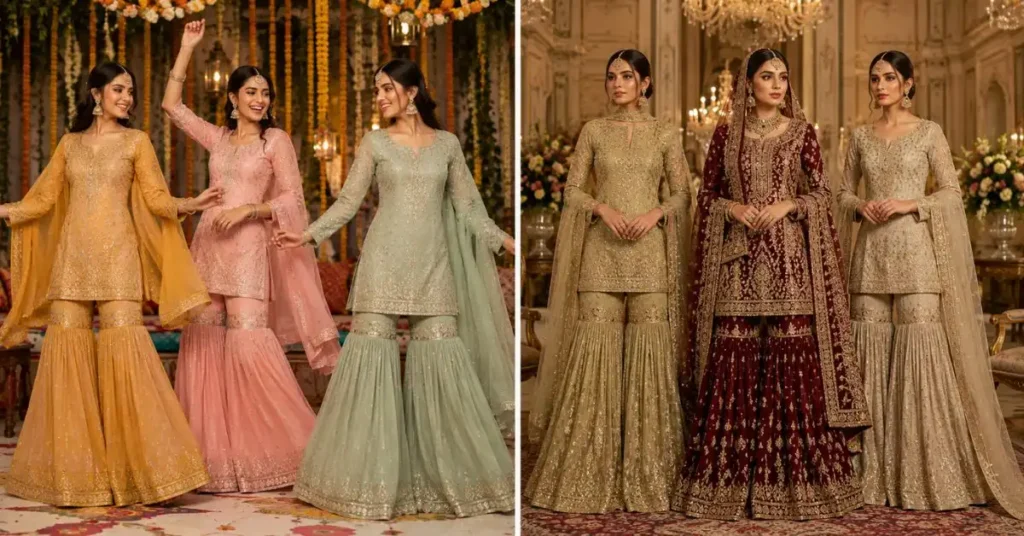
Choosing between these two outfits often comes down to the event itself. Shararas are lightweight, comfortable, and flowy, making them perfect for festive gatherings, casual parties, or even daytime weddings, while ghararas, with their regal knee flare and fitted structure, are more suited for formal occasions, bridal wear, and grand celebrations.
For mehndi nights filled with dancing and movement, a sharara is almost always the smarter pick. Light weight ghararas with subtle work are apt for pre-wedding events, while heavily decorated ghararas give a very festive appearance suited to weddings and receptions. Engagement ceremonies, nikkah functions, and formal family gatherings tend to call for the structured elegance only a gharara can deliver.
Fabric and Color Trends 2026
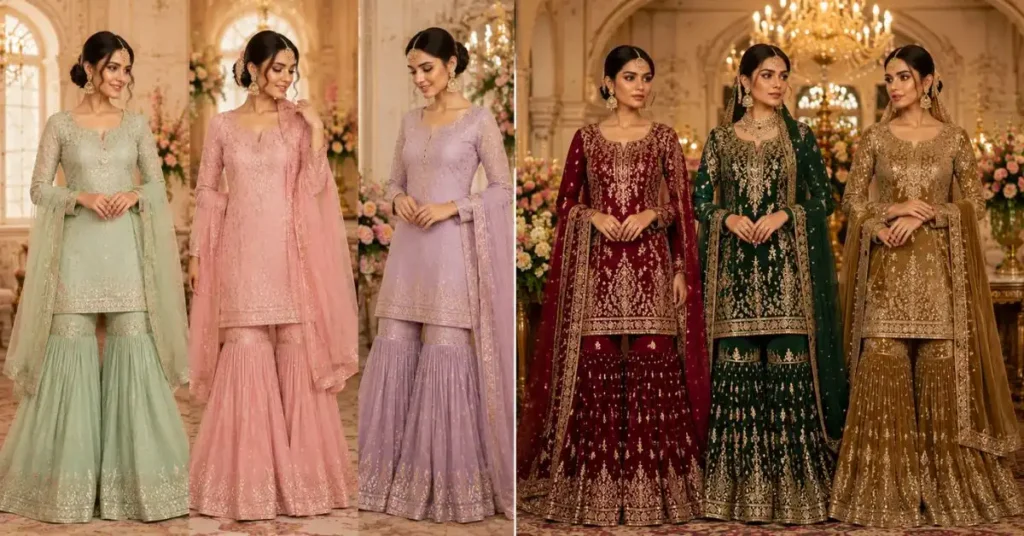
This year’s bridal and festive market has embraced a wider palette for both styles.Pastel shararas in soft mint, blush, and lilac are dominating daytime functions, often finished with delicate threadwork rather than heavy embellishment. For ghararas, jewel tones remain the favorite, especially deep maroon, emerald, and gold, frequently paired with zari and gota detailing that nods to their royal heritage. Tissue and organza have also entered the conversation for shararas, lending shimmer without weight, while velvet ghararas continue to dominate the winter wedding season for their warmth and visual richness.
How to Style Sharara vs Gharara
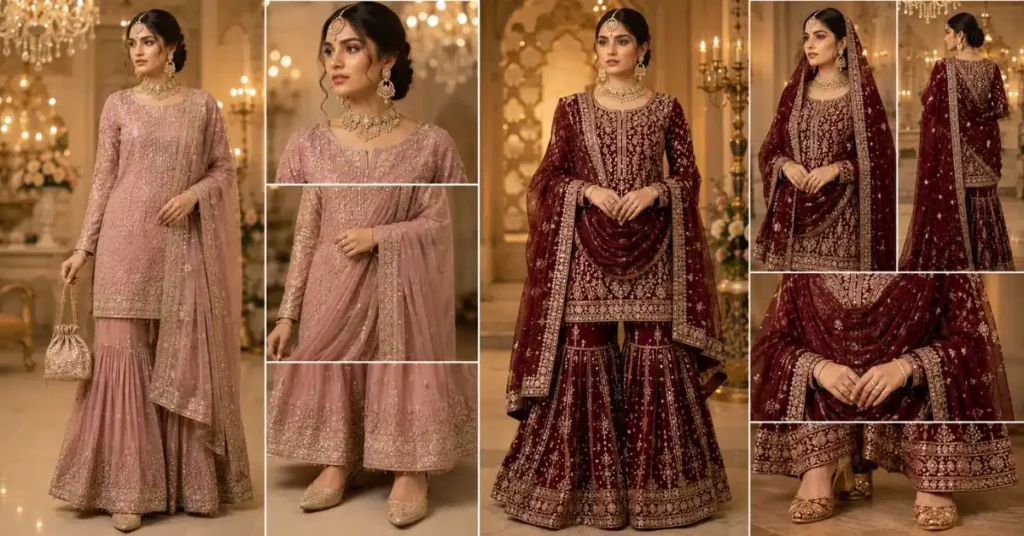
Styling makes all the difference once you have chosen your silhouette. For sharara sets, keep the dupatta draped casually over one shoulder for a relaxed, modern finish, and pair the outfit with delicate jhumkas or a slim choker rather than heavy jewelry, which can overwhelm the flow of the fabric. Metallic heels or embroidered juttis both work well, depending on how formal the event is.
Gharara styling leans into drama and tradition. A front pleated drape, where you pin pleats neatly across the front and drape evenly on both arms, creates a balanced bridal look, while a head and shoulder drape is ideal for brides who want to cover the head slightly and let the dupatta fall gracefully over the shoulder. Pair this structured piece with kundan or polki jewelry, and finish with block heels or embellished mojaris to let the knee flare move naturally without dragging.
Sharara vs Gharara Which Should You Choose
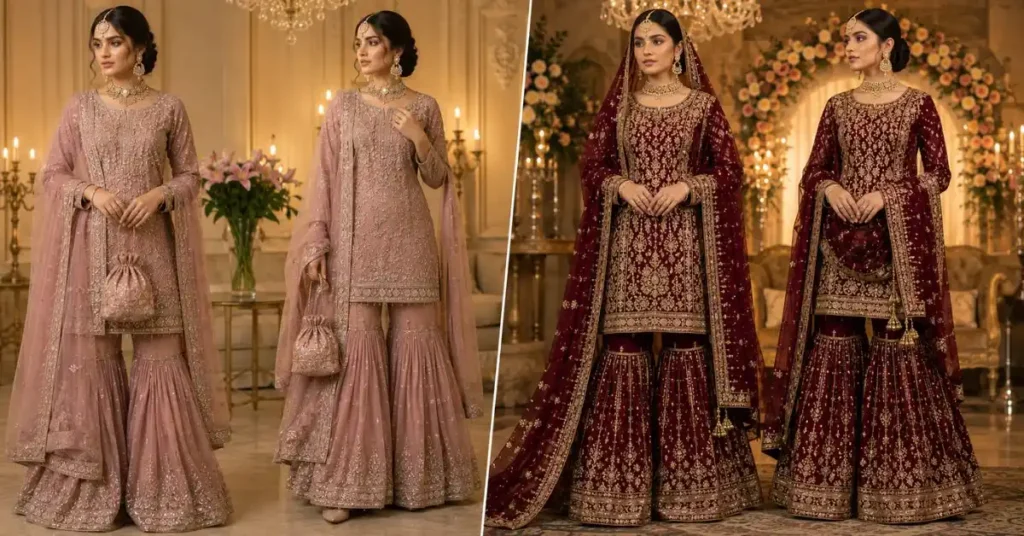
There is no universally correct answer in the Sharara vs Gharara debate; it genuinely depends on what you want your outfit to communicate. You should choose a sharara if you prefer comfort, elegance, and modern style, especially when you want to look festive but do not want to manage a heavy outfit, as it suits young bridesmaids, party wear, or semi-formal gatherings.
You should choose a gharara if you want a traditional and royal appearance, as it gives a regal vibe and is often a show-stopper at weddings, particularly when worn by brides in heavily embroidered fabrics paired with dupattas full of zari and stones.
If your event calls for dancing, mingling, and ease of movement, lean sharara. If your event is the main ceremony itself, where drama and tradition take center stage, the gharara is unlikely to disappoint.
Conclusion
Understanding Sharara vs Gharara ultimately comes down to recognizing one simple detail: the knee seam. A sharara flows in one continuous sweep from the waist, offering comfort and effortless movement, while a gharara introduces a structured knee joint that creates a dramatic, regal flare perfect for grand occasions. Both outfits carry centuries of South Asian heritage, and neither is inherently better than the other; it simply depends on your event, your body type, and the kind of impression you want to leave. Whether you lean toward the breezy elegance of a sharara or the majestic structure of a gharara, both pieces guarantee you will walk into any celebration feeling beautiful and confident.
FAQs
Q1: What is the main difference between Sharara vs Gharara?
A sharara flares evenly from the waist with no knee seam, while a gharara is fitted to the knee and flares from a visible stitched joint.
Q2: Which is more traditional, Sharara or Gharara?
Ghararas are generally considered more traditional due to their Lucknowi Nawabi origins and structured tiered construction.
Q3: Which outfit is better for dancing at mehndi or sangeet?
A sharara is the better choice since its lightweight fabric and continuous flare allow for much easier movement.
Q4: What fabrics are best for Sharara vs Gharara?
Shararas work best in georgette, chiffon, and crepe, while ghararas shine in silk, brocade, jamawar, and velvet.
Q5: Can a Sharara or Gharara be worn for a wedding reception?
Yes, both work beautifully for receptions, though a heavily embroidered gharara typically delivers a more formal, bridal-worthy look.
Zahida Amir is the founder and creative force behind Style Aura Dresses, a multicultural fashion blog celebrating South Asian, Western, and bridal dress styles. With a deep passion for fashion trends and timeless elegance, Zahida Amir curates content that helps readers discover the perfect look for every occasion.
Through Style Aura Dresses, Zahida Amir shares style guides, dress inspiration, and expert fashion tips, blending traditional and contemporary influences to inspire women worldwide.