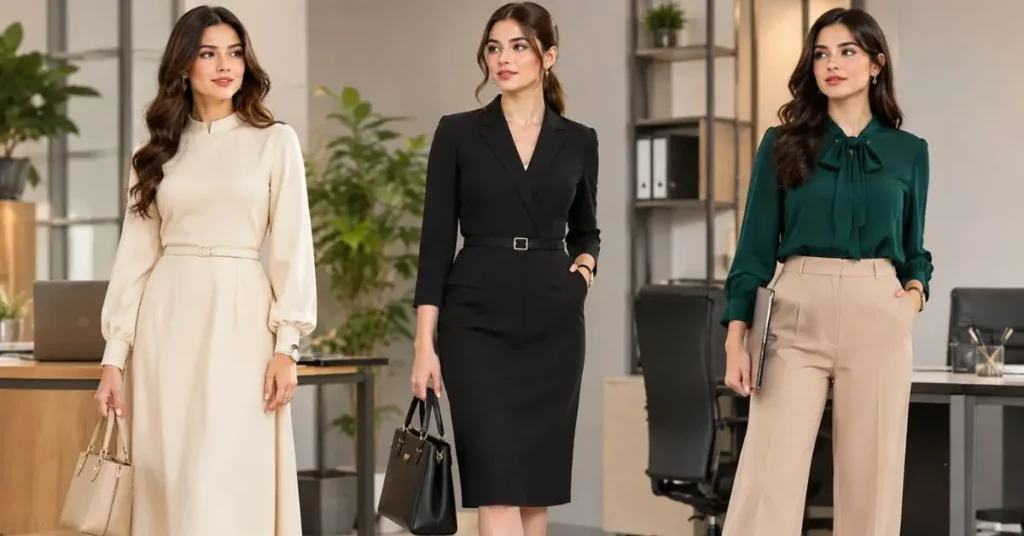
Choosing the right outfit for the office does not mean sacrificing personal style. The best work dresses combine comfort, polish, and practicality, making it easier to feel confident throughout a busy day. From formal corporate settings to relaxed business-casual workplaces, the right style can help you look put together without feeling overdressed.
A good office wardrobe should also work with your daily routine. Breathable fabrics, comfortable fits, practical lengths, and versatile colors can make an outfit much easier to wear from morning meetings to afternoon tasks. The key is to understand your workplace dress code and choose pieces that reflect both professionalism and your personality.
What Are Work Dresses?
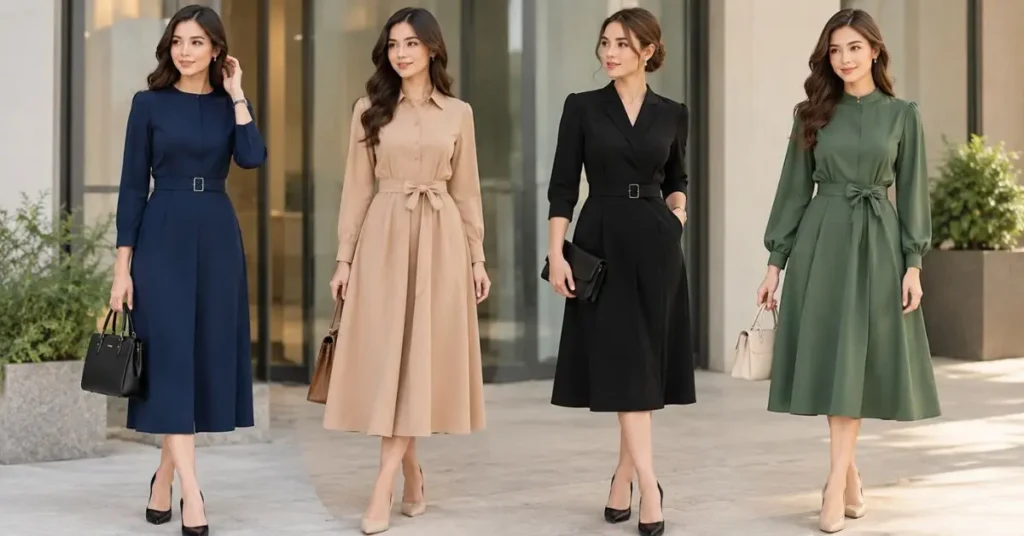
Work dresses are styles designed to provide a polished and appropriate appearance in professional settings. They usually feature practical lengths, comfortable fits, modest necklines, and fabrics that maintain their shape throughout the day.
A suitable office style should allow you to move comfortably while still looking neat. Structured midi silhouettes, shirt styles, wrap-inspired designs, and simple A-line shapes are often versatile choices. However, the best option depends on your workplace, profession, and personal preferences.
Color also matters. Neutral shades such as navy, black, beige, cream, and charcoal are easy to style, while muted jewel tones can add personality without appearing too casual.
How to Choose the Right Work Dresses
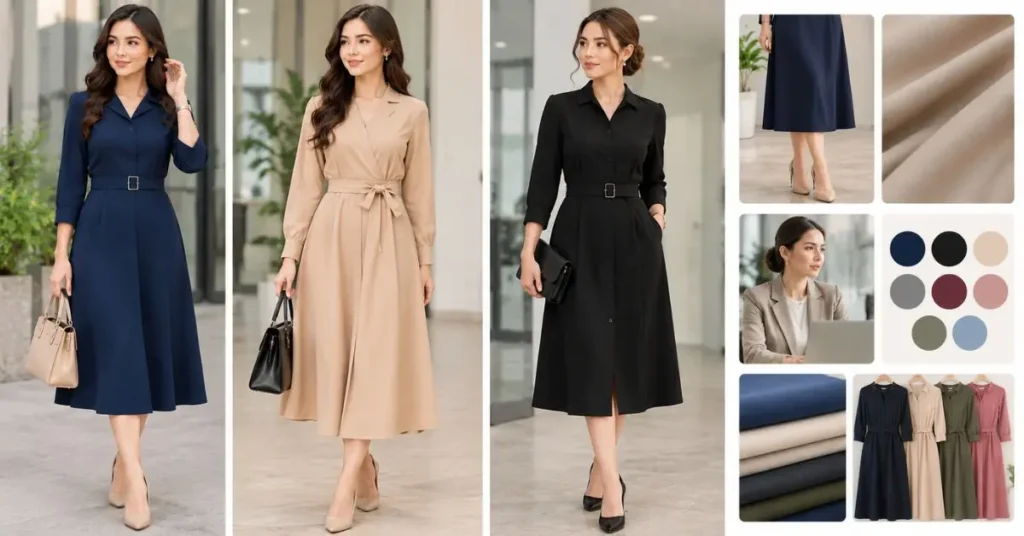
Finding the right office outfit becomes much easier when you consider a few practical details.
Choose the Right Length
For most professional environments, knee-length or midi styles are dependable choices. They offer enough coverage while allowing comfortable movement throughout the day.
A midi silhouette can be especially useful because it works well with pumps, loafers, flats, and ankle boots. If your workplace has a more relaxed dress code, you may have additional flexibility.
Consider the Fit
Fit should be comfortable rather than extremely tight or excessively loose. Clothing that requires constant adjustment can become distracting during meetings and daily tasks.
Look for a silhouette that follows your shape without restricting movement. A slightly structured fit can create a polished appearance while still allowing you to sit, walk, and work comfortably.
Select Comfortable Fabrics
Fabric can make a major difference in how an outfit feels during a long workday. Cotton, crepe, ponte, linen blends, viscose, and lightweight wool blends can provide different combinations of comfort, structure, and breathability.
For warmer weather, breathable materials and lighter constructions can help you stay comfortable. In cooler months, layered fabrics can provide warmth without making the outfit look bulky.
Think About the Workplace Dress Code
Every workplace has its own expectations. A corporate office may require more traditional tailoring, while a creative workplace may allow greater freedom with color, prints, and silhouettes.
Before buying new pieces, observe what people in your workplace actually wear. This gives you a practical idea of how formal or relaxed your wardrobe should be.
Choose Versatile Colors
Neutral colors are valuable because you can style them in several ways. A navy or black piece, for example, can work with different shoes, bags, jackets, and accessories.
You can also introduce muted colors such as burgundy, soft blue, olive, or dusty rose when you want more personality.
Best Work Dresses for Different Office Environments
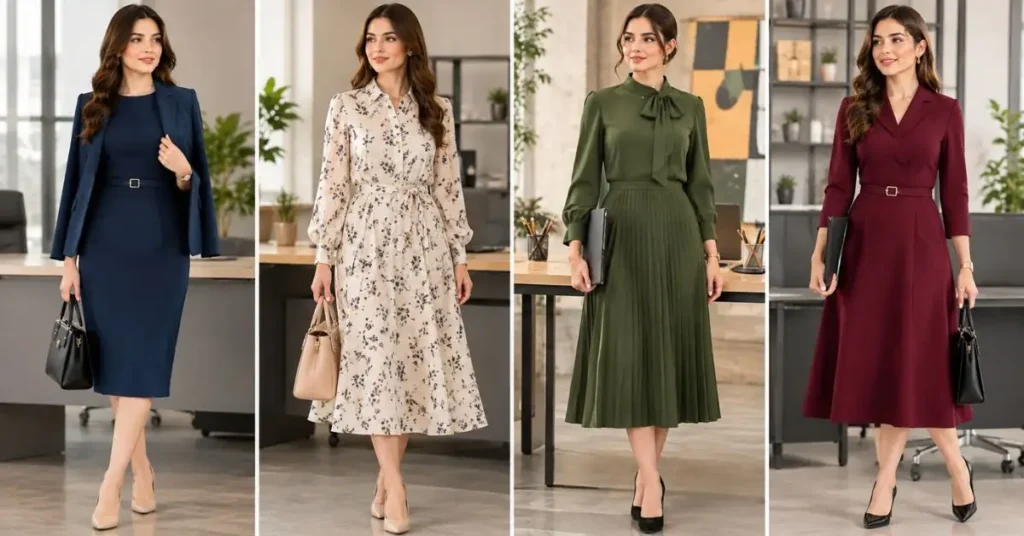
Not every professional environment requires the same approach to clothing. Your role and workplace culture should guide your choices.
Corporate Office
A corporate environment usually calls for refined and structured clothing. Choose clean silhouettes, subtle patterns, and sophisticated colors.
A tailored midi style paired with a blazer and closed-toe shoes can create a polished appearance. Keep accessories simple and choose a structured handbag for a coordinated finish.
Business Casual Workplace
Business-casual settings provide more flexibility. You can experiment with softer silhouettes, understated prints, and comfortable footwear while keeping the overall appearance professional.
Shirt styles, wrap silhouettes, and simple printed pieces can work particularly well. Pair them with loafers, ballet flats, or low heels for a balanced look.
Creative Workplace
Creative environments often allow more room for individual expression. Interesting textures, artistic prints, modern silhouettes, and unexpected color combinations can be incorporated into your wardrobe.
The key is to maintain a polished appearance even when your outfit is more expressive. Choose one statement element and keep the remaining accessories relatively simple.
Client-Facing Roles
When you regularly meet clients, your clothing should look polished and dependable. Classic silhouettes, refined colors, and well-maintained fabrics are practical choices.
Work dresses for client-facing roles should also allow comfortable movement because your day may include meetings, presentations, travel, or events.
Best Colors for Professional Workwear
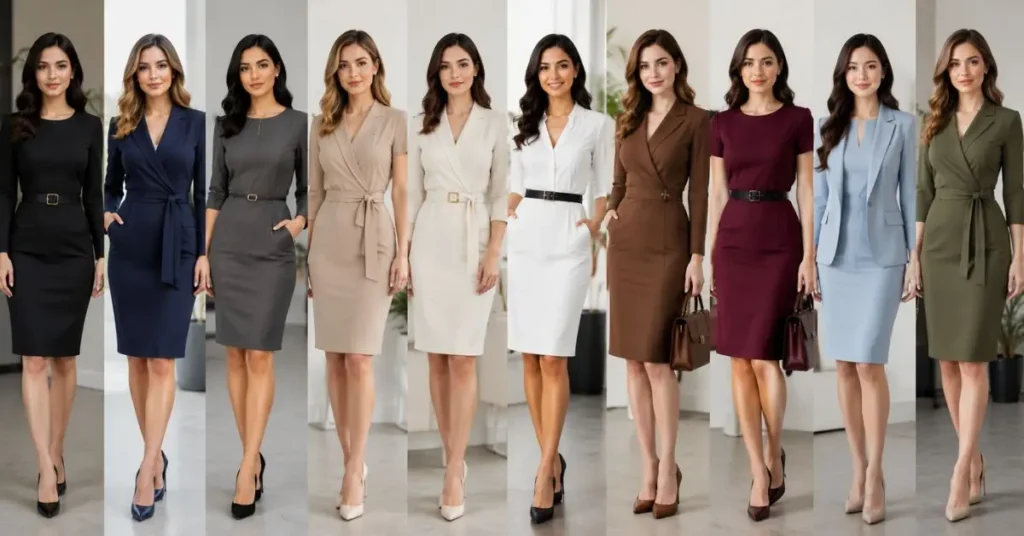
Work dresses do not have to be limited to traditional black or other dark shades. Color can change the overall impression of an outfit, while professional wardrobes can still include a range of sophisticated and versatile shades.
Popular options include:
- Black: Classic, versatile, and easy to coordinate.
- Navy: Professional and softer than stark black.
- Charcoal: A sophisticated alternative to traditional dark shades.
- Beige: Works well for refined neutral outfits.
- Cream: Creates a clean and elegant appearance.
- White: Fresh and easy to combine with darker accessories.
- Brown: Adds warmth to autumn and winter wardrobes.
- Burgundy: Provides color while remaining sophisticated.
- Soft blue: Gives a lighter, polished appearance.
- Muted green: Adds subtle personality to neutral wardrobes.
Instead of choosing colors only because they are trendy, consider whether they coordinate with the rest of your wardrobe.
Best Fabrics for Comfortable Office Wear
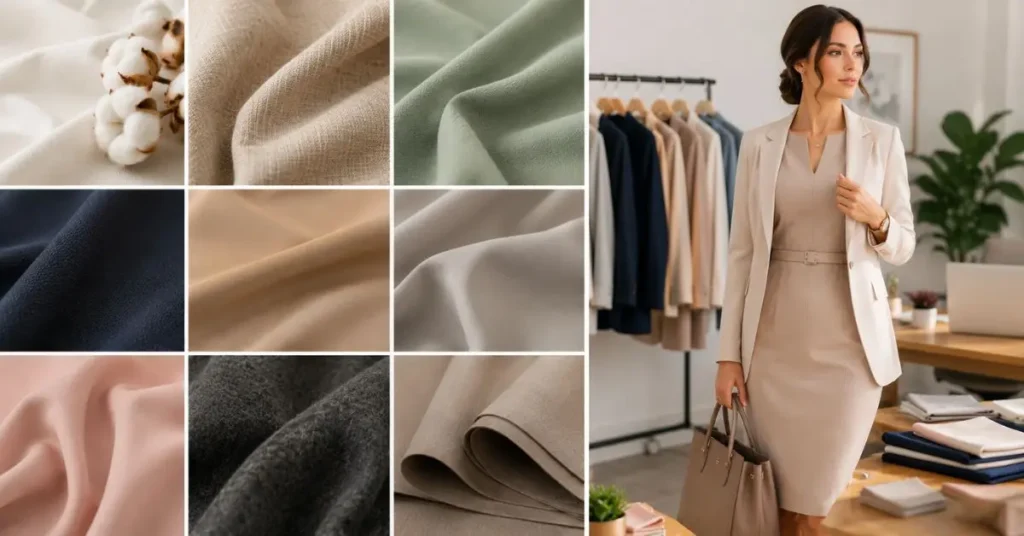
The right fabric can improve both comfort and appearance. Cotton is a reliable option for everyday wear because it is comfortable and breathable. Linen blends can be useful during warmer weather because they offer a lighter feel while often being easier to manage than pure linen.
Crepe provides a smooth appearance and can work well for polished office outfits. Ponte has a structured feel while offering flexibility, making it useful for long working days.
Viscose and rayon can provide a soft, fluid drape, while wool blends are practical for colder seasons. Lightweight structured fabrics can also help an outfit maintain its shape during a busy day.
When selecting fabric, think beyond appearance. Consider breathability, wrinkle resistance, care requirements, and the temperature of your workplace.
How to Style Work Dresses for a Polished Look
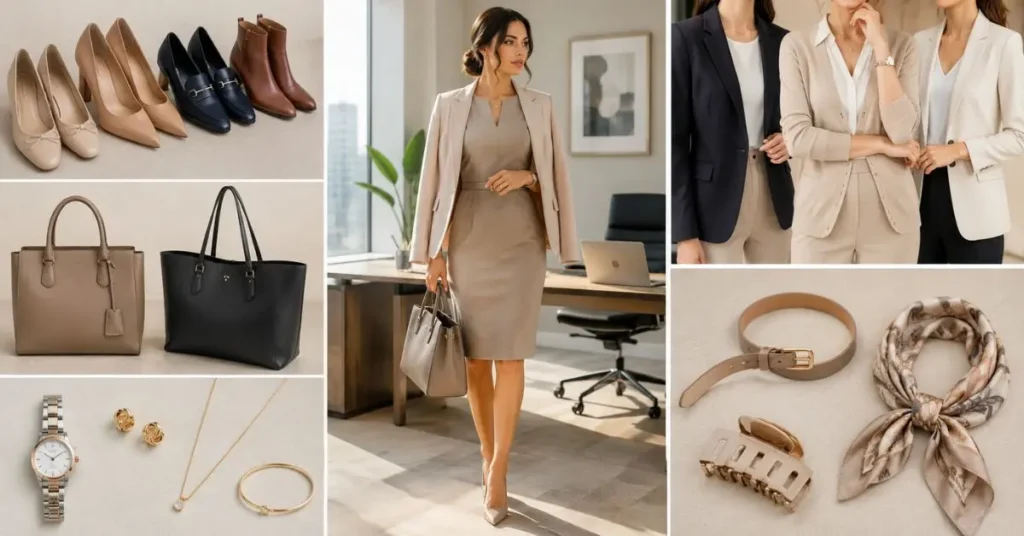
Styling can transform a simple outfit into a complete professional look. The goal is not to add as many accessories as possible but to choose pieces that work together.
Shoes
Loafers are excellent for smart-casual workplaces, while pumps can create a more traditional professional appearance. Ballet flats provide comfort, and ankle boots can work well during cooler months.
Choose footwear that suits both your workplace and your daily routine. If you spend much of the day walking, comfort should be a priority.
Bags
A structured handbag or practical tote can complete an office outfit while providing enough space for everyday essentials. Neutral shades are particularly versatile because they can coordinate with multiple outfits.
Jewelry
Simple jewelry can add polish without distracting from your clothing. Small earrings, delicate necklaces, watches, or understated bracelets can work well for professional settings.
Blazers and Layers
A blazer can instantly make an outfit appear more structured. Cardigans and lightweight jackets are useful alternatives when the workplace atmosphere is less formal.
Layering is also practical because office temperatures can vary throughout the day.
Belts and Other Accessories
A simple belt can define the waist of a relaxed silhouette and create a more finished appearance. Scarves, watches, and subtle hair accessories can also add personality without overwhelming the outfit.
Work Dresses for Different Seasons
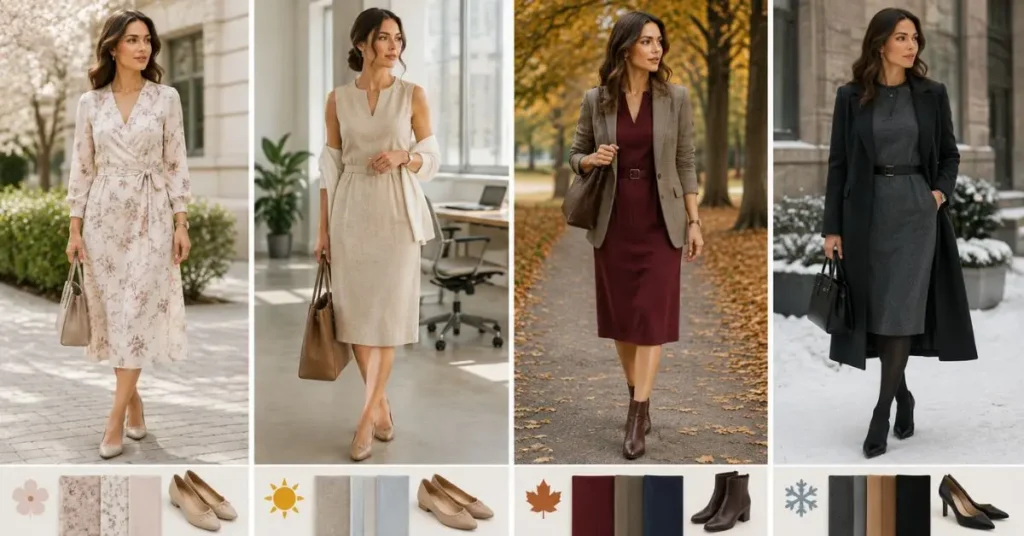
Seasonal changes should influence both fabric and styling.
Spring: Choose lightweight materials, soft colors, subtle prints, and comfortable flats.
Summer: Breathable cotton, linen blends, and lightweight viscose can help create comfortable office outfits. Keep layering options available for air-conditioned spaces.
Fall: Richer colors such as burgundy, brown, navy, and olive work beautifully with lightweight jackets and ankle boots.
Winter: Wool blends, ponte, heavier crepe, and layered styling can provide warmth. Add tights, structured coats, and closed-toe footwear when appropriate.
The most useful work dresses are often those that can be adapted across seasons with simple changes in shoes, layers, and accessories.
Common Mistakes to Avoid in Office Fashion

A professional wardrobe should make your working day easier, not more complicated. The right outfit should allow you to move comfortably while maintaining a polished appearance. Avoid these common mistakes when building and styling your office wardrobe:
- Choosing uncomfortable clothing: Avoid pieces that feel restrictive or uncomfortable after several hours. A comfortable fit makes it easier to focus on your work throughout the day.
- Ignoring your workplace dress code: Every workplace has different expectations. Check whether your environment is formal, business casual, or more relaxed before choosing your outfit.
- Wearing overly casual pieces: Items such as very casual tops, distressed clothing, or overly relaxed footwear may not work well in formal office settings. Choose polished alternatives that still reflect your personal style.
- Selecting difficult hemlines: A dress or skirt should allow you to sit, walk, and move comfortably. Consider the length and fit carefully, particularly if your work involves frequent movement.
- Using too many bold accessories: Statement jewelry, eye-catching shoes, and a bold handbag can compete with one another when worn together. Usually, one standout accessory is enough to add personality.
- Choosing high-maintenance fabrics: Fabrics that wrinkle easily may require frequent ironing or adjustment during the day. Consider practical materials that maintain their appearance with minimal maintenance.
- Wearing uncomfortable footwear: Office shoes should complement your outfit while allowing you to walk and stand comfortably. If your routine involves a lot of movement, prioritize supportive and practical styles.
- Selecting pieces that need constant adjustment: Clothing that repeatedly slips, pulls, or requires readjustment can become distracting. Choose well-fitting pieces that stay comfortable and secure during normal activities.
The goal is to find the right balance between style, comfort, and professionalism. A well-planned office outfit can look fashionable while remaining practical enough for a busy working day.
How to Build a Versatile Workwear Wardrobe
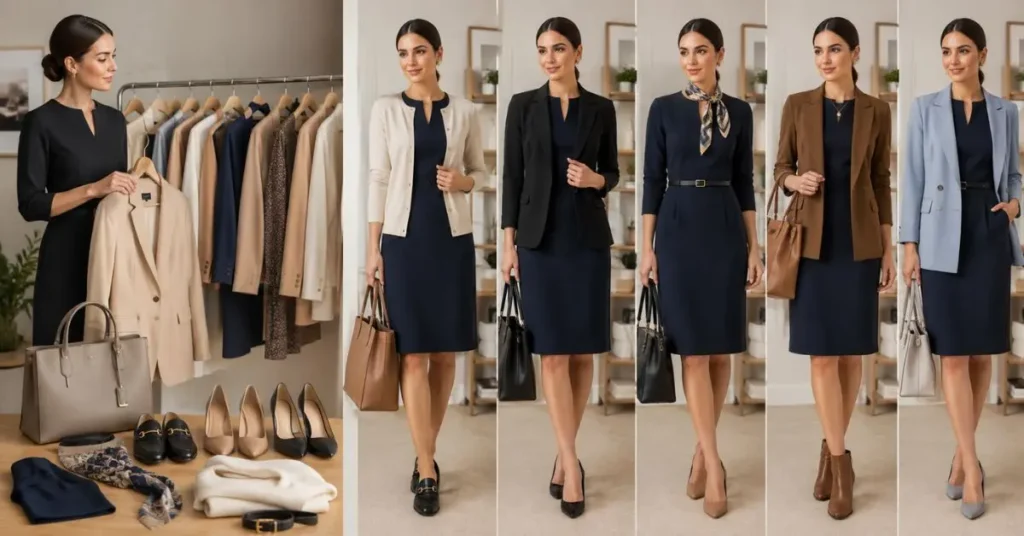
A versatile office wardrobe does not need to contain dozens of pieces. A few carefully selected work dresses can provide a strong foundation and can be styled with different shoes, layers, bags, and accessories.
Start with a small collection of reliable styles that can be combined with different accessories and layers.
Consider building your wardrobe around neutral colors first. Add a few subtle prints and accent shades once you have enough basic pieces to create multiple combinations.
For example, a navy midi style might work with a cream cardigan, black loafers, or a structured blazer. A simple black piece can be styled differently with colorful accessories, patterned scarves, or seasonal footwear.
When shopping, consider how many outfits you can create with each new item. This approach encourages thoughtful purchases and helps you get more value from your existing wardrobe.
Conclusion
The best work dresses make professional dressing feel simple rather than restrictive. By choosing comfortable fabrics, practical lengths, versatile colors, and suitable silhouettes, you can create outfits that look polished while supporting your everyday routine. Your workplace dress code should always be the starting point, but that does not mean you have to lose your personal style. Thoughtful accessories, seasonal layers, and carefully chosen colors can make familiar pieces feel fresh.
A strong professional wardrobe is ultimately about finding the right balance between comfort, confidence, elegance, and practicality. When every piece works with your lifestyle, getting ready for work becomes easier and more enjoyable.
FAQs
What makes a dress appropriate for work?
An appropriate office style generally has a comfortable fit, practical length, modest coverage, and a polished appearance. The best choice also depends on your workplace dress code and the type of work environment you have.
What colors are best for office wear?
Neutral shades such as navy, black, charcoal, beige, cream, and soft gray are versatile choices for professional settings. Subtle colors and understated prints can also add personality while maintaining a polished appearance.
Can work dresses be worn for business-casual settings?
Yes. Work dresses can be suitable for business-casual environments when you choose relaxed but polished silhouettes. Midi lengths, simple patterns, and comfortable fabrics can create an appropriate balance between professional and casual styling.
How can I make an office outfit more stylish?
Use one or two thoughtful accessories, such as a structured handbag, simple jewelry, a slim belt, or a lightweight blazer. Choosing polished footwear and adding a subtle layer can also make a simple office outfit look more refined.
What fabrics are best for comfortable workwear?
Cotton, linen blends, crepe, ponte, viscose, rayon, and lightweight wool blends can all be useful for comfortable workwear. Look for breathable, wrinkle-resistant, and easy-care fabrics that allow you to stay comfortable throughout the working day.
Zahida Amir is the founder and creative force behind Style Aura Dresses, a multicultural fashion blog celebrating South Asian, Western, and bridal dress styles. With a deep passion for fashion trends and timeless elegance, Zahida Amir curates content that helps readers discover the perfect look for every occasion.
Through Style Aura Dresses, Zahida Amir shares style guides, dress inspiration, and expert fashion tips, blending traditional and contemporary influences to inspire women worldwide.