
Quick Answer
Winter workwear dresses with a long coat work best when the dress uses a warm fabric like wool blend or ponte, ends at the knee or midi length, and sits under a coat that covers the hem. Add tights, ankle boots, and one neutral accessory for a polished, warm office look.
Author Box
- Author: Zahida Amir
- Role: Founder & Fashion Content Creator
- Experience: Fashion styling, dress trends, outfit inspiration, seasonal fashion, fabrics, clothing care, and everyday wardrobe ideas.
- Content Approach: Original fashion research, practical styling guidance, and trusted fashion resources designed to help readers make confident clothing and styling choices.
Winter workwear dresses with a long coat solve a common cold-weather problem: how to stay warm on your commute and still look polished at your desk. Many women default to trousers and heavy sweaters. A dress under a good coat gives you a cleaner outline, fewer pieces to coordinate, and an outfit that works from the train platform to the meeting room.
The details matter, though. A coat can swallow a dress, a hem can peek out at an awkward spot, and thin fabric can leave you cold by nine o’clock. These small problems decide whether your outfit looks planned or accidental.
This guide helps women who work in offices, schools, clinics, and client-facing roles. You will learn which dress styles fit under a coat, how to match coat length and hemline, which fabrics keep you warm, and which colors look sharp on gray winter days. You will also find two simple frameworks, two checklists, and two quick-reference tables.
Style Aura Dresses shares fashion inspiration and practical guidance for choosing, styling, and caring for clothing. Use this guide to build winter office outfits that work every weekday.
What Are Winter Workwear Dresses With a Long Coat?
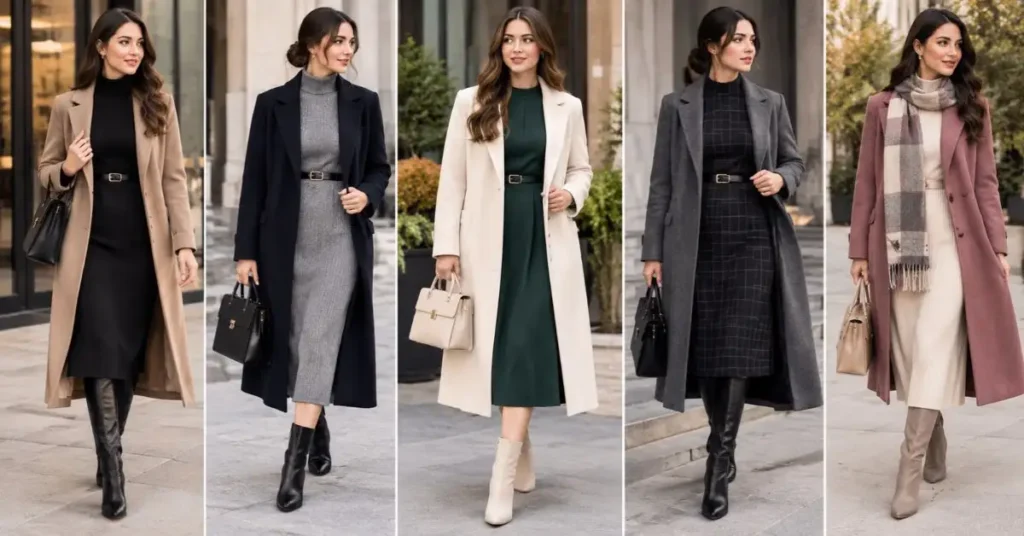
Winter workwear dresses with a long coat are office-ready dresses made from warm, structured fabrics, worn under a coat that reaches the knee, calf, or ankle. The dress sets your professional look. The coat handles the weather.
This pairing works because a long coat protects the areas that get coldest on a commute: your thighs, knees, and lower back. When the coat does that job, your dress can stay slim and comfortable instead of bulky. You do not need three sweaters to stay warm.
The idea also simplifies your mornings. One dress replaces a top-and-bottom combination, so you make fewer decisions. Add tights, boots, and a coat, and you have a complete outfit in minutes. If you want the basics first, our guide to work dresses covers fit, color, and dress codes for every season.
Winter adds a few extra rules, though. You wear the coat outside and remove it inside, so the dress must look good on its own. The coat must also suit the dress, not fight it. A boxy coat over a full skirt, for example, creates a bulky shape that hides your waist.
Weigh the benefits and limits before you shop:
- Benefits: easy styling, strong warmth where you need it, a polished outline, and a wardrobe that suits many workplaces.
- Limits: you need two good pieces instead of one, quality coats cost more, and long coats can feel heavy on crowded buses or in a car seat.
Match the pair to your office and your climate. A conservative corporate office suits a tailored wool dress with a classic camel coat. A creative workplace allows richer color, texture, or a belted coat with more shape. In mild winters, a lighter wool coat and sheer tights work. In freezing weather, choose a heavier coat and fleece-lined tights. Check what colleagues wear, then adjust for the weather where you live.
Best Winter Workwear Dresses to Wear Under a Long Coat
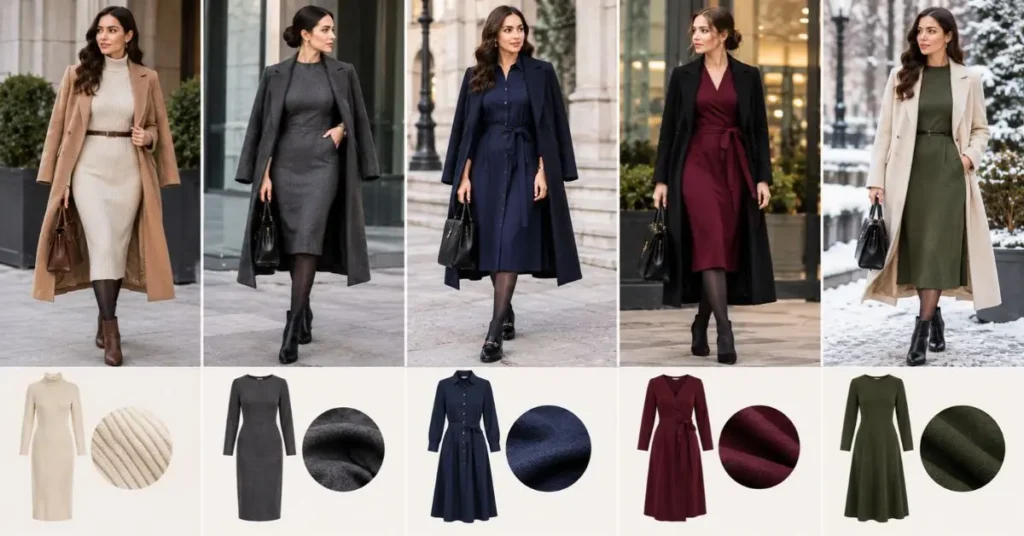
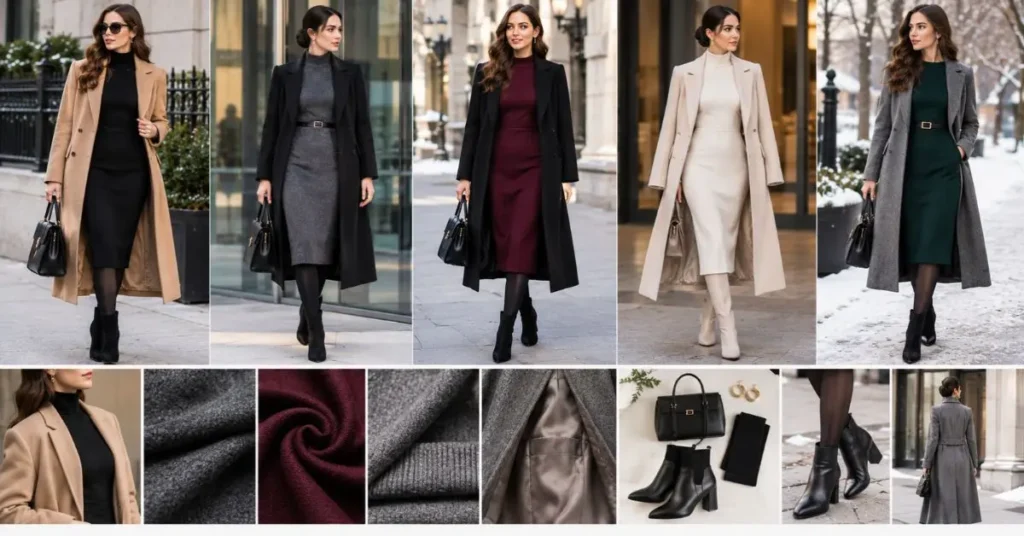
Not every dress works under a coat. The best choices have slim to moderate volume, narrow sleeves, and a smooth surface that glides against your coat lining. Bulky or clingy styles bunch up when you slide your arms into a coat.
The best dresses to wear under a long coat are knee-length or midi dresses with long, slim sleeves, a smooth knit or woven fabric, and a slim or gently flared shape. Use that rule as your starting point, then choose the style that suits your workplace.
Knit and Sweater Dresses
- Choose fine-gauge knits for the office. Chunky knits add bulk at the sleeves and waist.
- Pick a mock neck or crew neck so your scarf sits neatly under the coat collar.
- Add a belt to define your waist before you put on the coat.
- Read our sweater dress styling guide for outfit ideas across casual, office, and evening settings.
Shirt and Wrap Dresses
- Choose wool-blend or heavy crepe fabric for warmth and structure.
- Pick a wrap style if you want adjustable comfort when office temperatures change.
- Wear a shirt dress in conservative offices, because the collar and buttons look tailored.
- Keep sleeves narrow so the coat sleeve does not crush the cuffs.
Sheath and A-Line Dresses
- Choose a ponte sheath dress for a sleek outline that works under almost any coat length.
- Pick an A-line wool dress for movement, and pair it with a coat at least as long as the dress.
- Skip puff sleeves under a coat, because the lining flattens them.
The table below compares five reliable options.
| Dress Style | Best For | Suitable Season | Styling Idea |
|---|---|---|---|
| Fine-knit sweater dress | Casual offices, school settings | Late fall to deep winter | Add a slim belt and a camel coat |
| Ponte sheath dress | Corporate offices, client meetings | All winter | Pair with a charcoal coat and ankle boots |
| Wool-blend shirt dress | Business-casual offices | Fall to mid-winter | Layer under a navy coat with loafers and opaque tights |
| Crepe wrap dress | Presentations, long workdays | Early winter | Choose heavy crepe and match tights to the hem color |
| Wool A-line midi dress | Creative or business-casual workplaces | Mid to late winter | Wear a coat that is at least as long as the dress |
Each of these styles works with a long coat because the shape stays close to the body, while the fabric keeps its structure through a full workday.
How to Match a Long Coat With Your Winter Work Dress Hem
Coat length means the point where your coat’s hem lands on your body, usually the knee, mid-calf, or ankle. Dress hem means the point where your dress ends. Your outfit looks balanced when these two hems relate to each other on purpose.
Why does this matter? A coat covers most of your dress when you walk outside. If the two hems sit almost together, they compete for attention and create a cluttered line. If one hides the other, or if they sit clearly apart, the eye reads one clean shape.
Stylists at Who What Wear point out that an outer layer can make a dress look shapeless or hide it completely, so proportions deserve a plan. Their advice on pairing jackets with dresses shows more examples.
The Hem-to-Coat Rule
- Coat longer than the dress: This is the cleanest and warmest option. A mid-calf coat over a knee-length or midi dress hides the hem completely. It also works well with flared dresses.
- Narrow dress, any coat length: A slim sheath or pencil-style dress stays close to the body, so almost any coat length looks tidy over it.
- Coat shorter on purpose: A knee-length coat over a midi dress lets the dress hem show several inches below the coat. This looks intentional only when the gap is clear. Avoid a gap of just one or two inches.
Test your pairing with this quick fitting routine:
- Put on your dress and note where the hem lands.
- Add your coat and stand in front of a full-length mirror.
- Check the gap. You want either no hem showing or a clear, deliberate difference.
- Sit down and stand up to see whether the coat bunches or the dress rides up.
- Walk a few steps to confirm you can move freely.
Height changes the result. Petite women often look best in a coat that ends at or just below the knee, because a very long coat can overwhelm a short frame. A belt at the waist keeps the proportions balanced. Taller women can wear mid-calf and ankle-length coats with ease.
Best Fabrics for Winter Work Dresses and Long Coats
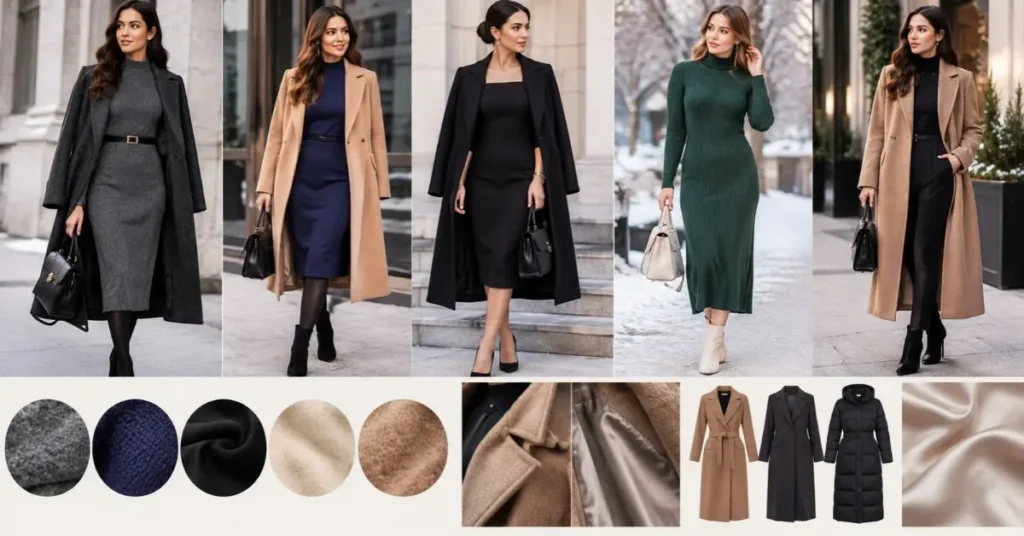
Fabric decides whether you feel warm, comfortable, and put together by lunchtime. Winter work dresses with a long coat need materials that hold their shape, insulate well, and move easily under a lining.
Wool leads the list for a reason. Woolmark’s wool breathability fact sheet explains that the natural crimp in wool fibre traps pockets of still air, which insulates you from the cold. The same sheet notes that wool breathes, so you stay comfortable when you step from a freezing street into a warm office.
Wool has drawbacks too. Some people find it itchy against bare skin, and it needs careful washing. Blends of wool with a small amount of polyester or elastane often cost less, resist creasing, and feel softer. Check the label for fibre content before you buy.
Ponte, a thick stretch knit, suits long days of sitting, walking, and commuting. Heavy crepe gives a smooth, polished surface for client meetings. Fine merino knits feel soft and light, which helps in offices with strong heating.
Coat fabric matters as much as dress fabric. A wool-blend coat gives warmth and a formal outline. A long puffer coat keeps you warm, but it often looks too casual for corporate offices. Choose a puffer only if your dress code allows relaxed outerwear.
Static cling is a small but annoying problem. Slick synthetic linings can grab a knit dress and drag it upward as you walk. Wear a smooth slip, or choose a coat with a satin-type lining that glides over fabric.
Use this table to match fabric to your day.
| Option | Best Occasion | Key Benefit | Styling Tip |
|---|---|---|---|
| Wool-blend dress | Daily office wear | Warmth with structure | Pair with a slim wool coat |
| Ponte dress | Long workdays and commutes | Stretch, shape, and easy care | Add a belt for definition |
| Heavy crepe dress | Client meetings, presentations | Smooth, polished finish | Keep accessories minimal |
| Fine merino knit dress | Cold offices, casual days | Soft, light warmth | Wear a slip to prevent cling |
| Wool-blend long coat | Commutes and outdoor walks | Insulation and a formal outline | Pick a coat with a smooth lining |
Choose the option that fits your schedule, then build the rest of the outfit around it.
Best Colors for Winter Office Outfits
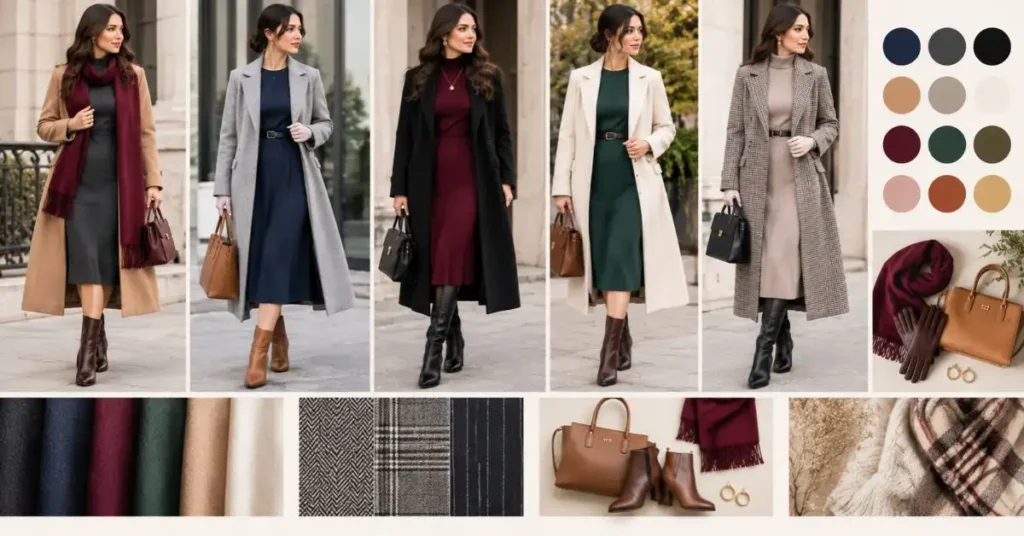
Color shapes how your outfit reads at work. In winter, when daylight is short and skies look gray, the right palette keeps you looking fresh instead of washed out.
The 60-30-10 Color Framework gives you an easy formula:
- 60% base: your dress. Choose navy, charcoal, black, forest green, or burgundy.
- 30% layer: your coat. Choose camel, gray, navy, cream, or a deep tone that complements the dress.
- 10% accent: your scarf, bag, or gloves. Add a pop of rust, olive, soft pink, or gold.
Why does this work? Your eye sees one main color, one supporting color, and one small highlight. Nothing competes, so the outfit looks planned.
Try these combinations:
- Charcoal dress, camel coat, burgundy scarf
- Navy dress, light gray coat, tan leather bag
- Burgundy dress, black coat, gold earrings
- Forest green dress, cream coat, brown ankle boots
Tonal outfits, such as a taupe dress under a beige coat, create a long, calm line. Mix textures, such as a knit dress with a smooth wool coat, so the look keeps depth. If you love muted, refined dressing, explore our guide to quiet luxury dresses for neutral palettes and timeless shapes.
Patterns need a careful hand. Subtle checks, herringbone, and fine stripes suit offices well. Wear only one pattern at a time. If your coat has a pattern, choose a solid dress. If your dress has a print, choose a plain coat.
Light colors such as cream and ivory look elegant in winter, but they show salt, mud, and rain marks quickly. Wear them on drier days, and keep a spot-cleaning plan ready.
Shoes, Tights, and Accessories That Finish the Look
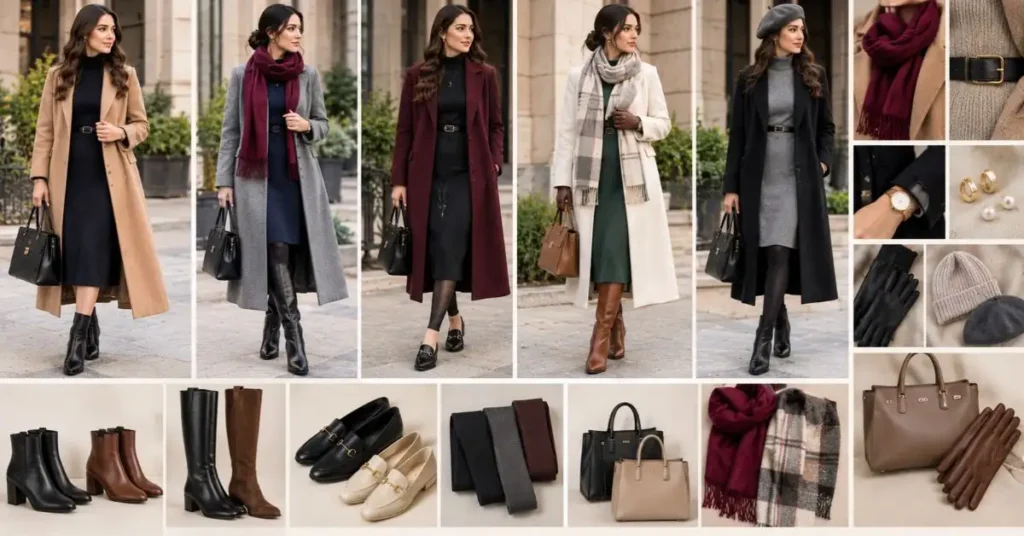
Accessories matter more in winter because heavy outerwear hides your shape. Small details such as a belt, scarf, or boots show your style. They also keep you comfortable, so choose practical pieces first and decorative ones second.
Footwear and Legwear
- Ankle boots: A block heel or grippy sole holds steady on wet pavement and suits most midi dresses.
- Knee-high boots: Wear them with a midi dress under a coat that covers the boot top.
- Loafers: Pair them with opaque tights in dry weather for a smart, classic look.
- Opaque tights: Match them to your dress or boots for a long, unbroken line. Fleece-lined tights add warmth under heavier fabrics.
- Office shoes in your bag: Change at your desk if you walk through snow or rain.
Scarves, Bags, Gloves, and Jewelry
- Scarf: Tuck a slim scarf inside your coat collar. Use your 10% accent color.
- Bag: Choose a structured tote or satchel in a neutral shade. It holds its shape and carries work essentials.
- Gloves: Leather or lined wool gloves look more polished than bulky mittens.
- Jewelry: Small earrings and a watch stay visible without catching on your scarf. Skip long necklaces, which tangle in layers.
- Belt: Wear it over your coat or under it to define your waist.
Add a hat only if it suits your dress code. A simple wool beanie or beret keeps you warm, and you can remove it quickly at the door.
Common Mistakes to Avoid With Winter Work Dresses and Coats
Most winter outfit problems come from a few repeat errors. Fix these, and your outfit improves right away.
Fashion Mistakes Checklist
- Coat hem and dress hem sit within an inch or two of each other. The close lines compete and cut your leg line. Move the dress hem clearly above or below the coat hem.
- Bulky knit under a fitted coat. The coat sleeves squeeze the fabric and restrict your arms. Choose a fine-gauge knit or a slightly roomier coat.
- Thin fabric in freezing weather. A summer-weight dress leaves you cold even under a heavy coat. Pick wool blend, ponte, or heavy crepe.
- Ignoring static cling. Synthetic linings grab knits and ride them up. Wear a slip or choose a smoother lining.
- Wearing flat black from head to toe. Monochrome works, but only with varied textures. Mix matte wool, soft knit, and leather.
- Forgetting indoor temperatures. Offices run warm. Choose breathable layers so you stay comfortable after you remove the coat.
- Storing a damp coat badly. Wet wool can lose its shape. Hang it on a wide shoulder hanger and let it dry away from direct heat.
- Ignoring the dress code. A very casual puffer can undercut a tailored dress. Match the coat’s formality to your workplace.
- Wearing slippery soles. Smooth leather soles slide on ice. Choose rubber soles or textured heels in snowy weather.
- Adding too many statement pieces. A bold scarf, bag, and boots compete. Pick one standout item.
You do not need a new wardrobe to fix most of these. Start with one or two changes, such as adjusting the hem gap or adding a slip. Small adjustments change how the whole outfit looks.
Winter Work Outfit Checklist and Care Schedule
Use this checklist before you buy a dress or leave the house.
Winter Workwear Dress Selection Checklist
- Check the occasion and your office dress code.
- Choose a warm fabric such as wool blend, ponte, or heavy crepe.
- Pick a knee-length or midi hem.
- Confirm that slim sleeves fit under your coat.
- Match coat length to the dress with the Hem-to-Coat Rule.
- Apply the 60-30-10 color framework.
- Choose opaque tights and weather-ready boots.
- Add one scarf and a structured bag.
- Test comfort: sit, walk, and raise your arms.
- Read the care label before you buy.
Good care keeps winter pieces looking sharp for many seasons. Wool resists odor naturally, so you do not need to wash it after every wear. Follow the label for cleaning, and use this schedule as a guide.
Clothing Care Schedule
- After every wear: Air your dress for a few hours before you put it away. Brush your coat gently with a soft garment brush to lift dust and lint.
- Weekly: Check hems, buttons, and linings. Fix loose threads early.
- Every season: Wash or dry clean pieces as the label directs. Spot-clean marks quickly.
- End of winter: Clean your coat and dresses before storage. Store them on wide hangers in breathable garment bags, not plastic.
Winter workwear dresses with a long coat give you warmth, polish, and simplicity in one outfit. Choose warm fabrics, match your hems on purpose, and keep your colors tidy. For more outfit ideas, browse our style guides and our seasonal fashion collection, then build a winter wardrobe that carries you through every cold workday.
Frequently Asked Questions
What dresses work best under a long coat in winter?
Long-sleeved knit dresses, tailored midi dresses, shirt dresses, and A-line dresses can all work well. Choose the fabric according to the weather and make sure the dress fits comfortably beneath the coat.
Can I wear a sweater dress with a long coat to work?
Yes. A simple sweater dress paired with a tailored coat creates a practical winter office outfit. Choose a suitable hemline, comfortable boots, and accessories that reflect your workplace dress code.
Which coat color is best for winter office outfits?
Black, camel, navy, charcoal grey, and beige are versatile options. Camel pairs well with black and burgundy, while charcoal complements navy and cream. Choose a shade that works with several dresses you already own.
Which fabric is best for a winter work dress?
Wool blends, medium-weight knits, and structured ponte fabrics can suit winter workwear. The best choice depends on the fabric construction, local temperature, indoor heating, and your personal comfort.
Are midi dresses suitable for winter office wear?
Yes. Midi dresses provide useful coverage and pair well with ankle boots or knee-high boots. Add tights and a suitable coat when temperatures fall.
How can I stay warm without making my outfit bulky?
Use a thin thermal base layer, a comfortable dress, and a coat with enough room for layering. Thermal tights and a suitable scarf can add warmth without requiring several thick garments.
Can I wear a long coat with traditional Pakistani clothing?
Yes. A long coat can complement a kurta and straight trousers or other suitable traditional clothing. Choose compatible lengths and fabrics, and make sure the sleeves allow comfortable movement.
What shoes work best with winter work dresses?
Ankle boots, knee-high boots, loafers, and closed-toe flats can all work. Consider your commute, the weather, your dress length, and your workplace requirements before choosing footwear.
How can I style a long coat for a formal office?
Choose a structured coat in black, navy, charcoal, or camel. Pair it with a tailored dress, polished shoes, and simple accessories. Keep patterns and decorative details restrained when your workplace expects formal clothing.
Can I wear the same long coat with different dresses?
Absolutely. A neutral coat can complement several dress styles and colors. Changing your footwear, scarf, handbag, or jewellery helps create different outfits without purchasing another coat.
Conclusion
Winter workwear dresses with long coat combinations can help you create office outfits that balance warmth, comfort, and professional style. The most useful combinations begin with a suitable dress, a coat that fits comfortably, and footwear that supports your daily routine.
Start with versatile pieces such as a knit midi dress, a tailored shirt dress, and a neutral long coat. Choose fabrics according to your local weather, coordinate colors thoughtfully, and use removable layers to manage changing indoor and outdoor temperatures.
You do not need a large wardrobe to look polished. A few well-chosen dresses and accessories can provide enough variety for everyday work, meetings, and professional events.
At Style Aura Dresses, our goal is to share practical fashion inspiration that helps readers make confident clothing choices. Use these ideas as a starting point, adapt them to your workplace and personal style, and create a winter wardrobe that works for you throughout the season.

Zahida Amir is the creative force behind Style Aura Dresses, a multicultural fashion blog. With a passion for timeless elegance, she curates easy-to-follow style guides that help readers find the perfect look for every occasion.
Pingback: 6 Stylish Fur Denim Jacket for Winters: Stunning Outfit Ideas