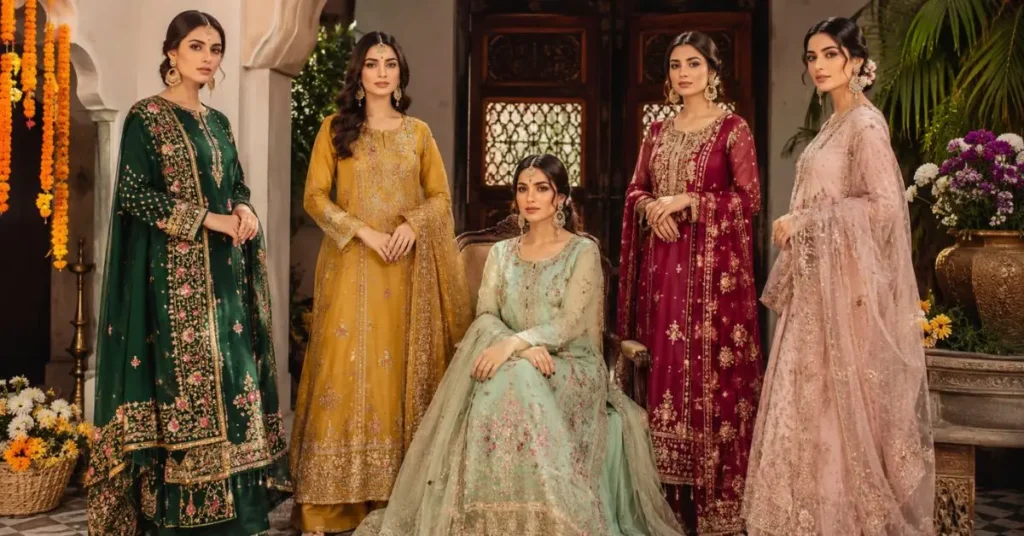
Traditional Pakistani Dresses represent a perfect blend of culture, elegance, and timeless fashion. Pakistan is known for its rich heritage, colorful traditions, and beautifully crafted ethnic wear that reflects grace and sophistication. From luxurious wedding ensembles to simple everyday attire, Pakistani fashion continues to inspire women across the world.
The beauty of these cultural outfits lies in their detailed embroidery, premium fabrics, and stylish silhouettes. Whether someone prefers classic styles or modern fusion fashion, Traditional Pakistani Dresses offer endless options for every age and occasion. Over the years, Pakistani ethnic fashion has gained international recognition because of its elegance, modesty, and artistic craftsmanship.
History of Traditional Pakistani Fashion
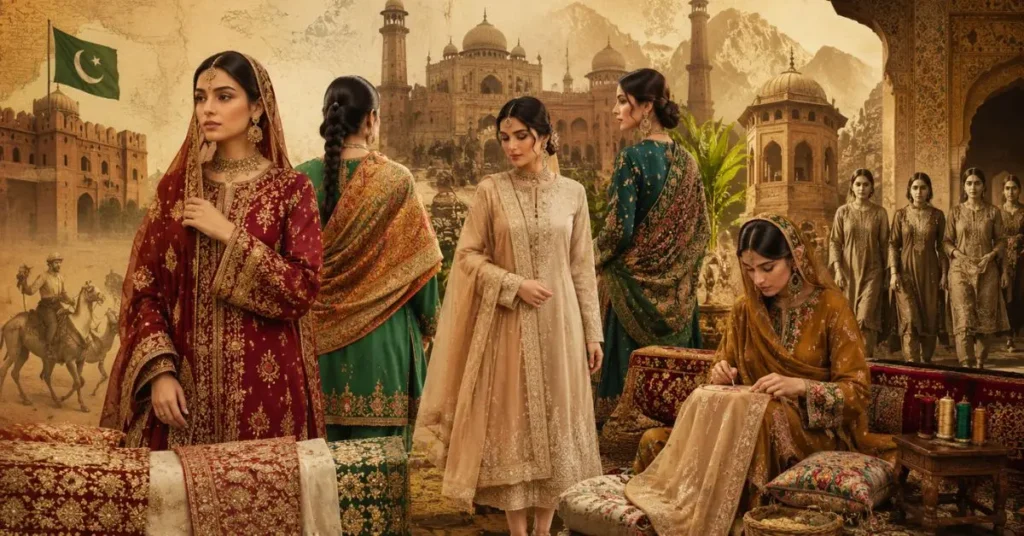
Pakistani cultural fashion has deep historical roots influenced by Mughal traditions, regional cultures, and South Asian artistry. For centuries, people in different regions of Pakistan have worn beautifully stitched attire designed with unique embroidery patterns and luxurious fabrics.
During the Mughal era, richly embroidered garments became symbols of royalty and elegance. Over time, local artisans introduced regional styles that reflected the traditions of Punjab, Sindh, Balochistan, and Khyber Pakhtunkhwa. Each area contributed distinctive craftsmanship, vibrant colors, and artistic details to Pakistani ethnic wear.
As fashion evolved, traditional clothing adapted to modern trends while preserving its cultural identity. Today, Pakistani designers combine classic craftsmanship with contemporary cuts to create stylish and sophisticated looks loved around the globe.
Popular Types of Traditional Pakistani Dresses
Shalwar Kameez
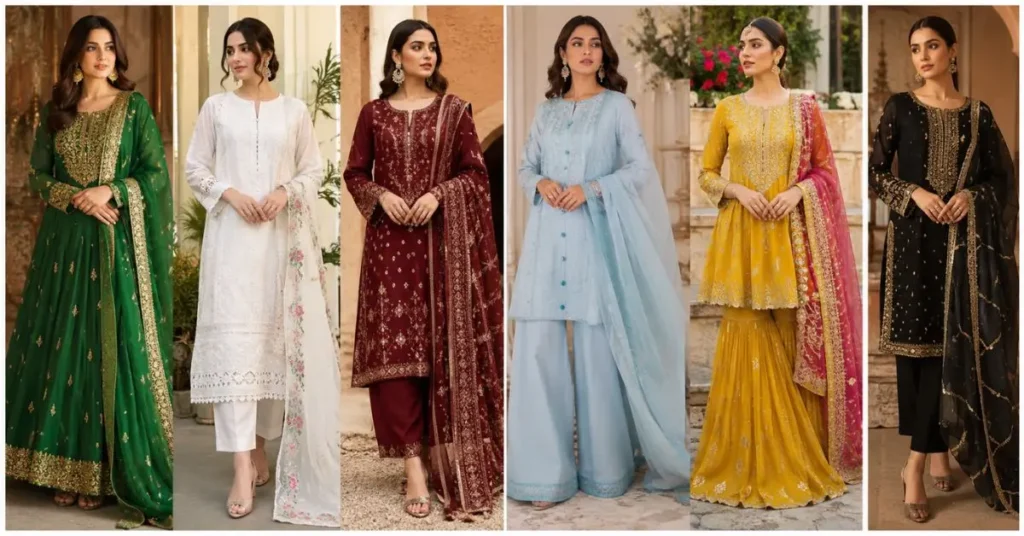
The Shalwar Kameez remains the most iconic Pakistani outfit. It includes a long shirt paired with loose trousers and a dupatta. Women prefer this attire because it offers comfort, elegance, and versatility for casual and formal occasions alike.
Modern versions feature stylish cuts, delicate embellishments, and trendy sleeve designs that enhance the overall appearance.
Lehenga Choli
Lehenga Choli outfits are popular for weddings and festive celebrations. These luxurious ensembles usually include a heavily embroidered skirt, fitted blouse, and beautifully decorated dupatta.
Brides and wedding guests often choose vibrant shades like red, maroon, gold, and emerald green to create a glamorous traditional look.
Anarkali Style
Anarkali attire reflects royal Mughal-inspired fashion. Its long frock-style silhouette creates a graceful and elegant appearance that suits formal events perfectly.
Designers now create modern Anarkali styles with soft pastel shades, minimal embellishments, and flowy fabrics for contemporary fashion lovers.
Saree Fashion in Pakistan
Although the saree originated in South Asia, it remains an admired part of Pakistani festive fashion. Women often wear chiffon, silk, or net sarees with embroidered borders during formal gatherings and receptions.
Pakistani saree styling focuses on sophistication, delicate embroidery, and elegant draping techniques.
Gharara and Sharara
Gharara and Sharara outfits are traditional festive ensembles commonly worn during weddings and Eid celebrations. Their wide-leg trousers and heavily embellished tops create a luxurious royal appearance.
These classic outfits continue to dominate modern bridal and festive collections.
Kurti Styles
Kurtis provide a stylish fusion of traditional and modern fashion. Women pair them with jeans, trousers, or cigarette pants for casual and semi-formal looks.
Simple printed kurtis remain highly popular because of their comfort and fashionable appearance.
Fabrics and Embroidery Trends
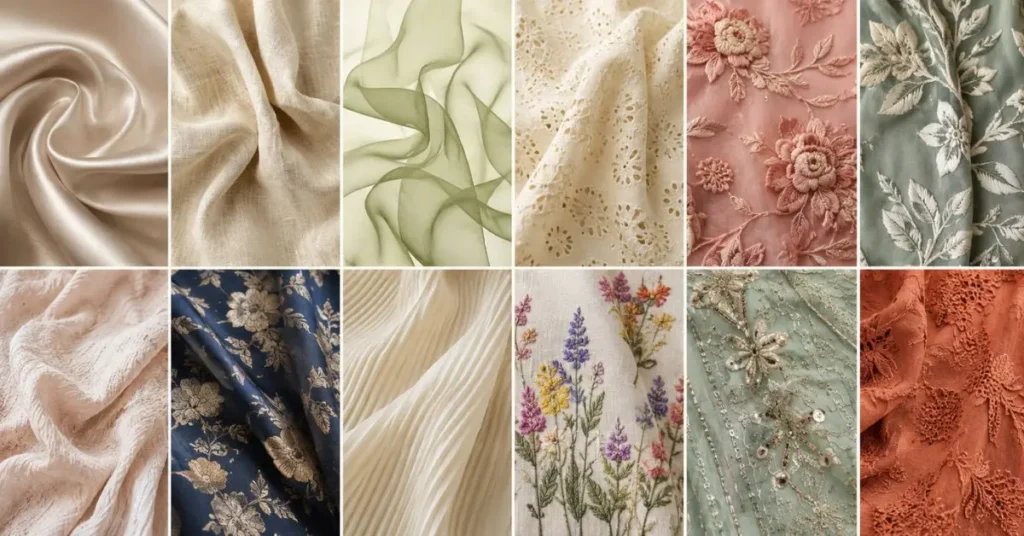
The charm of Traditional Pakistani Dresses becomes even more attractive through luxurious fabrics and artistic embroidery.
Chiffon
Chiffon is widely used for formal attire because of its soft texture and elegant fall. It creates graceful silhouettes ideal for weddings and evening events.
Silk
Silk adds richness and sophistication to festive clothing. Its smooth texture and luxurious shine make it a preferred choice for bridal collections.
Cotton
Cotton outfits provide comfort during warm weather. Lightweight cotton ensembles are ideal for daily wear and summer fashion.
Lawn
Lawn fabric dominates Pakistani summer fashion. Women love lawn collections because they are breathable, stylish, and available in beautiful prints.
Velvet
Velvet becomes highly popular during winter weddings. Its rich appearance creates a royal and luxurious fashion statement.
Embroidery Styles
Pakistani fashion is famous for handcrafted embroidery techniques, including:
- Zari work
- Mirror work
- Thread embroidery
- Stone embellishments
- Sequins detailing
- Pearl decorations
These artistic details transform simple attire into breathtaking masterpieces.
Traditional Pakistani Dresses for Weddings and Festivals
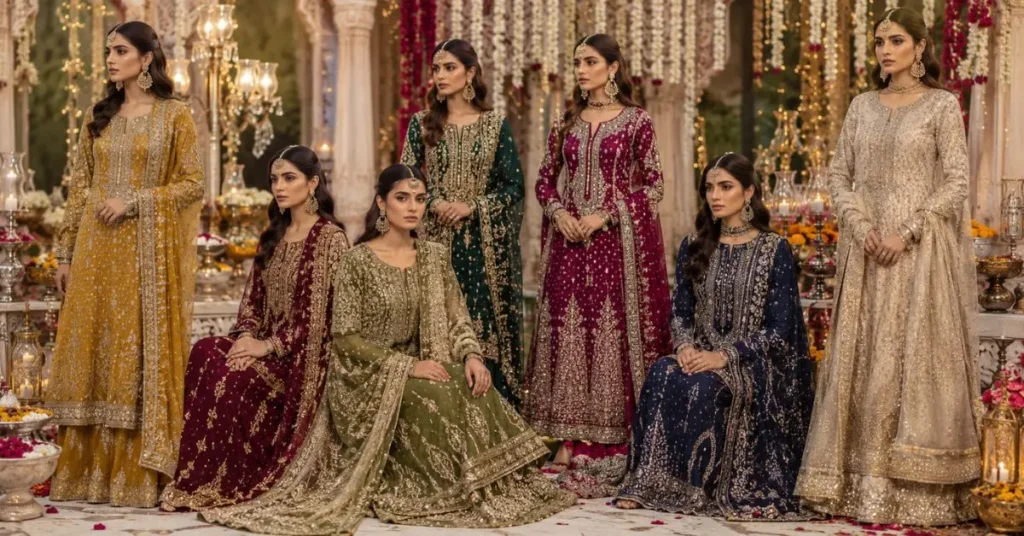
Pakistani festive fashion plays an important role in celebrations and cultural gatherings. Women carefully select elegant outfits that reflect beauty and tradition.
Wedding Fashion
Bridal and wedding guest attire often includes luxurious lehengas, heavily embroidered maxis, and elegant shararas. Rich colors and detailed embellishments create glamorous looks perfect for grand celebrations.
Eid Celebrations
Women prefer comfortable yet stylish ensembles during Eid. Pastel shades, floral embroidery, and lightweight fabrics become especially popular during festive gatherings.
Mehndi Events
Bright yellow, green, and orange tones dominate Mehndi fashion. Mirror work and colorful embroidery add a playful and joyful touch to the overall appearance.
Family Gatherings
Simple embroidered kurtis and stylish shalwar kameez outfits provide the perfect balance between comfort and sophistication during family events.
Cultural Festivals
Traditional attire helps preserve cultural identity during festivals and heritage celebrations. Regional embroidery and handcrafted details make every ensemble unique and meaningful.
Modern Trends in Pakistani Ethnic Wear
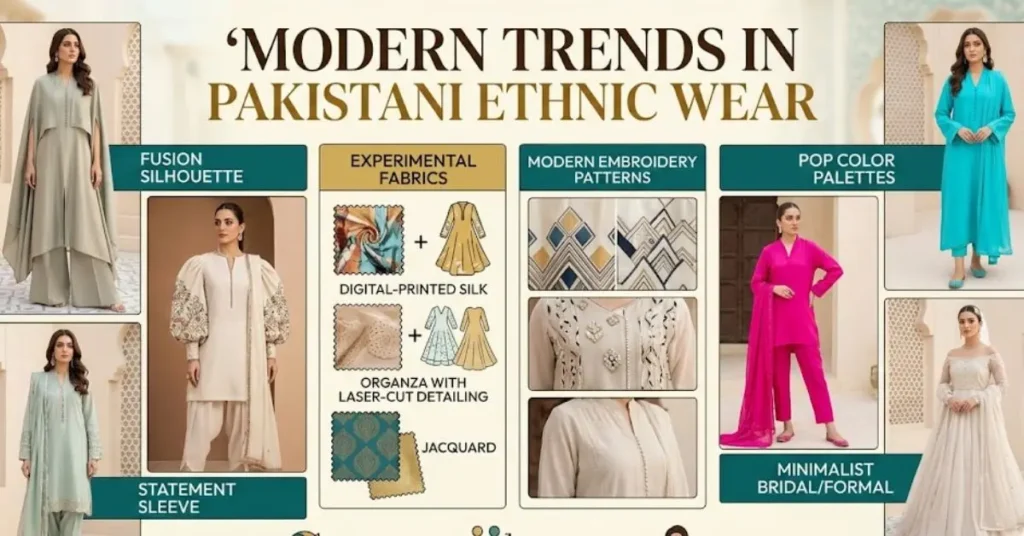
Fashion trends continue evolving every year, and Pakistani designers constantly introduce fresh ideas while preserving traditional elegance.
Contemporary Cuts
Modern silhouettes such as straight shirts, peplum tops, capes, and asymmetrical hemlines have become increasingly popular among young women.
Pastel Colors
Soft pastel shades dominate current fashion collections. Colors like blush pink, lavender, mint green, and ivory create elegant and sophisticated looks.
Luxury Pret Collections
Luxury pret wear combines premium fabrics with ready-to-wear convenience. Women now prefer stylish designer collections that offer elegance without heavy customization.
Minimal Embroidery
Modern fashion trends focus on subtle embellishments and clean designs. Minimal embroidery creates a classy and refined appearance suitable for formal events.
Fusion Fashion
Fusion wear combines western cuts with eastern craftsmanship. Designers now create outfits that blend cultural tradition with modern style effortlessly.
Designer Trends in 2026
Fashion experts predict that 2026 trends will include:
- Floral thread embroidery
- Pearl embellishments
- Organza dupattas
- Monochrome outfits
- Statement sleeves
- Sustainable fabrics
These trends continue redefining Pakistani ethnic fashion globally.
How to Style Traditional Pakistani Outfits Elegantly
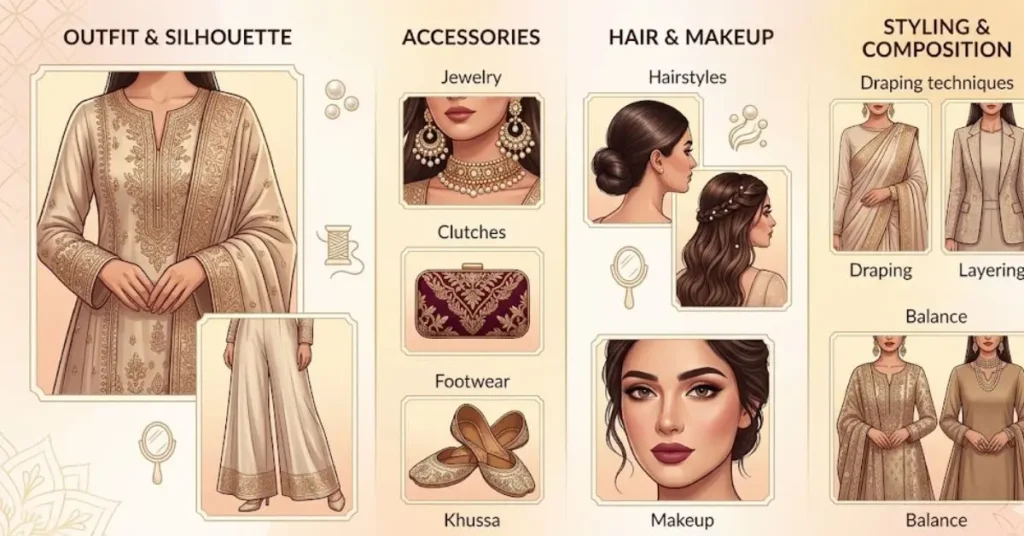
Styling plays a major role in enhancing the beauty of traditional attire.
Jewelry Tips
Pair heavily embroidered ensembles with delicate jewelry for balance. Statement earrings and traditional bangles instantly elevate the look.
Footwear Ideas
Khussas, heels, and embellished sandals perfectly complement eastern wear. Comfortable footwear helps maintain confidence throughout long events.
Makeup Suggestions
Soft glam makeup with neutral tones enhances traditional fashion beautifully. Bold lip colors work especially well with bridal and festive looks.
Dupatta Styling
Elegant dupatta draping can completely transform an outfit. Women often style dupattas over one shoulder or with pleated front drapes for a sophisticated touch.
Handbag Matching
Small embellished clutches and embroidered handbags complete the overall appearance perfectly.
Common Mistakes to Avoid
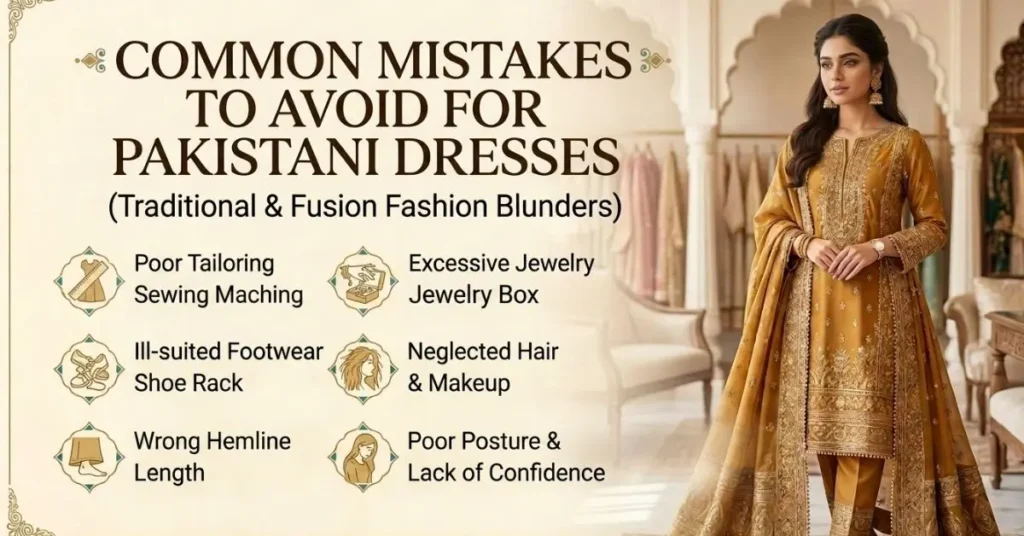
Many people unintentionally reduce the elegance of their outfits through simple styling mistakes.
Over-Accessorizing
Too many accessories can overwhelm the overall look. Maintaining balance creates a more graceful appearance.
Wrong Fabric Selection
Choosing heavy fabrics during summer can feel uncomfortable. Always select materials according to the weather and event.
Ignoring Body Type
Different silhouettes suit different body shapes. Proper fitting enhances confidence and elegance.
Poor Color Combinations
Clashing colors may reduce the beauty of an ensemble. Coordinated shades create a polished fashion statement.
Uncomfortable Footwear
Stylish yet comfortable shoes are essential for maintaining elegance during long celebrations.
Why Traditional Pakistani Dresses Remain Timeless
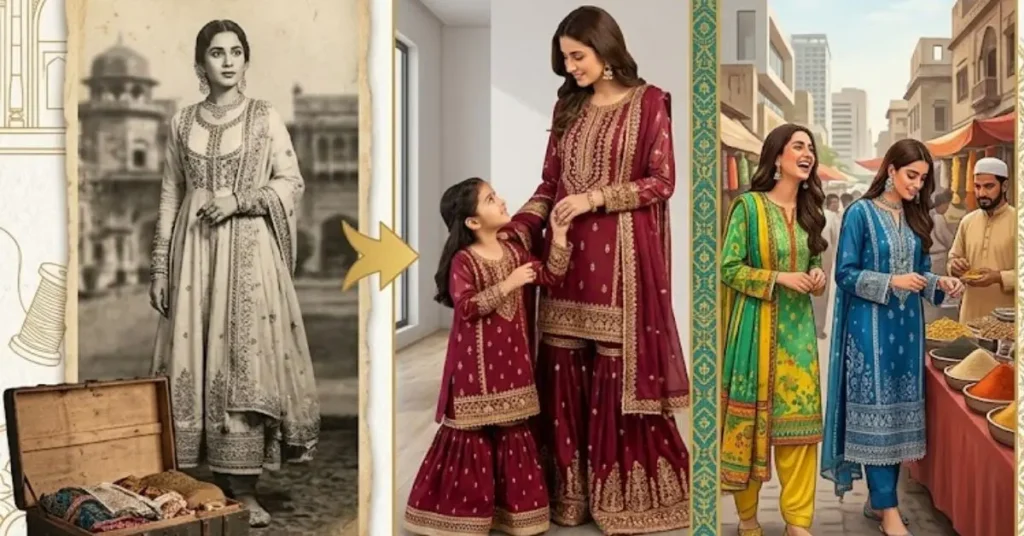
Traditional Pakistani Dresses continue to remain timeless because they beautifully combine modesty, sophistication, and cultural identity. Their artistic embroidery, luxurious fabrics, and graceful designs make them suitable for every generation.
Moreover, Pakistani fashion constantly evolves while preserving traditional roots. Designers successfully blend modern trends with cultural craftsmanship, allowing these elegant ensembles to remain fashionable worldwide.
Celebrities, influencers, and fashion enthusiasts across different countries now admire Pakistani ethnic wear because of its unique beauty and versatility. Whether worn at weddings, festivals, or formal gatherings, these outfits always create a memorable and elegant impression.
Conclusion
Traditional Pakistani Dresses are more than just beautiful clothing; they are a reflection of the country’s rich heritage, cultural values, craftsmanship, and timeless sense of style. From the classic shalwar kameez and elegant Anarkali suits to beautifully detailed lehengas and luxurious bridal ensembles, Pakistani ethnic wear offers a wide range of styles for every special occasion.
The beauty of Traditional Pakistani Dresses lies in their fine embroidery, delicate embellishments, vibrant colors, graceful silhouettes, and carefully chosen fabrics. Whether you are dressing for a wedding, Eid celebration, family gathering, festival, or formal event, these outfits allow you to celebrate tradition while expressing your personal style.
FAQs
What are Traditional Pakistani Dresses famous for?
They are famous for elegant embroidery, luxurious fabrics, and timeless cultural beauty.
Which fabric is best for Pakistani summer fashion?
Lawn and cotton fabrics are ideal because they feel lightweight and breathable.
Are Pakistani traditional outfits popular internationally?
Yes, Pakistani ethnic fashion is admired globally for its sophistication and craftsmanship.
What colors are trending in Pakistani fashion in 2026?
Pastel shades, earthy tones, and monochrome styles are trending in 2026.
Which Pakistani outfit is best for weddings?
Lehenga Choli, Sharara, and heavily embroidered Anarkali styles are popular wedding choices.
Zahida Amir is the founder and creative force behind Style Aura Dresses, a multicultural fashion blog celebrating South Asian, Western, and bridal dress styles. With a deep passion for fashion trends and timeless elegance, Zahida Amir curates content that helps readers discover the perfect look for every occasion.
Through Style Aura Dresses, Zahida Amir shares style guides, dress inspiration, and expert fashion tips, blending traditional and contemporary influences to inspire women worldwide.